
How Often Should You Get Blood Work? When to Retest Each Marker
How often healthy adults get blood work under screening guidelines, how long to wait before retesting HbA1c, lipids, TSH, vitamin D, B12, ferritin and hs-CRP after a change, and how to make a retest comparable to your baseline.
- Published
- October 5, 2026
- Read time
- 11 min read
- Medically reviewed by
-
 Rhonda Collins, FNP-C
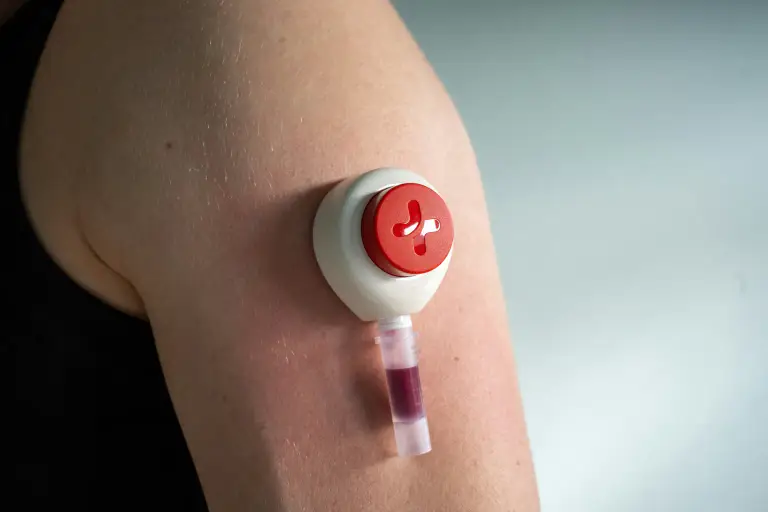
How often you should get blood work depends on why you are testing. For screening, major guidelines set intervals of several years for adults whose results are normal: a lipid profile at least every 5 years, and diabetes screening about every 3 years for adults who qualify. When you are acting on a specific result, such as a diet change, a new supplement, or a medication change, the affected markers are usually rechecked sooner, commonly 6 weeks to 3 months after the change, then spaced out once they are stable.
The right retest window comes from each marker’s biology. HbA1c needs about 3 months. TSH needs about 6 weeks or longer. hs-CRP can be repeated in 2 weeks. Testing earlier than that mostly shows noise.
How often should a healthy adult get blood work?
There is no single annual blood panel that every healthy adult needs. Screening guidelines set their own intervals, and most are longer than a year when results are normal:
- Cholesterol. The 2026 ACC/AHA dyslipidemia guideline recommends lipid screening beginning at age 19 and at least every 5 years after that, with more frequent screening for people with additional cardiovascular risk factors.
- Blood sugar. The US Preventive Services Task Force recommends screening adults aged 35 to 70 who have overweight or obesity, and says screening every 3 years may be reasonable when blood glucose is normal.
Many people still choose a yearly check, often with an annual physical. That is a reasonable personal choice, but it is not a guideline requirement for most healthy adults. Which tests belong in a baseline, and why, is covered in what blood tests a healthy adult should consider.
How often should you retest when you are acting on a result?
Monitoring is different from screening. When you change something to move a marker, the retest answers one question: did it work? The interval is shorter, but not so short that the marker has not had time to respond.
Clinical guidance for the most common monitoring situations points to a first recheck between about 6 weeks and 3 months:
- The American Diabetes Association recommends checking HbA1c about every 3 months after a recent treatment change, and at least twice a year once goals are met.
- The 2026 ACC/AHA guideline recommends a lipid profile 4 to 12 weeks after starting or adjusting lipid-lowering therapy, then every 6 to 12 months.
- Thyroid monitoring after starting or changing thyroid hormone checks TSH every 6 to 8 weeks until it is in range.
After a marker is stable, the interval usually lengthens to every 6 to 12 months, or back to the routine screening schedule.
When to retest each blood marker after a change
The table below gives a typical first retest window after a diet, exercise, supplement, or medication change. Some windows come from clinical guidelines. Others come from how long the marker takes to turn over, and the table says which.
| Marker | What it reflects | Typical retest window | Basis |
|---|---|---|---|
| HbA1c | Average blood glucose over the past 2 to 3 months | About 3 months | Guideline and biology: ADA Standards of Care 2026; red blood cells live about 3 months (MedlinePlus) |
| Fasting glucose | Glucose on the morning of the draw | No set lifestyle window; confirm an abnormal result with a repeat test | Guideline: ADA Standards of Care 2026 |
| LDL cholesterol and triglycerides | Current lipid levels | 4 to 12 weeks after starting or adjusting lipid-lowering therapy | Guideline: 2026 ACC/AHA |
| TSH and free T4 | Thyroid signaling and thyroid hormone output | 2 to 3 months to confirm an isolated high TSH; 6 to 8 weeks after a thyroid hormone change | Guideline: ETA 2013; AAFP 2021 |
| Vitamin D (25-hydroxyvitamin D) | Vitamin D status over recent weeks | About 2 to 3 months | Biology: a half-life of about 15 days (Jones 2008) |
| Vitamin B12 | Circulating B12 | No standard retest window | Guideline summary: AAFP 2017 |
| Ferritin and iron | Iron stores and circulating iron | Hemoglobin within 4 weeks of starting iron; stores refill over months | Guideline: BSG 2021 |
| hs-CRP | Low-grade inflammation | 2 weeks for a repeat measurement | Scientific statement: CDC and AHA 2003 |
If you are changing a prescription medication, agree the retest timing with the prescribing clinician, because the dose and the reason for treatment change the schedule. The sections below explain each window.
HbA1c: retest after about 3 months
HbA1c reflects average blood glucose over the past 2 to 3 months, because glucose stays attached to hemoglobin for the life of a red blood cell, which is about 3 months, according to MedlinePlus. A retest after a few weeks still carries mostly red cells formed before the change.
The ADA Standards of Care 2026 (recommendation 6.2) advise assessing glycemic status at least twice a year, and more often, for example every 3 months, for people with recent treatment changes or who are not meeting their goals.
Fasting glucose: confirm, then track alongside HbA1c
Fasting glucose measures blood sugar on the morning of the draw, so it moves day to day with sleep, illness, stress, and the previous evening’s meal. A single reading is a snapshot. The ADA requires a confirmatory test before diagnosing diabetes in most cases, so an unexpected result is normally repeated rather than acted on alone.
No guideline sets a fasting glucose window after a lifestyle change. Because one value is noisy, the longer view comes from HbA1c at about 3 months.
Cholesterol and triglycerides: 4 to 12 weeks after a therapy change
The 2026 ACC/AHA dyslipidemia guideline recommends a lipid profile 4 to 12 weeks after starting or adjusting lipid-lowering therapy, and every 6 to 12 months after that, to check how well it is working. The guideline does not set a separate window for diet or exercise changes alone.
Triglycerides react to a recent meal more than LDL cholesterol does. A European consensus found the largest average rise after usual meals was about 26 mg/dL for triglycerides, while HDL cholesterol, apoB, and Lp(a) were unaffected by fasting status (Nordestgaard 2016). If your baseline was fasting, make the retest fasting too.
Lp(a) is the exception among lipid markers. The 2026 guideline recommends measuring it at least once in adulthood, and notes that lifestyle changes have little effect on it, so repeat testing is generally not needed (ACC summary).
TSH and free T4: 6 weeks or longer
TSH takes weeks to settle after a change. The European Thyroid Association advises investigating an initially raised TSH with a normal free T4 by repeating both, along with thyroid peroxidase antibodies, preferably after 2 to 3 months (ETA 2013), so one high reading is confirmed before it is acted on.
When thyroid hormone treatment is started or adjusted, an American Family Physician review describes checking TSH every 6 to 8 weeks until it is in range, then every 6 to 12 months. The TSH guide covers what moves TSH and how to read it.
Vitamin D: about 2 to 3 months
Blood tests measure 25-hydroxyvitamin D, the circulating form. It has a half-life of about 15 days (Jones 2008). A level takes several half-lives to settle after a change in sun exposure, diet, or supplements, which works out to roughly 2 to 3 months. This window comes from the marker’s biology, not from a guideline schedule.
The Endocrine Society’s 2024 guideline suggests against routine vitamin D testing in the general populations it reviewed, which excluded people with an established reason for testing. A vitamin D retest is most useful when a low result is being acted on, not as a routine add-on.
Vitamin B12: no standard retest window
There is no standard window for rechecking serum B12. An American Family Physician review notes that the British Society for Haematology does not recommend retesting B12 levels after treatment has started. Response is judged in other ways: methylmalonic acid, homocysteine, and reticulocyte count improve within about a week, and anemia and mean corpuscular volume within about 8 weeks.
Ferritin and iron: hemoglobin first, stores over months
The British Society of Gastroenterology guideline on iron deficiency anemia recommends checking for a hemoglobin response in the first 4 weeks of oral iron, and continuing treatment for about 3 months after hemoglobin returns to normal to refill iron stores. It found insufficient data to recommend routine ferritin monitoring, and suggests periodic blood counts, perhaps every 6 months at first, after recovery.
Two details make ferritin and iron easy to misread. Ferritin can rise with inflammation, such as an infection or recent surgery, as well as with liver disease and other conditions (MedlinePlus). Serum iron varies through the day and may be higher in the morning (MedlinePlus). Retest when you are well, at the same time of day as your baseline.
hs-CRP: repeat in 2 weeks, and not while you are sick
The CDC and American Heart Association statement on inflammation markers recommends measuring hs-CRP twice, optimally 2 weeks apart, and averaging the results. A result above 10 mg/L should be repeated after about 2 weeks, with a search for an obvious source of infection or inflammation (Pearson 2003).
Because infection and inflammation raise CRP, a reading taken while you are unwell says little about a diet or lifestyle change. Retest once you have recovered.
How to make a retest comparable to your baseline
A retest only answers “did it change?” if the conditions match the first test. Laboratory-medicine groups describe food, coffee, alcohol, smoking, and time of day as sources of variation that change results before the sample reaches the lab (Simundic 2014). Control the ones you can:
- Use the same lab where possible. MedlinePlus advises using the same lab when you are looking for trends, because labs use different methods and reference ranges (MedlinePlus).
- Match the time of day. Serum iron and some other markers change through the day. A morning baseline needs a morning retest.
- Match the fasting state. If the baseline was fasting, fast the same way for the retest. The fasting for blood work guide explains what counts as fasting.
- Ask about biotin. Biotin can interfere with some laboratory methods, including some thyroid and hormone tests. How long to pause depends on the product and the assay, so ask the lab or ordering clinician. See how biotin affects blood tests.
- Skip hard exercise beforehand. Intense training, especially eccentric exercise such as downhill running, raises creatine kinase, a muscle enzyme, and the size of the rise varies widely between people (Radišić Biljak 2025). Keep the day before both draws similar.
- Keep hydration and habits similar. Plain water is generally allowed during a fast. Arrive the way you did for the baseline, and note anything different, such as a recent illness, a new supplement, or alcohol the night before.
Why results from different labs can differ
Results from different labs are not always directly comparable. MedlinePlus explains that labs often use different testing methods, so they set different reference ranges, and that a result should be read against the range printed on its own report (MedlinePlus).
Even within one lab, two results can differ with no real change in your body. Every measurement carries some analytical imprecision, and every marker varies naturally within a person. A change between two results is meaningful only when it is larger than those two sources of variation combined, a threshold laboratories call the reference change value (Fraser 2011). This is why a small move in either direction is rarely a reason to act.
What a longitudinal lab record should keep
A long-term record of your blood work is only as useful as the context saved with each result. For every draw, keep:
- The value and its units. The same marker can be reported in different units, such as mg/dL or mmol/L for glucose and cholesterol, or ng/mL or nmol/L for vitamin D.
- The reference range printed on that report, not a range from another lab or website.
- The lab and, where listed, the method or assay.
- The date and time of the draw, and whether it was fasting.
- The collection type, such as a venous draw or an at-home kit.
- Relevant conditions, such as a recent illness, hard exercise, travel, new supplements or medications, and biotin use.
Keep the original report as well as any summary, so the details stay available if a value is questioned later. For a step-by-step approach to the numbers themselves, see how to read blood test results.
How Mito supports retesting
Mito sells individual lab tests for many markers a la carte in its marketplace, alongside full panels, so you can reorder only the markers you are tracking rather than repeating a whole panel. Members see their Mito results and trends over time in one dashboard.
Members can also upload past lab reports from the Documents tab of the dashboard to use as a baseline. Uploads accept PDF, JPG, or PNG files under 10 MB that are not password-protected. The feature is in beta and works for some PDFs and biomarkers, and successfully imported results appear on the dashboard within a week.
To retest the markers in this guide, search the Mito lab test catalog. Each product page lists its current price, collection method, and preparation instructions.
Medical disclaimer
This guide is general education about blood-test timing. It does not replace the instructions attached to a laboratory order or individualized advice about your results or treatment.
Frequently asked questions
How often can you get blood work done?
As often as the result can actually change. Retesting a marker before it has had time to respond mostly measures normal day-to-day variation, so many first rechecks after a change fall between about 6 weeks and 3 months, while hs-CRP can be repeated after 2 weeks.
Should I be worried about a repeat blood test?
Not necessarily. Repeat testing is a routine part of confirming a result. Diabetes guidelines require a confirmatory test before most diagnoses, thyroid guidance repeats an isolated high TSH after 2 to 3 months, and an hs-CRP above 10 mg/L is repeated after about 2 weeks.
Do I need to retest every marker at the same time?
No. Retest the markers connected to the change you made, on the window that fits each one. Markers that were normal and are not affected by the change can stay on their routine screening interval.
Popular lab tests
Antinuclear Antibody (ANA) 11-Marker Panel
View current details, availability, and member pricing.
Comprehensive Metabolic Panel (CMP)
A 14-marker snapshot of kidney function, liver function, electrolytes, and blood sugar in one draw.
Complete Blood Count (CBC) with Differential and Platelet Count Test
A broad screen of red cells, white cells, and platelets that anchors most checkups.
The standard cholesterol workup for cardiovascular risk, and the baseline for tracking diet, exercise, or statin response.