Fasting for Blood Work: What You Can Have and How to Prepare
How long to fast before blood work, what you can have during the fast, which common tests need it, and what to do if you eat or drink before your appointment.
- Published
- August 27, 2026
- Last updated
- October 18, 2026
- Read time
- 10 min read
- Medically reviewed by
-
 Rhonda Collins, FNP-C
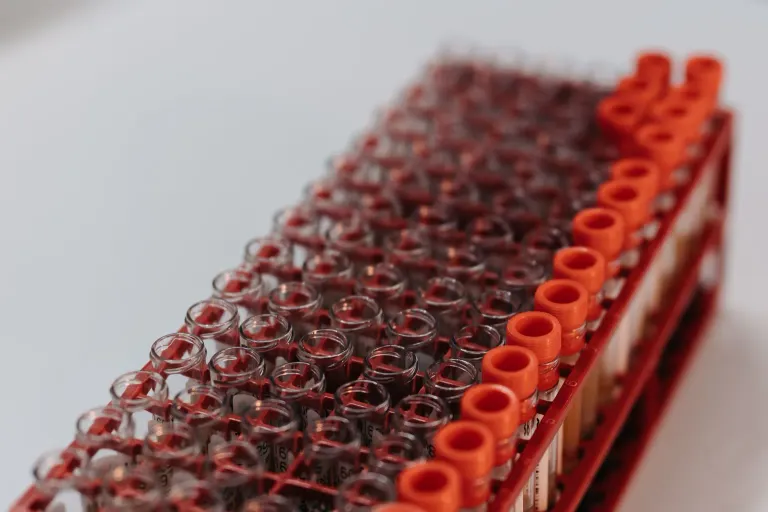
How long you fast before blood work depends on the test, but when fasting is requested it is usually 8 to 12 hours with nothing but plain water. MedlinePlus, the National Library of Medicine’s patient resource, gives that 8 to 12 hour range and says the ordering provider sets the exact time for the tests on your order [1]. Many common blood tests need no fasting at all.
The instructions attached to your specific order decide whether you fast and for how long. Do not start a fast based only on a general article: fasting when it was not requested can also change some results and make two draws harder to compare.
What does fasting mean for blood work?
Fasting for blood work means having no food or drink except plain water for the period stated in your test instructions. MedlinePlus explains why: sugar, fat, protein, and other nutrients from food and drinks enter the bloodstream and can change the levels a test measures [1].
During a standard fast, avoid:
- food of any kind, including small snacks and mints;
- coffee and tea, even black;
- juice, soda, milk, and flavored or sweetened water;
- alcohol;
- chewing gum;
- smoking or nicotine products;
- strenuous exercise.
That list follows the fasting guidance published by MedlinePlus and by Labcorp, one of the largest US clinical laboratories [1][2].
Black coffee counts as breaking a blood-test fast; coffee before a blood test covers which results it can affect and what to do if you already had some.
How long do you need to fast before blood work?
Most fasting blood tests use a window of 8 to 12 hours, counted back from the time of the draw. The exact window varies by test, and the order’s instructions take priority over any general range.
Labcorp’s patient guidance gives these typical windows when fasting is requested [2]:
| Test | Typical fasting window (Labcorp) |
|---|---|
| Fasting glucose (blood sugar) | 8 to 12 hours |
| Basic or comprehensive metabolic panel | 10 to 12 hours, if fasting is recommended |
| Fasting insulin | 8 hours |
Quest Diagnostics, the other large national laboratory, says fasting for a lab test typically lasts eight hours [3]. A morning appointment lets most of the fast happen while you sleep.
Which blood tests need fasting, and which do not?
Fasting is usually requested for tests whose results shift soon after a meal, mainly blood sugar and some fat and metabolic measurements. Tests such as a complete blood count and hemoglobin A1c are usually done without fasting.
Tests that often need fasting:
- Fasting glucose. The test measures blood sugar after a fast, so the fast is part of the test. Mito’s fasting glucose test page says to fast for at least 8 hours and book a morning appointment.
- Insulin. Fasting insulin is read alongside fasting glucose. Mito’s insulin blood test page says to fast for at least 8 hours.
- Basic and comprehensive metabolic panels. MedlinePlus lists the basic metabolic panel among tests that usually require fasting [1]. Mito’s comprehensive metabolic panel (CMP) and basic metabolic panel (BMP) pages both say fasting for at least 8 hours is preferred.
- Iron studies. MedlinePlus says you may be asked to fast for 12 hours before iron tests, which are usually drawn in the morning [4].
Tests that usually do not need fasting:
- Complete blood count (CBC). MedlinePlus says no special preparation is usually needed for a complete blood count, unless other tests on the same sample require fasting [5].
- Hemoglobin A1c. The National Institute of Diabetes and Digestive and Kidney Diseases says you do not have to fast before an A1C test, because it reflects average blood sugar over the past few months [6].
- Labcorp adds that thyroid tests, most vitamin and mineral tests such as B12 and vitamin D, and most hormone panels can typically be done without dietary restrictions [2].
Do you need to fast for a lipid panel?
Not always. Lipid panels were traditionally drawn after a fast, but current guidance often accepts non-fasting samples. A 2016 consensus statement from the European Atherosclerosis Society and the European Federation of Clinical Chemistry and Laboratory Medicine recommended non-fasting samples for routine lipid testing. It found that changes after ordinary meals were not clinically significant, with fasting still worth considering when non-fasting triglycerides are very high [7].
Mito’s lipid panel page lists fasting as not required before the test. If your order for a different lipid test asks for a fast, follow that order.
Each Mito test page lists its own preparation
Every Mito test page has a “How to prepare” line for that specific test. For example, the 25-hydroxy vitamin D page says fasting for at least 8 hours is preferred. When an order combines several tests, use the strictest preparation among them.
Is fasting longer than 12 hours a problem?
Fasting longer than 12 hours does not make most results more accurate. A 2026 study of about 9.8 million routine test results from 101,148 adult outpatients at one hospital in South Korea found no test where results differed meaningfully between 8 to 12 hours and more than 12 hours of fasting [8].
The same study found that glucose, triglycerides, gamma-glutamyl transferase (GGT), and lipase were higher when people had fasted for less than 8 hours. It was a single-center, cross-sectional study, so it shows associations rather than a rule for every lab. Its findings support aiming for the full window your order asks for, without stretching it. A much longer fast also makes conditions different from a previous draw, which makes the two results harder to compare.
Can you drink water while fasting for blood work?
Yes. Plain water is allowed during a standard blood-test fast, and both MedlinePlus and Labcorp encourage it [1][2]. Water does not add sugar, fat, or protein, and staying hydrated keeps more fluid in your veins, which can make the blood draw easier.
MedlinePlus says to avoid lemon-flavored or flavored carbonated water, which may contain sugars or artificial sweeteners [1]. If your order gives different fluid instructions, follow the order.
Can you chew gum, smoke, or exercise before a fasting blood test?
No. Chewing gum, smoking, and exercise are all off limits during a fasting window. MedlinePlus lists all three as things to avoid while fasting for a blood test, and Labcorp’s guidance also lists gum and smoking or nicotine products [1][2].
A laboratory-medicine working group of the European Federation of Clinical Chemistry and Laboratory Medicine lists smoking, coffee, alcohol, fasting duration, and time of day among factors that change the body’s response after eating, and calls for controlling them before a fasting sample [9].
Can you take medication or supplements during a fast?
Usually, yes. Labcorp’s guidance says most people should keep taking prescribed medications as directed, even on the morning of a fasting blood test, because stopping without medical guidance can be harmful [2].
Two exceptions are worth planning for. If you take diabetes medication and are fasting for a glucose or insulin test, ask your prescriber ahead of time whether to adjust its timing. High-dose biotin can interfere with some laboratory methods; read how biotin can affect blood tests before your draw.
Will one bite of food ruin a fasting blood test?
It can. Food or a caloric drink during the fasting window means the sample no longer reflects a true fast, and glucose and triglycerides are among the results most affected by a recent meal.
Labcorp’s guidance is that if you ate food or had a sugary or caloric drink, rescheduling is generally best. If you only had a small amount of black coffee, it says to contact your provider’s office before the appointment, because the impact varies by test [2]. MedlinePlus also says to tell your provider if you ate or drank before the test [1].
Either way, tell the collection site what you had and when. Do not decide on your own that it was too small to matter. Depending on the order, the draw may go ahead with the slip documented, or you may need a new appointment. Alcohol raises separate questions; see alcohol before a blood test.
Can you get fasting blood work in the afternoon?
Yes, but the fast still counts back from the time of the draw. For a 2 p.m. appointment with an 8-hour fast, you would stop eating by 6 a.m. and have only water after that. For a 12-hour fast, the last meal would be at 2 a.m., which is why most people book fasting draws in the morning.
Morning appointments are the usual advice for more than convenience. MedlinePlus suggests early scheduling so most of the fast happens during sleep, iron tests are usually drawn in the morning, and Mito’s fasting glucose test page asks for a morning appointment [1][4]. Time of day is also one of the factors laboratory working groups list as affecting results [9]. If afternoon is your only option, check whether your order allows it. If you take diabetes medication, settle its timing for a daytime fast before the appointment day.
Frequently asked questions
Do I need to fast before a Labcorp test?
Only if a test on your order requires it. Labcorp says many common lab tests do not require fasting. When fasting is required, its guidance is plain water only for 8 to 12 hours, depending on the test [2]. The lab follows the preparation tied to the tests ordered, not a rule for the lab itself.
Can I smoke before a blood test?
Not during a fasting window. MedlinePlus and Labcorp both list smoking among things to avoid while fasting for a blood test [1][2]. For a test that does not require fasting, follow the order’s instructions.
How long does a blood draw take?
The draw itself usually takes less than five minutes, according to MedlinePlus [5]. Check-in and waiting time at the collection site add to the total visit.
When can I eat after a fasting blood test?
As soon as the draw is finished. MedlinePlus notes that it is common to feel light-headed after a fasting blood test, so bringing a snack to eat right away can help [1].
Can I eat before a blood test that does not require fasting?
Yes. Quest’s patient guidance says that if a test does not require fasting, you should eat something before having your blood drawn [3].
A practical blood-work preparation checklist
- Read the instructions attached to the exact order, including each test’s preparation line.
- Confirm whether fasting is required and when the fasting window starts.
- Book a morning appointment if you need to fast.
- Plan how to handle prescription medicines, over-the-counter products, and supplements.
- During the fast, have plain water only unless the order says otherwise.
- Skip gum, smoking, and strenuous exercise during the fast.
- Tell the collection site about any preparation mistake before the sample is taken.
- Note the fasting time and conditions if you plan to compare the result with a future draw.
Standardized preparation makes repeat testing more comparable. When you are ready to choose testing, browse the Mito lab marketplace. Each test page is the source for its current availability, collection method, and preparation instructions.
Medical disclaimer
This guide provides general education about preparing for blood work. It does not replace the instructions attached to a laboratory order or individualized advice from your clinician.
References
Popular lab tests
View current details, availability, and member pricing.
Comprehensive Metabolic Panel (CMP)
A 14-marker snapshot of kidney function, liver function, electrolytes, and blood sugar in one draw.
Complete Blood Count (CBC) with Differential and Platelet Count Test
A broad screen of red cells, white cells, and platelets that anchors most checkups.
The standard cholesterol workup for cardiovascular risk, and the baseline for tracking diet, exercise, or statin response.