
At-Home Cholesterol Tests: How They Work and Which Kit to Choose
Learn what an at-home cholesterol test measures, how collection works, and how to choose between Mito's Heart Health and Longevity kits.
- Published
- August 26, 2026
- Read time
- 5 min read
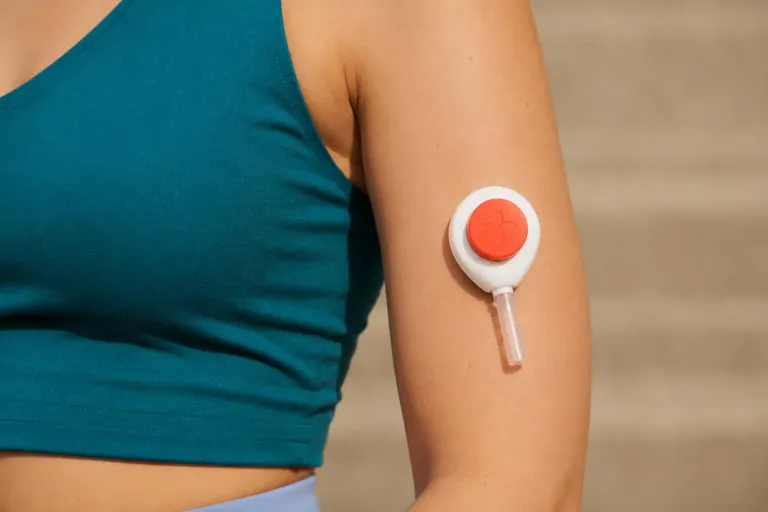
An at-home cholesterol test lets you collect a blood sample without visiting a lab. Mito offers two kits that include cholesterol testing: the At-Home Heart Health Test Kit and the At-Home Longevity Test Kit. Both measure a lipid profile, but they answer different questions. Heart Health adds specialized cardiovascular markers, while Longevity combines lipids with a broader set of inflammation, vitamin, albumin, and hormone markers.
Neither product is a single-marker cholesterol test. Each is a focused panel with cholesterol as part of its measured marker set. The product pages own current contents, availability, pricing, and checkout.
How an at-home cholesterol test works
Mito’s at-home cholesterol kits use a single-use Tasso+ device on the upper arm. A small puncture and gentle vacuum collect a capillary blood sample into a tube. You prepare the return package, use the prepaid label, and send the sample to the lab. Results appear in your Mito dashboard after the lab finishes testing.
The process has four steps:
- Choose and order a kit. Pick Heart Health for a cardiovascular-focused panel or Longevity for a broader baseline.
- Collect the sample at home. Follow the instructions included with the kit. The canonical product pages currently say that fasting is not required for either kit.
- Return the sample. Collect Monday through Friday and hand the prepaid package to FedEx on the same day, following the kit instructions.
- Review the results. The lab runs the sample and posts the completed results to your dashboard.
For the evidence behind capillary collection and the practical factors that affect a mailed sample, read Are At-Home Blood Tests Accurate?.
What an at-home cholesterol test measures
A standard lipid profile measures the fats and cholesterol-carrying particles used in routine cardiovascular assessment. The Centers for Disease Control and Prevention describes cholesterol screening as a blood test that checks cholesterol and triglyceride levels. The National Heart, Lung, and Blood Institute also identifies a lipid panel as the blood test used to diagnose high blood cholesterol.
Both Mito at-home cholesterol kits currently include:
The Heart Health kit also includes calculated VLDL cholesterol, ApoA1, Apolipoprotein B, hs-CRP, and total bilirubin. The Longevity kit includes a calculated triglyceride-to-HDL ratio and combines its lipid profile with vitamin D, hs-CRP, albumin, and sex-hormone markers.
The two kits do not measure identical panels. Check the current product page before ordering because kit composition and availability can change.
Which home cholesterol test kit is best for your task?
The best home cholesterol test kit is the one whose panel matches the question you want to answer. Heart Health is the more focused choice when your primary task is a detailed cardiovascular baseline. Longevity is the broader choice when you want cholesterol results alongside several non-lipid markers in one at-home collection.
| Choose | When it fits | Current cholesterol-related coverage |
|---|---|---|
| At-Home Heart Health Test Kit | You want a cardiovascular-focused panel that goes beyond a standard lipid profile. | Total cholesterol, HDL, LDL, triglycerides, calculated VLDL, ApoA1, ApoB, and hs-CRP |
| At-Home Longevity Test Kit | You want a broader at-home baseline that includes lipids with inflammation, vitamin D, albumin, and hormone markers. | Total cholesterol, HDL, LDL, triglycerides, calculated triglyceride-to-HDL ratio, and hs-CRP |
Choose Heart Health if ApoB, ApoA1, and calculated VLDL are important to your testing task. Choose Longevity if the value comes from combining a lipid profile with its wider marker set. If you only need an inexpensive standard lipid panel and can visit a collection site, compare that different path in the lipid panel cost guide.
What arrives in the kit?
Each supported kit includes the single-use upper-arm collector, collection materials, instructions, and prepaid return packaging. You do not need to schedule a phlebotomy appointment or travel to a collection site for these two products.
At-home collection has practical limits. A small capillary sample cannot support every test that a larger venous draw can. Mito therefore offers focused at-home kits rather than claiming that every lab test or comprehensive panel can be completed from home.
How to prepare and return the sample
Follow the instructions included with the exact kit you order. The current Heart Health and Longevity product pages both say to hydrate normally, warm your arm, stay seated during collection, and return the labeled sample and completed form the same day. Plan the collection for Monday through Friday and check the hours of your local FedEx return location before you begin.
Do not substitute general online preparation advice for the instructions supplied with your kit. The testing method, sample handling, and marker set determine what preparation is appropriate.
At-home cholesterol test questions
Can you test cholesterol at home? Yes. Mito’s Heart Health and Longevity kits let you collect an upper-arm capillary blood sample at home and mail it to a laboratory. Both include total cholesterol, HDL, LDL, and triglycerides.
Is a home cholesterol test the same as a home cholesterol test kit? In this context, both phrases describe the same task: ordering a kit, collecting the sample at home, and mailing it to a lab. Mito does not sell a generic single-marker cholesterol kit.
Which Mito kit has the most cardiovascular detail? The Heart Health kit is the cardiovascular- focused option. It adds ApoA1, ApoB, calculated VLDL, and hs-CRP to its standard lipid markers.
Which Mito kit has the broadest marker set? The Longevity kit combines cholesterol testing with inflammation, vitamin D, albumin, and sex-hormone markers. Its product page lists the current contents.
Do these kits replace all in-lab cholesterol testing? No. They provide focused at-home panels. Some broader or specialized testing still requires a conventional blood draw at a collection site.
Medical disclaimer
This guide explains testing access and kit selection. It does not interpret cholesterol results or provide medical advice, diagnosis, or treatment. Discuss personal results and testing needs with a qualified clinician.
Heart health lab tests

View current details, availability, and member pricing.
Apolipoprotein B (Apo B) Blood Test
Estimate the number of atherogenic lipoprotein particles that can enter the artery wall, not just the cholesterol they carry.
The standard cholesterol workup for cardiovascular risk, and the baseline for tracking diet, exercise, or statin response.
Lipoprotein(a) (Lp(a)) Blood Test
Reveal an inherited cardiovascular risk factor that a standard lipid panel can miss.