
Are At-Home Blood Tests Accurate? What the Science Actually Says
At-home blood tests can be as accurate as a lab draw — but it depends on how the sample is collected, how it's shipped, and who runs it. Here's what actually drives accuracy, and how to get a result you can trust.
- Published
- July 21, 2026
- Last updated
- September 9, 2026
- Read time
- 7 min read
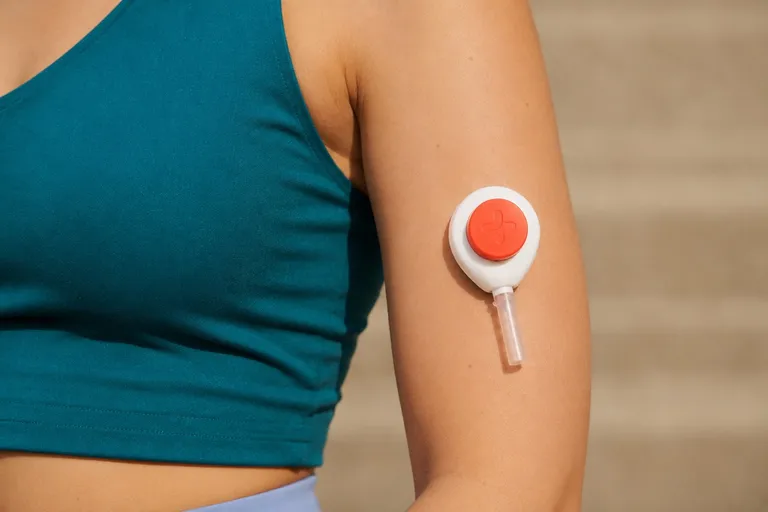
Table of contents
If you’re going to skip the lab and draw your own blood at the kitchen table, the first honest question is: can I actually trust the number that comes back?
It’s the right question to ask. “At-home blood test” covers everything from a serious clinical-grade collection to a novelty finger-prick kit, and the accuracy gap between those is huge. So the real answer isn’t a simple yes or no — it’s it depends on three things: how the sample is collected, how it survives the trip to the lab, and who actually runs it.
Quick summary
A well-collected at-home blood sample, shipped promptly and analyzed by a certified lab, produces results that line up closely with a traditional venous draw for most common markers — lipids, HbA1c, vitamin D, hsCRP, and many hormones. Accuracy problems come from the collection, not the concept: too little blood, a squeezed finger-prick sample, a kit that bakes in a hot mailbox for a week, or an uncertified lab. The way to get a trustworthy result is to use a good collection device, follow the prep and timing rules, and mail it back the same day.
What “accurate” actually means for a blood test
No blood test — at home or in a clinic — returns a single perfect number. Every result carries some normal variation from the instrument, the sample, and your own biology that day (whether you fasted, when you last exercised, how hydrated you were).
The right benchmark for an at-home test is simple: does it match what you’d get from a standard venous draw taken at the same time? For most markers, the answer is yes — the two correlate closely. A few analytes show small, predictable differences between capillary and venous blood, and good labs know about those and account for them. The failure cases aren’t subtle “off by a hair” issues; they’re results that get flagged, rejected, or thrown off by a bad sample.
The three things that decide accuracy
1. How the sample is collected
This is where most of the reputation problem comes from. The classic at-home kit is a finger-prick — you lance a fingertip and squeeze drops into a tiny tube. Squeezing (or “milking”) the finger mixes in tissue fluid and can rupture red blood cells, a problem called hemolysis. A hemolyzed sample can distort several markers or get rejected outright. Small finger-prick volumes also give the lab less to work with, so one under-filled tube can mean no result at all.
Mito’s at-home kits don’t use a finger-prick. They use the Tasso+ collector, a single-use device that sits on your upper arm, makes a tiny painless puncture, and uses a gentle vacuum to draw a capillary sample — no squeezing, no repeated pricking, and a larger, cleaner sample than a fingertip gives up. That collection method is a big part of why an at-home result can stand next to a lab draw. Learn more about our at-home kits here.
2. How the sample survives shipping
A blood sample is perishable. Heat, time, and rough handling degrade it, and a sample that spends five days in a hot mailbox is not the same sample the lab needs. This is a real limitation of some mail-back kits.
Two things protect the result: sample stability (the collection materials are designed to keep blood analyzable in transit) and speed. Once you’ve collected your sample, Mito’s kits ship it back overnight with the prepaid, expedited return packaging included in every kit — so your blood reaches the lab fast, while it’s still fresh, instead of sitting in transit for days. The single most important thing you control here is timing: collect and drop it in the mail the same day rather than letting the kit sit on a shelf for a week.
3. Who runs the sample
Once your sample reaches the lab, an at-home kit and an in-person draw go through the same certified lab process — the same instruments, the same quality controls. A result is only as good as the lab behind it, and this is the part that quietly separates a real diagnostic test from a gimmick. With Mito, your at-home sample is run by the lab and then reviewed by a clinician, and your numbers post to the same dashboard you’d get from a full in-lab panel — the experience is identical, minus the trip.
Why the number of markers decides whether you can test at home
There’s one more factor that has nothing to do with accuracy and everything to do with feasibility: how many markers you’re testing at once.
An upper-arm collector draws a fixed, modest amount of blood — plenty for a focused panel, but not for a sprawling one. Every marker a lab runs consumes sample volume, and some assays need their own dedicated tube. So the more markers you stack onto a single test, the more blood the lab needs — and at a certain breadth, a single at-home collector simply can’t supply enough. That’s a hard physical limit, not a quality shortcut.
This is why at-home collection at Mito is intentionally limited to seven focused kits. Each one is built around a single question and a tight, curated marker set that a Tasso+ collection can actually fill:
| At-home kit | The question it answers |
|---|---|
| Longevity | The broadest starting point — lipids, inflammation, vitamin D, and a full sex-hormone picture |
| Heart Health | Cardiovascular risk — ApoB, the full lipid panel, and hsCRP |
| Weight Loss | The hormones behind stubborn weight — cortisol, thyroid, DHEA-S, and sex hormones |
| Men’s Hormone & Thyroid | Male hormone and thyroid balance in one collection |
| Women’s Hormone | Reproductive and cycle hormones — FSH, LH, estradiol, progesterone, and more |
| TRT Monitoring | Staying on top of testosterone therapy — testosterone, estradiol, and hematocrit |
| Testosterone | A single, simple total testosterone check |
Each kit is deliberately targeted so it fits inside what an at-home draw can accurately deliver — and so you test exactly what you care about, nothing you don’t.
More comprehensive testing means a venous draw, though not necessarily a lab visit. Mito’s full panels (Essential, Core, and Ultra) and any à-la-carte markers cover far more ground than a single collector’s worth of blood allows, so they use a standard venous draw. You can give that sample at a collection site near you, or request an at-home blood draw and have a licensed phlebotomist come to you for a flat $99. Think of the at-home kits as the low-friction way to track a focused set of markers regularly, and the full panels as the deep, once-or-twice-a-year comprehensive picture.
How to get the most accurate at-home result
The concept is sound; the accuracy is mostly in your hands during collection. A few rules go a long way:
- Follow the prep instructions. If your panel calls for fasting, fast. Hydrate well beforehand — it genuinely helps the sample draw.
- Time it right. For hormones especially, when you test matters. Women testing reproductive hormones should mind their cycle phase — see our guide on timing blood tests around your period.
- Collect cleanly. Use the collector as directed, let it fill fully, and don’t squeeze. A complete sample is an accurate sample.
- Mail it back the same day. Don’t let the kit sit. The faster it reaches the lab, the more the result reflects your actual biology.
- Match your details exactly. The lab links your sample to your order using your name and date of birth. A mismatch can mean the sample can’t be run — accurate details protect your result.
The bottom line
Are at-home blood tests accurate? When they’re done right, yes. A quality upper-arm collection, shipped stable and fast, run by the same certified lab and reviewed by a clinician, gives you a result you can act on — and track over time from home. The kits aren’t a replacement for comprehensive testing, but for the markers that benefit from regular checking, they remove the biggest reason people skip it.
All seven kits are HSA/FSA eligible, and Mito members pay our at-cost lab price. Shop the at-home test kits and pick the panel that answers your question.
Popular lab tests
Comprehensive Metabolic Panel (CMP)
A 14-marker snapshot of kidney function, liver function, electrolytes, and blood sugar in one draw.
Complete Blood Count (CBC) with Differential and Platelet Count Test
A broad screen of red cells, white cells, and platelets that anchors most checkups.
The standard cholesterol workup for cardiovascular risk, and the baseline for tracking diet, exercise, or statin response.
Vitamin D, 25-Hydroxy (Calcidiol) Blood Test
The standard measure of vitamin D status, reflecting what you build from sun, diet, and supplements.