DEXA Scan for Body Composition: What It Measures, How Accurate It Is, and Who It Is For
What a DEXA body composition scan measures, how it differs from a bone density scan, how accurate and repeatable it is, how to prepare, and when it is worth doing.
- Published
- May 10, 2024
- Last updated
- October 5, 2026
- Read time
- 12 min read
- Medically reviewed by
-
 Rhonda Collins, FNP-C

Table of contents
A DEXA scan for body composition measures how much of your body is fat mass, lean mass, and bone. It reports those amounts for the whole body and for each region, such as the arms, legs, and trunk. Many scanners also estimate visceral fat, the fat stored around the abdominal organs, and the same scan gives a bone mineral density reading. DEXA, also written DXA, stands for dual-energy X-ray absorptiometry. A 30-year review of DXA body composition [1] describes how the method has grown from whole-body percent fat into regional measures with clinical uses.
Quick answers
- What it measures: total and regional fat mass, lean mass, a visceral fat estimate, and bone mineral density.
- How accurate it is: repeat scans on the same machine agree closely, but absolute values differ from reference methods and between scanner brands. The trend on one machine is the most reliable number.
- How to prepare: scan under the same conditions each time, and avoid intense exercise, heavy meals, and large amounts of fluid beforehand.
- Whether it is worth it: most useful when you will track a change over time or act on the result.
- What it costs: see Mito’s DEXA scan page for the current price and booking.
- Body composition or bone density scan: a bone density scan is a DEXA scan of the hip and lower spine, and it is the one used to diagnose osteoporosis. A body composition scan covers the whole body to measure fat and lean mass. See which DEXA scan you need.
What does a DEXA body composition scan measure?
A DEXA scanner passes two X-ray beams at different energy levels over your body while you lie still on a padded table. Bone, fat, and lean tissue absorb the two energies differently, so the scanner can separate each part of the body into bone mineral, fat, and lean soft tissue. A typical report includes:
- Fat mass and body fat percentage: for the whole body and for each region, which shows where you carry fat, not only how much.
- Lean mass: everything that is not fat or bone, including muscle, organs, and the water they hold. It is not a pure muscle measurement, which matters when you compare scans (see the preparation section below).
- Regional and left-right balance: lean and fat mass for each arm, leg, and the trunk, so you can compare one side of the body with the other.
- Visceral fat estimate: an estimate of the fat around the abdominal organs, calculated from the abdominal region of the scan.
- Bone mineral density: how much mineral is in the measured bone. Bone density results are usually reported as T-scores and Z-scores. Mito’s guide on how to read DEXA scan results explains which score applies to you and what it compares. The whole-body bone reading from a body composition scan is not an osteoporosis test. Guidelines use a hip and spine scan, such as the DEXA Bone Density Scan, for that.
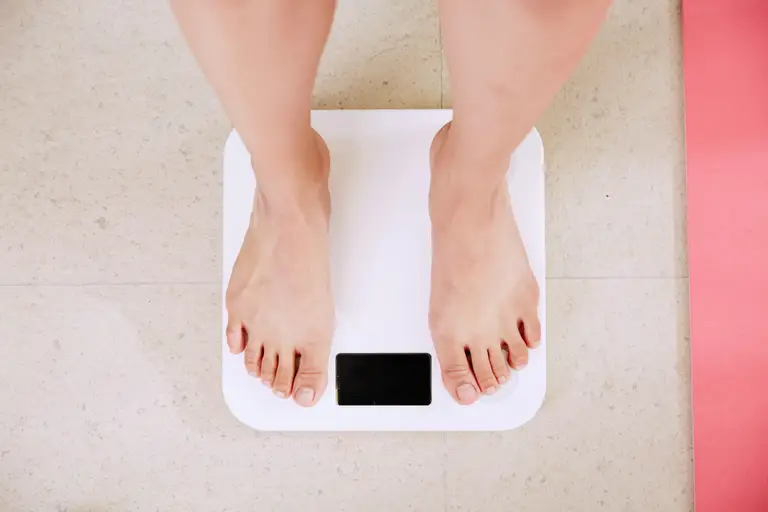
A scale gives one number. DEXA splits that number into fat, lean tissue, and bone, which is why two people with the same weight and BMI can have very different reports.
DEXA body composition scan vs bone density scan: which do you need?
A bone density scan is a DEXA scan. DEXA is the method, not the test. Mito offers two DEXA scans that point the same technique at different parts of the body and answer different questions: the body composition scan asks what your body is made of, and the bone density scan asks how strong your bones are at the sites where osteoporosis is diagnosed.
| DEXA body composition scan | DEXA bone density scan | |
|---|---|---|
| What it scans | Your whole body in one pass | Your hip and lower spine |
| What you learn | Fat, lean mass, and visceral fat, by region, plus a whole-body bone reading | Bone density T-score and Z-score, plus fracture risk if you are 40 or older |
| Diagnoses osteoporosis | No | Yes, with your clinician |
| Best for | Weight loss, training, muscle on a GLP-1, visceral fat | Osteoporosis screening and bone health |
Why the whole-body bone reading is not enough. The ISCD adult official positions [2] base an osteoporosis diagnosis on the T-score of the lumbar spine, total hip, or femoral neck. A body composition scan reports bone for the whole skeleton, which is useful context but not one of those sites. A bone density scan measures the hip and lower spine directly and reports the T-score and Z-score that the DEXA results guide explains.
Choose the body composition scan when your question is about fat, muscle, or where you carry weight: tracking a training or weight-loss phase, protecting muscle on a GLP-1 medicine, or following a visceral fat estimate over time.
Choose the bone density scan when your question is about bone loss or fracture risk. The US Preventive Services Task Force [3] recommends osteoporosis screening for women 65 and older and for postmenopausal women under 65 at increased risk. The Bone Health and Osteoporosis Foundation [4] also recommends testing for men 70 and older, women 50 to 64 and men 50 to 69 with risk factors, and anyone who breaks a bone after age 50. If you fall in one of those groups, the DEXA Bone Density Scan page explains when insurance or Medicare usually covers the test.
Consider both when you have both questions, for example if you are changing your body composition and also fall into one of the screening groups above. One scan does not stand in for the other: the body composition scan cannot diagnose osteoporosis, and the bone density scan does not measure fat or lean mass. Neither scan is done during pregnancy. How often to repeat each one is covered in the section on repeat scans below.
See the DEXA Body Composition Scan and the DEXA Bone Density Scan for what each includes, the current price, and booking.
How accurate is a DEXA scan for body fat?
DEXA is very repeatable on the same machine, but its absolute numbers are estimates. Accuracy and repeatability are separate questions, and they lead to different advice.
Repeatability (precision). In a 2026 study of 44 healthy women aged 40 to 65 [5], duplicate DXA scans had a precision error of about 1.2% for body fat percentage and fat mass, and 0.7% for fat-free mass. The International Society for Clinical Densitometry (ISCD) sets the minimum acceptable precision [2] for an individual technologist measuring DXA body composition at 3% for total fat mass, 2% for total lean mass, and 2% for percent fat.
Accuracy against a reference method. A review in Obesity [6] found that most studies comparing DXA body composition with the four-compartment model, the reference method, observed significant differences between the two. The same study of 44 women found that bioelectrical impedance and 3D body scanning were not interchangeable with DXA for an individual, so numbers from a smart scale and a DEXA report should not be compared directly.
Different machines give different numbers. RadiologyInfo [7] notes that bone density measured on different DXA equipment cannot be directly compared, and advises follow-up scans at the same institution, ideally on the same machine. For body composition, ISCD positions allow changes to be compared across two systems of the same make and model when they have been cross-calibrated.
Visceral fat is the least certain number. In 124 adults scanned with both DXA and CT [8], DXA visceral fat tracked closely with the CT measurement. In 36 women with severe obesity followed after bariatric surgery [9], however, DXA estimated less than half the visceral fat measured by MRI at baseline and underestimated how much it fell. Those authors concluded that the DXA estimate may show the direction of change but should not be used to compare people or size a change precisely.
The practical takeaway: compare your own scans on the same machine, under the same conditions, and treat any single number as an estimate.
How to prepare for a DEXA body composition scan
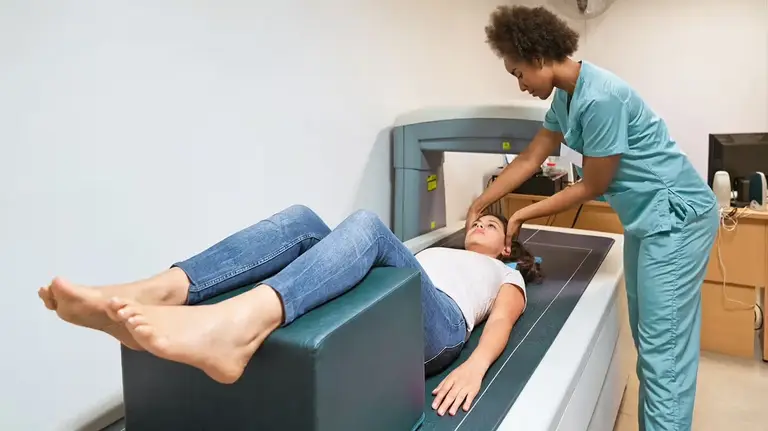
Preparation matters because food, fluid, and exercise shift body water, and DEXA counts body water as lean mass. Mito’s DEXA scan page gives this guidance:
- No fasting is required.
- Avoid heavy meals, large fluid volumes, and intense exercise immediately beforehand.
- Wear light clothing without metal.
- Tell the technician if there is any chance you are pregnant.
- For repeat scans, keep the same time of day and similar hydration.
The research supports keeping conditions consistent. In 55 trained adults [10], an exercise session with usual food and fluid intake shifted body composition estimates by trivial to small amounts and raised the measurement error by about 10%. The authors found that scanning fasted and rested was the simplest way to reduce this noise. In 21 cyclists tracked through a training block [11], scans taken without a standardized protocol produced roughly double the variation in lean and total mass change compared with standardized scans.
Does creatine affect a DEXA scan? It can change the lean mass estimate. In a 42-day trial in 13 female collegiate dancers [12], creatine supplementation raised both total body water and DXA lean mass. The authors noted that larger studies are needed to show whether this reflects added muscle. If you use creatine, a change in your routine between scans can move your lean mass number partly through water, so compare scans taken on the same routine.
For a bone density exam, RadiologyInfo [7] advises not taking calcium supplements for at least 24 hours beforehand. It also describes the radiation dose of a bone density scan as less than one-tenth of a standard chest X-ray and less than a day’s exposure to natural background radiation.
Is a DEXA body scan worth it?
A DEXA body composition scan is worth it when the result will change what you do or show whether a change is working. Scale weight cannot tell you whether weight you lost or gained was fat or lean tissue. DEXA estimates changes in fat mass and lean mass, but its lean-mass reading includes water and cannot distinguish hydration changes from muscle changes.
It tends to be most useful for:
- Tracking a training or weight-loss phase: confirming whether lost weight came from fat while lean mass held steady.
- Midlife and older adults concerned about muscle loss: for age-related muscle loss (sarcopenia), a regional lean mass trend is more informative than a single reading.
- Clinical situations: ISCD lists DXA body composition with regional analysis for people with muscle weakness or poor physical functioning, people with obesity undergoing bariatric surgery, and people living with HIV.
- Adding structure to metabolic blood work: a visceral fat estimate alongside metabolic markers gives a fuller picture than either alone (see the blood markers section below).
It is less useful when you want a single number to compare against someone else’s scan from a different machine, or when you plan to rescan before a real change could exceed the measurement error. For cost, the current price and booking details are on Mito’s DEXA scan page.
How often should you repeat a DEXA scan?
There is no single recommended interval for body composition scans. Repeat a scan when the change you expect is larger than the scanner’s measurement error. For bone density, ISCD positions state that each facility should determine its own precision error and least significant change, and that repeat testing intervals must be individualized to age, baseline results, treatment, and risk factors.
Because repeat-scan error for fat and lean mass was about 1% to 2% on the same machine in the studies above, a rescan after a short gap mostly shows noise unless your body composition changed substantially. A practical approach is to schedule the next scan at the end of a training or nutrition phase rather than on a fixed calendar, on the same machine, at the same time of day, with the same preparation.
How DEXA results pair with blood markers

DEXA shows how your body is built. Blood tests show how it is working. Read together, they answer questions neither can answer alone.
- Visceral fat and metabolic markers: visceral fat, rather than fat under the skin, is the stronger predictor of adverse outcomes, according to the DXA and CT validation study [8] above. Mito’s article on visceral fat and its hidden risk covers why. Pairing a visceral fat estimate with fasting insulin and HbA1c shows whether fat distribution is matched by early changes in blood sugar control. The guide to insulin resistance signs and tests explains how those markers fit together.
- Lean mass and creatinine: creatinine is produced mainly by skeletal muscle, so a muscular person can have a higher blood creatinine than their kidney function alone would suggest. A lean mass result helps put that number in context.
- Lean mass and hormones: when lean mass falls without an obvious training or diet reason, total testosterone is one of the hormone markers that can add context.
- Bone density and bone-related markers: calcium and vitamin D are part of bone metabolism. If a bone density score is flagged as low, the DEXA results guide explains the scores, and your doctor can decide whether further evaluation is needed.
Next step: book a DEXA scan
Mito’s DEXA scan page lists what the scan includes, how to prepare, the current price, and how to book. Use the same scanner and the same preparation for each follow-up, and compare the results with your blood markers rather than reading either on its own.
Resources
- Shepherd JA, et al. Body composition by DXA. Bone. 2017.
- International Society for Clinical Densitometry. Adult official positions.
- US Preventive Services Task Force. Recommendation: Osteoporosis to Prevent Fractures: Screening.
- Bone Health and Osteoporosis Foundation. Bone Density Test, Osteoporosis Screening & T-score Interpretation.
- Oliver CJ, et al. Precision, least significant change and validity of body composition estimates from bioelectrical impedance analysis, 3D-optical scanning, and dual X-ray absorptiometry. Clin Nutr ESPEN. 2026.
- Toombs RJ, et al. The impact of recent technological advances on the trueness and precision of DXA to assess body composition. Obesity. 2012.
- RadiologyInfo.org. Bone density scan (DEXA or DXA).
- Kaul S, et al. Dual-energy X-ray absorptiometry for quantification of visceral fat. Obesity. 2012.
- Ashby-Thompson M, et al. Validity of dual-energy x-ray absorptiometry for estimation of visceral adipose tissue and visceral adipose tissue change after surgery-induced weight loss in women with severe obesity. Obesity. 2022.
- Nana A, et al. Effects of exercise sessions on DXA measurements of body composition in active people. Med Sci Sports Exerc. 2013.
- Nana A, et al. Importance of standardized DXA protocol for assessing physique changes in athletes. Int J Sport Nutr Exerc Metab. 2016.
- Brooks SJ, et al. Creatine monohydrate supplementation changes total body water and DXA lean mass estimates in female collegiate dancers. J Int Soc Sports Nutr. 2023.
Frequently asked questions
Is a DEXA scan the same as a bone density scan?
A bone density scan is one kind of DEXA scan. DEXA, also written DXA, is the X-ray method, and it can be aimed at the hip and lower spine to measure bone density or passed over the whole body to measure fat, lean mass, and bone. Every bone density scan is a DEXA scan, but not every DEXA scan is a test for osteoporosis.
Does a DEXA body composition scan diagnose osteoporosis?
No. It includes a whole-body bone reading, but the International Society for Clinical Densitometry bases an osteoporosis diagnosis on the T-score of the lumbar spine, total hip, or femoral neck. That reading comes from a hip and spine bone density scan.
Does a bone density scan measure body fat or muscle?
No. A bone density scan reads bone at the hip and lower spine only. Fat mass, lean mass, and visceral fat come from a whole-body DEXA body composition scan.
Who is usually advised to get a bone density scan?
The US Preventive Services Task Force recommends screening for women 65 and older and for postmenopausal women under 65 at increased risk. The Bone Health and Osteoporosis Foundation also recommends testing for men 70 and older, women 50 to 64 and men 50 to 69 with risk factors, and anyone who breaks a bone after age 50.
Tests for training and performance

Measures your body fat, lean muscle and visceral fat, region by region, in about 10 minutes.
Testosterone, Free and Total Blood Test
A complete view of testosterone: total levels plus the free portion available for your body to use.
Insulin-Like Growth Factor 1 (IGF-1) Blood Test
Understand growth hormone activity with a steadier blood marker.
Complete Blood Count (CBC) with Differential and Platelet Count Test
A broad screen of red cells, white cells, and platelets that anchors most checkups.