
Why Are My Allergies Worse at Home?
Home allergy symptoms often come from dust mites, mold, pet dander, cockroach allergens, or irritants that build up indoors. Here's how to read the pattern and choose the right test category.
Published July 31, 2026 | 10 min read
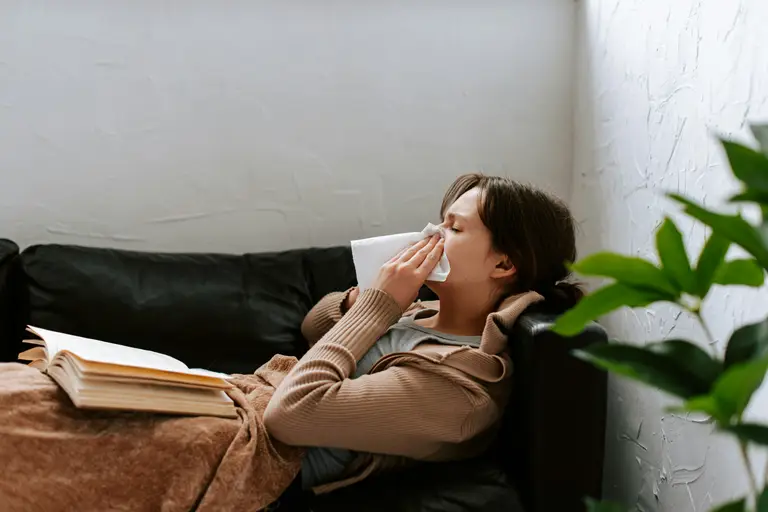
Table of contents
If your allergies get worse when you walk through your front door, wake up in the morning, sit on the couch, or clean the bedroom, the trigger may not be outside. It may be inside the house.
Indoor allergies can feel confusing because home is supposed to be where you escape pollen and outdoor air. But dust mites, mold, pet dander, cockroach allergens, and tracked-in pollen can build up indoors. So can non-allergic irritants such as smoke, fragrance, cleaning products, and dry air. The symptoms can look similar, but the solution depends on which pattern fits.
Quick summary
Allergies that are worse at home often point toward indoor allergens: dust mites in bedding and upholstered furniture, pet dander that settles into soft surfaces, mold in damp spaces, cockroach or rodent allergens, or pollen brought indoors on shoes, clothing, hair, and pets. Specific IgE blood testing can help identify sensitization to dust mites, pet dander, mold, cockroach, and related indoor triggers. It does not prove that the allergen is present in your home, and it does not replace fixing moisture, ventilation, pest, or cleaning problems.
Why home can make allergy symptoms worse
Indoor allergens behave differently from outdoor pollen. They do not always spike for a few weeks and then disappear. They can accumulate in the places you spend the most time: mattresses, pillows, rugs, couches, carpets, pet beds, curtains, closets, basements, and HVAC systems.
That is why home allergy symptoms often show up as a pattern:
- Morning congestion: symptoms are strongest after sleeping.
- Bedroom flares: sneezing, itchy eyes, or cough worsen in bed or when changing sheets.
- Cleaning flares: dusting, vacuuming, or moving stored items triggers symptoms.
- Damp-room flares: symptoms worsen in basements, bathrooms, laundry rooms, or musty spaces.
- Pet-zone flares: symptoms are worse on couches, rugs, cars, or rooms where pets spend time.
- Travel improvement: symptoms ease when you sleep somewhere else.
That pattern does not prove the trigger, but it tells you where to start.
Dust mites: worse in bed, in the morning, or after cleaning
Dust mites are microscopic indoor allergens that thrive in warm, humid environments. Their allergen is not “dust” itself. It comes from mite bodies and waste particles that settle into soft surfaces and become airborne when disturbed.
Dust mite allergy often fits this pattern:
- Stuffy or runny nose after waking.
- Sneezing in bed or while making the bed.
- Itchy, watery eyes in the bedroom.
- Coughing, wheezing, or asthma symptoms indoors.
- Symptoms after vacuuming, dusting, or moving stored fabric items.
- Worse symptoms in humid months or homes with carpeting.
The highest-yield rooms are usually the bedroom and living room because mattresses, pillows, upholstered furniture, rugs, and curtains act like reservoirs. Dust mites do not bite, and you usually cannot see them. A clean-looking bedroom can still hold dust mite allergen if soft surfaces are not protected or washed.
What testing can tell you
Specific IgE testing can check sensitization to dust mite allergens, commonly including Dermatophagoides pteronyssinus and Dermatophagoides farinae. A positive result means your immune system recognizes that allergen. It does not measure how much dust mite allergen is in your mattress.
Best fit: dust mite or indoor respiratory IgE testing if symptoms are strongest in bed, in the morning, after cleaning, or around carpets and upholstered furniture.
Mold: worse in damp, musty, or water-damaged spaces
Mold allergy is different from general “mold exposure” concern. A mold IgE test looks for allergic sensitization to specific molds. It does not inspect your home, measure spores in the air, or diagnose toxin exposure.
Mold allergy often fits this pattern:
- Congestion, sneezing, cough, or itchy eyes in damp spaces.
- Symptoms that flare in basements, bathrooms, laundry rooms, or rooms with past leaks.
- Symptoms that worsen in humid weather.
- Asthma symptoms in musty environments.
- Skin or eye irritation around visible mold or water damage.
Common allergy-related molds include Alternaria, Aspergillus, Cladosporium, and Penicillium, though panels vary by lab. Mold can also irritate the eyes, nose, throat, skin, and lungs even in people who are not mold-allergic, so a negative mold IgE result does not make a damp building healthy.
What testing can tell you
Mold IgE testing can help answer “am I sensitized to this mold category?” It cannot answer “is there mold behind my wall?” or “is this building safe?” If there is visible mold, a musty smell, or water damage, the environmental problem still needs to be addressed.
Best fit: mold IgE or indoor respiratory IgE testing if symptoms track with damp rooms, musty spaces, water damage, high humidity, or asthma flares around mold.
Pets: worse on couches, rugs, cars, or in certain homes
Pet allergy is not just about fur. Allergens can come from dander, saliva, urine, and skin particles. They stick to clothing and soft surfaces, so symptoms can happen even when the animal is not in the room.
Pet allergy often fits this pattern:
- Sneezing, congestion, itchy eyes, or cough around cats, dogs, or other animals.
- Symptoms in homes with pets, even after the pet leaves the room.
- Worse symptoms on couches, rugs, blankets, or in cars where pets ride.
- Symptoms after hugging, grooming, or cleaning up after an animal.
- Asthma or eczema flares around animal exposure.
Cat and dog allergens can persist in a home, especially in carpeting, upholstered furniture, bedding, and HVAC dust. That means the timing is not always instant. Some people notice symptoms only after a longer visit or after sleeping in a pet-heavy home.
What testing can tell you
Specific IgE testing can check sensitization to cat dander, dog dander, horse dander, mouse urine protein, or other animal allergens depending on the panel. If symptoms are limited to one animal, targeted testing may be enough. If symptoms are broader, an indoor respiratory panel may make more sense.
Best fit: cat, dog, animal dander, or indoor respiratory IgE testing if symptoms reliably follow animal exposure or pet-heavy indoor spaces.
Cockroach and rodents: overlooked indoor allergy triggers
Cockroach and rodent allergens are easy to overlook because people do not always see pests. Allergen can come from droppings, saliva, body parts, and urine, and it can persist in dust.
This category is more likely when:
- Symptoms are worse in kitchens, basements, older buildings, apartments, or shared housing.
- There are signs of pests, droppings, water leaks, or food crumbs.
- Asthma symptoms are worse indoors.
- Symptoms persist despite dust mite and pet control.
Testing can include cockroach IgE and sometimes mouse-related allergens. But pest control and moisture control matter even more than the lab result. Cockroaches and rodents need food, water, and entry points. Removing those sources is part of reducing exposure.
Best fit: cockroach or indoor respiratory IgE testing if symptoms occur in buildings with pest risk, especially when asthma is part of the picture.
It may not be allergy: indoor irritants can mimic allergy symptoms
Not every home-triggered symptom is IgE allergy. Irritants can cause congestion, cough, throat irritation, watery eyes, headaches, or chest tightness without an allergic antibody response.
Common indoor irritants include:
- Smoke or vaping residue.
- Strong fragrance, candles, incense, or air fresheners.
- Cleaning sprays.
- Paint, solvents, new furniture, or renovation materials.
- Gas stove combustion byproducts.
- Dry air.
- Poor ventilation.
- Fine dust from construction or hobbies.
If symptoms happen with strong smells, chemicals, smoke, or poor ventilation, allergy testing may be normal. That does not mean the symptoms are not real. It means the exposure category is different.
Best fit: start with exposure reduction and ventilation changes when symptoms track with odors, smoke, cleaning products, renovation, or dry air rather than a specific allergen.
How to use room-by-room clues
Your home pattern can narrow the likely trigger before you test.
| Where symptoms are worse | Likely trigger categories | Testing to consider |
|---|---|---|
| Bed or bedroom | Dust mites, pet dander, mold, pollen on bedding | Dust mite, pet dander, mold, or indoor respiratory IgE |
| Basement, bathroom, laundry room | Mold, dampness, dust mites in humidity | Mold IgE or indoor respiratory IgE |
| Couch, rugs, carpets, curtains | Dust mites, pet dander, pollen, dust reservoirs | Dust mite, pet dander, or indoor respiratory IgE |
| Kitchen or apartment building | Cockroach, rodents, mold, cleaning products | Cockroach or indoor respiratory IgE, plus exposure control |
| After cleaning | Dust mite allergen, dust, mold spores, cleaning irritants | Indoor respiratory IgE if symptoms are allergy-like |
| After pets are nearby | Cat, dog, horse, small animal dander | Animal dander or indoor respiratory IgE |
What an indoor allergy blood test can and cannot do
An indoor allergy blood test usually means specific IgE testing for allergens such as dust mites, cat dander, dog dander, cockroach, mouse urine protein, and molds. Depending on the panel, it may also include outdoor allergens because pollen can travel indoors.
It can help answer
- Whether you are sensitized to major indoor allergens.
- Whether dust mite, pet, mold, or cockroach results match your symptoms.
- Whether a broader respiratory allergy pattern is present.
- Which trigger category is worth prioritizing for avoidance.
It cannot answer
- Whether there is mold hidden in the wall.
- Whether your HVAC system is contaminated.
- Whether your home is safe after water damage.
- Whether a positive allergen is definitely causing symptoms.
- Whether fragrance, smoke, or chemical irritation is the main cause.
This is the same principle as other allergy testing: results are most useful when they match the history.
For blood testing versus skin testing, see How to Test for Environmental Allergies.
What to change while you are figuring it out
You do not need to wait for a test result before reducing the most common indoor triggers.
High-yield steps:
- Wash bedding regularly and use dust mite covers on pillows and mattresses.
- Keep humidity controlled, especially in bedrooms, bathrooms, and basements.
- Fix leaks quickly and dry wet materials.
- Remove visible mold safely and address the moisture source.
- Vacuum with a high-quality filter and avoid stirring dust into the air.
- Reduce clutter and soft-surface dust reservoirs where possible.
- Keep pets out of the bedroom if pet allergy is suspected.
- Clean pet bedding, upholstery, and high-contact surfaces.
- Seal pest entry points and remove food and water sources.
- Avoid fragrance, smoke, and harsh cleaning sprays if they trigger symptoms.
If you have asthma, wheezing, shortness of breath, recurrent sinus infections, or symptoms that interfere with sleep, talk with a clinician. Indoor allergen control is useful, but persistent breathing symptoms deserve medical evaluation.
How Mito helps organize indoor allergy testing
Mito organizes allergy testing by trigger category so you do not have to search through hundreds of individual allergens first. For home-related symptoms, the most relevant starting categories are usually:
- Indoor respiratory allergy testing: dust mites, cockroach, pet dander, mouse urine protein, and indoor molds.
- Mold testing: Alternaria, Aspergillus, Cladosporium, Penicillium, and other mold markers depending on the panel.
- Pet and animal testing: cat, dog, horse, and other animal dander markers.
- Seasonal testing: useful if pollen may be entering the home on clothing, hair, pets, shoes, or open windows.
The bottom line
If your allergies are worse at home, look for the pattern before choosing a test. Morning and bedroom symptoms often point toward dust mites. Damp or musty spaces point toward mold and moisture. Symptoms around couches, rugs, cars, or certain homes can point toward pet dander. Kitchens, apartments, and older buildings can raise cockroach or rodent questions. Strong smells and cleaning products may be irritants, not allergies.
Specific IgE testing can help identify sensitization to indoor allergens, but the result only matters when it matches your real-world symptoms. The best next step is usually both: reduce the likely exposure at home and test the category that fits your pattern.
Sources
- AAAAI: Indoor Allergens
- AAAAI: Managing Indoor Allergen Culprits
- ACAAI: Dust Allergy
- ACAAI: Home Allergy Management
- ACAAI: Environmental Allergy Avoidance
- CDC: Mold
- EPA: A Brief Guide to Mold, Moisture and Your Home
- EPA: Molds and Health for Public Health Professionals
- Mayo Clinic: Mold Allergy Symptoms and Causes
Inflammation tests

View current details, availability, and member pricing.
C-Reactive Protein, High Sensitivity (hs-CRP) Blood Test
Add an inflammation-sensitive signal to a complete cardiovascular risk assessment.
An amino acid tied to B-vitamin metabolism and cardiovascular risk that routine cholesterol panels do not capture.
Understand your iron stores with a standalone ferritin blood test.