Whole-Genome Sequencing With Mito Health: What to Know
Mito Health now offers whole-genome sequencing so members can own a durable genetic baseline that becomes more useful as science advances.
- Published
- August 10, 2026
- Read time
- 7 min read

Table of contents
Most health data is a snapshot.
Your bloodwork captures what is happening right now. Your sleep score reflects last night. Your VO2 max, body composition, glucose, hormones, inflammation, and nutrient markers all move as your life moves.
That is exactly why Mito tracks them. The body changes, and good preventive care should change with it.
Your genome is different.
It is the baseline you are born with. It does not tell the whole story of your health, but it gives you a permanent layer of context that can sit underneath everything else you measure. It can help explain why two people respond differently to the same lifestyle, the same medication, the same diet, or the same risk factor. It can also become more useful over time as genomic science improves.
That is why Mito Health is adding whole-genome sequencing to the preventive health stack.
Members can now access whole-genome sequencing at two sequencing depths: 3x whole-genome sequencing and 30x whole-genome sequencing. Both options read across your whole genome rather than checking a fixed list of genotyping-array sites. The goal is simple: give you durable ownership of your genetic data, then help you use it responsibly as one part of a broader health picture.
Why Genome Data Belongs in Preventive Health
Preventive health works best when you can see risk early enough to act.
Bloodwork can show whether inflammation is rising, ApoB is high, glucose regulation is drifting, or iron stores are low. Imaging can reveal structural findings before symptoms appear. A microbiome test can add context about digestion, inflammation, and gut ecology. Medical history shows what has already happened to you and your family.
Genome data adds another layer: inherited context.
It can help explain predispositions that were already present before your first lab draw. For some people, that context is about common traits. For others, it is about inherited risk, carrier status, or how their body may process certain medications. For everyone, it is a long-lived data layer that can be revisited as interpretation improves.
That last point matters. Sequencing your genome is not only about what can be interpreted today. It is also about owning the raw material for future interpretation. Scientific understanding changes. Variant databases improve. New research links genetic patterns to new clinical questions. A genome file you control can be reanalyzed later without starting from zero.
What Makes Our Whole-Genome Sequencing Different
Many consumer DNA products use genotyping arrays. Those tests look at a selected set of known sites across the genome. They can be useful for ancestry, traits, and some common variants, but they are not the same as sequencing the genome itself.
Whole-genome sequencing reads across your DNA more broadly. The CDC describes whole-genome sequencing as the largest genetic test because it looks at all of a person’s DNA, not just genes or a preset panel of variants.
That breadth is why whole-genome sequencing is a more durable foundation. It is not limited to the questions a chip was designed to answer. It can support many kinds of future analysis, from common variant interpretation to more clinically oriented review when the sequencing depth is high enough and the interpretation is handled appropriately.
In plain English: a genotyping array is a checklist. Whole-genome sequencing is closer to owning the source material.
Why Mito Is Launching This Now
Mito’s view of health has always been systems-based.
No single marker explains a person. ApoB matters, but so do inflammation, insulin resistance, blood pressure, sleep, nutrition, fitness, family history, and the care plan that ties those signals together. We built Mito around that idea: give members access to better data, then make it usable with longitudinal tracking, AI-supported analysis, and clinician oversight where it matters.
Genome data fits naturally into that model.
It is not a replacement for bloodwork. It is not a shortcut around clinical care. It is not a magic answer key.
It is context.
For example, if someone has persistently high LDL cholesterol or ApoB, genome data may add context about inherited lipid risk. If someone is considering a medication, pharmacogenomic findings may be worth discussing with a clinician. If someone is planning a family, carrier information may matter. If someone wants to understand ancestry-linked or trait-linked patterns, the common-variant layer can make the information more personal.
The value comes from combining layers. Your genome may explain predisposition. Your biomarkers show what is actually happening now. Your habits, environment, and care plan determine what changes next.
What You Can Learn
Mito’s launch includes two whole-genome sequencing options.
The 3x depth is a light read across the whole genome. It is best for the common-variant layer: ancestry, traits, polygenic scores, and exploratory genome ownership.
The 30x depth is the clinical-grade depth. It includes the common-variant layer and adds stronger confidence for rare and pathogenic variants, carrier status, ClinVar-linked findings, and pharmacogenomics.
Depth drives confidence. If your primary goal is health-oriented genome data, 30x is usually the stronger choice. If your goal is exploration, ancestry, traits, and owning a whole-genome file at a lower price, 3x can make sense.
Ownership Matters
The most important shift is not just that genome sequencing is becoming more accessible. It is that people should be able to own their own data.
Your genome should not be trapped in a one-time report. It should not disappear behind a dashboard that only answers today’s questions. It should be portable, downloadable, and useful beyond the first interpretation.
That is why raw genome files matter.
A static report can become outdated. A genome file can be reinterpreted. As new tools, databases, and clinical standards emerge, the same underlying data can support new questions.
We wrote more about this ownership principle in Your Genome Should Stay Yours, including why genomic data needs stronger control than ordinary health data.
This is also why privacy and control matter. Genetic data is deeply personal. Before ordering any genome product, you should understand what data is generated, where it is stored, what files you can download, how deletion works, and what the provider does or does not do with your information. Genome Computer publishes its current privacy and ordering model in its public FAQ.
What Genome Sequencing Cannot Do
The responsible version of genome sequencing starts with limits.
Your genome does not determine your destiny. Most common diseases are shaped by many genes plus environment, behavior, age, exposures, and chance. A risk signal is not a diagnosis. A low-risk result is not immunity. A variant may be important, uncertain, benign, or meaningful only in a specific clinical context.
Genome data should not be used alone to make medical decisions.
That is not fine print. It is central to using this data well. The CDC notes that direct-to-consumer genetic test results should not be used alone for treatment or medical-care decisions. ClinGen also states that ClinVar information is not intended for diagnostic use or medical decision-making without review by a genetics professional.
This is the standard Mito will keep reinforcing: use genome data as powerful context, not as a standalone verdict.
The Future Is Longitudinal
The first era of consumer DNA was curiosity. Where did my ancestors come from? What traits do I carry? What can a handful of variants tell me?
The next era is longitudinal.
Your genome should sit alongside your labs, imaging, microbiome, medical history, medications, family history, and goals. It should help personalize preventive care over years, not generate a one-time novelty report.
That is the direction Mito is building toward.
We want members to understand their health with more depth and less guesswork. Sometimes that means tracking a biomarker over time. Sometimes it means finding the right screening test. Sometimes it means bringing inherited context into a clinician conversation. Sometimes it means knowing what not to over-interpret.
Whole-genome sequencing gives members a new layer of self-knowledge. Used carefully, it can make the rest of your health data more personal.
Your genome is not the whole map. But it is one of the few health assets you only need to sequence once, can own for life, and can keep learning from as science moves forward.
Explore Whole-Genome Sequencing With Mito
Mito members can now explore:
- 3x whole-genome sequencing for ancestry, traits, polygenic scores, and whole-genome ownership.
- 30x whole-genome sequencing for clinical-grade depth, rare and pathogenic variant confidence, carrier status, ClinVar findings, and pharmacogenomics.
If you are choosing between them, start with your goal. For exploration, 3x is a real entry into whole-genome sequencing. For health-oriented use, 30x is the stronger default.
Either way, the bigger shift is ownership. Your genome is a health asset. Now it can be part of the same preventive health system you use to understand the rest of your body.
References
Popular lab tests
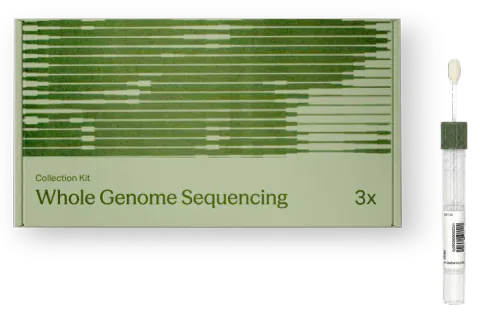
Whole Genome Sequencing Test Kit, 3x
View current details, availability, and member pricing.

Comprehensive Metabolic Panel (CMP)
A 14-marker snapshot of kidney function, liver function, electrolytes, and blood sugar in one draw.
Complete Blood Count (CBC) with Differential and Platelet Count Test
A broad screen of red cells, white cells, and platelets that anchors most checkups.
The standard cholesterol workup for cardiovascular risk, and the baseline for tracking diet, exercise, or statin response.