Skin Prick Test vs. Blood Test for Allergies: Which Is Better?
Skin prick tests and specific IgE blood tests can both help identify allergy sensitization. Here is how they differ, when each one fits, and why symptoms still matter.
- Published
- July 31, 2026
- Read time
- 10 min read
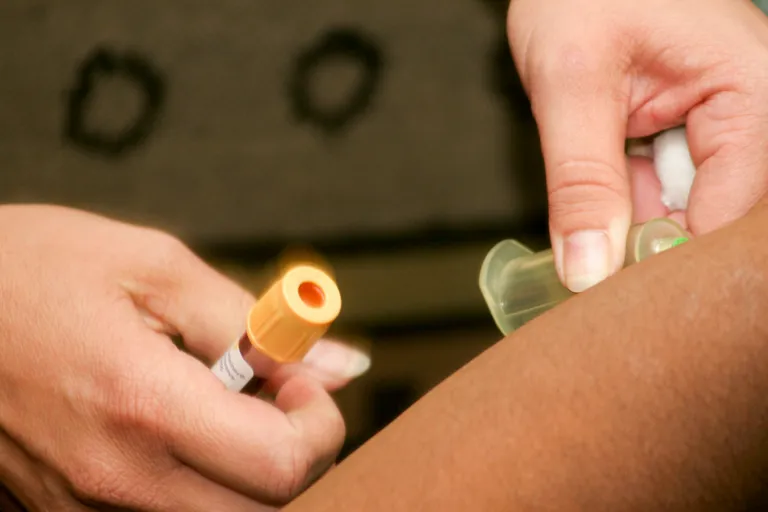
Table of contents
If you are trying to figure out what you are allergic to, you will usually run into two main options: a skin prick test at an allergist’s office or a specific IgE blood test through a lab.
They can look for many of the same triggers: pollen, dust mites, mold, pet dander, foods, venom, latex, and some medication-related questions. But they are not interchangeable in every situation. Skin prick testing is fast and often preferred by allergists. Blood testing is convenient, quantitative, and useful when skin testing is difficult or not the right fit.
Quick summary
Skin prick tests and specific IgE blood tests both look for evidence that your immune system is sensitized to an allergen. Skin prick testing usually gives results during the visit and is commonly used by allergists, but antihistamines and some skin conditions can interfere. Blood testing measures allergen-specific IgE from a blood sample, does not require a skin reaction, and can be useful when you cannot stop allergy medications or want a lab-based result. Neither test proves a clinical allergy by itself. The result has to match your symptoms and exposure history.
What both tests are trying to answer
Both tests are usually asking some version of the same question:
Has your immune system made IgE antibodies to this allergen?
IgE is the antibody class involved in many immediate allergic reactions. If your body has IgE to cat dander, dust mites, peanut, ragweed, or mold, a test may come back positive. That positive result is called sensitization.
Sensitization matters, but it is not the same thing as proven clinical allergy. Some people have positive tests to allergens that do not cause symptoms. Others have symptoms that need a different workup even if the first test is negative.
The best allergy diagnosis combines:
- Your symptoms.
- Timing, such as minutes after food or seasonal outdoor flares.
- Exposure pattern, such as pets, bedding, damp rooms, or stings.
- Test results.
- Response to avoidance or treatment.
Testing is strongest when it confirms a pattern you already see.
How a skin prick test works
A skin prick test is usually done on the forearm or back. A clinician places small amounts of allergen extract on the skin, then lightly pricks or scratches the surface so the allergen can interact with immune cells in the skin.
After about 15 to 20 minutes, the clinician checks for a raised, itchy bump called a wheal. A positive control, often histamine, confirms that your skin can respond. A negative control helps show whether the skin is reacting nonspecifically.
Skin prick testing is commonly used for:
- Pollen allergy.
- Dust mite allergy.
- Mold allergy.
- Cat, dog, and other animal dander.
- Some food allergy questions.
- Some venom or medication questions under specialist care.
The biggest practical advantage is speed. You can often discuss the pattern with the allergist the same day.
How an allergy blood test works
An allergy blood test measures allergen-specific IgE in a blood sample. You may see this called specific IgE, sIgE, ImmunoCAP, or historically RAST, though modern labs do not necessarily use the old RAST method.
The lab reports whether IgE to a specific allergen is present and often gives a numeric result. That number can help show the degree of sensitization, but it still does not automatically predict symptom severity.
Specific IgE blood testing is commonly used for:
- Food allergens, such as peanut, tree nuts, egg, milk, wheat, soy, sesame, fish, and shellfish.
- Environmental allergens, such as tree pollen, grass pollen, weed pollen, dust mites, mold, cockroach, and pet dander.
- Venom allergens, such as bee, wasp, hornet, yellow jacket, or fire ant, depending on lab availability.
- Situations where skin testing is hard to perform or interpret.
The biggest practical advantage is flexibility. You do not need an in-office skin reaction for the test to work, and the sample can be processed like other lab testing.
Skin prick test vs blood test: the practical differences
| Question | Skin prick test | Specific IgE blood test |
|---|---|---|
| How results are measured | Skin reaction size after allergen exposure. | Allergen-specific IgE level in blood. |
| Timing | Often read during the appointment. | Usually returns after lab processing. |
| Medication issues | Antihistamines can suppress the skin response. | Often useful when skin testing is not practical, but medication instructions still come from your clinician. |
| Skin conditions | Can be harder with severe eczema, widespread rash, dermatographism, or irritated test areas. | Does not require a readable skin response. |
| Comfort | Multiple small pricks, itching if positive. | Standard blood draw. |
| Best use | Allergist-led evaluation when same-day interpretation is useful. | Lab-based evaluation, targeted panels, medication constraints, or when skin testing is not a good fit. |
When a skin prick test may be better
Skin prick testing is often a strong choice when you are already seeing an allergist and need a hands-on evaluation.
It may fit especially well when:
- You need same-day interpretation.
- You are evaluating allergic rhinitis, pollen, dust mites, pets, or mold.
- You can safely stop antihistamines for the recommended window.
- Your skin is clear enough to test.
- The allergist wants to test many inhaled allergens during one visit.
- The result will guide immunotherapy, such as allergy shots or tablets.
Skin testing is also useful because the allergist can interpret the result immediately in context. A small positive to one pollen may not matter if your symptoms do not match that season. A strong dust mite result may matter more if your symptoms are worse in bed and in the morning.
When a blood test may be better
Specific IgE blood testing may be a better fit when skin testing is inconvenient, harder to interpret, or not advised.
It may fit especially well when:
- You cannot stop antihistamines or other medications that could interfere with skin testing.
- You have eczema, hives, dermatographism, or another skin condition that makes skin results hard to read.
- You want a lab-based result for specific foods, pollens, molds, pet dander, dust mites, or venom.
- You need testing for a focused set of allergens rather than a full in-office evaluation.
- You prefer a blood draw over many skin pricks.
- You are comparing allergen-specific IgE results over time under clinician guidance.
Blood testing is not automatically “better” or “worse.” It answers the IgE sensitization question in a different way.
Food allergies: neither test is the final word by itself
Food allergy is where interpretation matters most.
Skin prick testing and blood IgE testing can both support an IgE-mediated food allergy diagnosis. They are most useful when the history is clear: for example, hives, swelling, wheezing, vomiting, or throat symptoms soon after eating a specific food.
But a positive test does not always mean you will react if you eat the food. A negative test does not always explain every symptom. For unclear cases, allergists may use component-resolved testing or a supervised oral food challenge.
An oral food challenge is not an at-home experiment. It is done in a medical setting because reactions can be serious.
For a deeper food-specific guide, read How to Test for Food Allergies.
Environmental allergies: pollen, dust mites, mold, and pets
For environmental allergies, both skin prick and blood tests can be useful. The right choice often comes down to logistics, medication use, and the kind of answer you need.
Skin prick testing may be efficient if you are seeing an allergist for a full seasonal or indoor allergy evaluation. Blood testing may be easier if you want targeted lab testing for:
- Tree pollen.
- Grass pollen.
- Weed pollen, including ragweed. A common-ragweed specific IgE blood test can answer that focused question when the symptom pattern already points to this pollen.
- Dust mites.
- Cat dander.
- Dog dander.
- Cockroach.
- Indoor molds.
- Outdoor molds.
The key is matching the result to your actual pattern. A dust mite result matters more when symptoms are worse in bed or after cleaning. A ragweed result matters more when symptoms flare in late summer or fall; the ragweed allergy guide explains season timing, symptoms, and testing in more detail. A mold result matters more when symptoms track with damp or musty spaces.
For the environmental-allergy version of this topic, read How to Test for Environmental Allergies.
Venom, medication, and severe reactions need specialist guidance
Some allergy questions are too high-stakes for self-directed testing.
If you have had throat swelling, trouble breathing, fainting, low blood pressure, or a severe whole-body reaction after a sting, food, medication, or latex exposure, talk with a clinician or allergist. Testing may still involve skin testing, blood testing, or challenge procedures, but the safety plan matters as much as the lab result.
Medication allergy is especially specific. For example, some drug allergy workups use skin testing or challenge procedures under specialist supervision, while ordinary blood allergy testing may not answer the question.
Which test should you choose?
Use this as a practical starting point:
| Your situation | Often better starting point | Why |
|---|---|---|
| Seasonal congestion, itchy eyes, or sneezing | Either skin prick or specific IgE blood testing | Both can assess pollen and respiratory allergens. |
| Symptoms at home, in bed, around pets, or in damp rooms | Either skin prick or specific IgE blood testing | Both can assess dust mites, pet dander, mold, and cockroach. |
| You cannot stop antihistamines | Specific IgE blood testing | Antihistamines can suppress skin test reactions. |
| Severe eczema, widespread rash, or dermatographism | Specific IgE blood testing | Skin testing may be hard to perform or interpret. |
| Clear immediate food reaction | Allergist-guided testing, often skin prick and/or blood IgE | Food allergy decisions need history-based interpretation. |
| Possible venom or medication allergy | Allergist-guided testing | Testing strategy and safety planning are more specialized. |
What neither test can tell you
Neither skin prick testing nor blood IgE testing can answer every allergy-adjacent question.
They do not prove:
- That a positive allergen is definitely causing your symptoms.
- That a food is unsafe to eat without clinical context.
- That a negative result rules out every possible reaction.
- That a home has mold, dust mites, or pet dander present.
- That chronic digestive symptoms are caused by allergy.
- That IgG or IgG4 food sensitivity results diagnose allergy.
This is why the symptom story matters. A test result is a clue. It is strongest when it lines up with real exposure and real symptoms.
How Mito fits in
Mito offers lab-based allergy testing organized by trigger category, including food, seasonal, indoor, mold, pet, venom, and exposure-related testing. That makes specific IgE blood testing easier to browse when you already have a likely category in mind.
If your symptoms suggest a severe food reaction, venom reaction, medication reaction, or uncontrolled asthma, start with a clinician or allergist. For lower-risk questions, such as “could dust mites, mold, pet dander, pollen, or a specific food be part of this pattern?”, specific IgE blood testing can be a practical way to start.
For what that testing costs and what moves the number, see allergy test cost.
The bottom line
Skin prick tests and allergy blood tests can both identify IgE sensitization. Skin prick testing is fast and often preferred in an allergist’s office. Blood testing is flexible, lab-based, and useful when skin testing is inconvenient, medication-limited, or hard to interpret.
The better test is the one that fits your symptoms, risk level, and practical constraints. The most important step is not testing the largest number of allergens. It is choosing the test that matches the pattern you are actually trying to explain.
Sources
- ACAAI: Allergy Testing
- ACAAI: Testing and Diagnosis
- ACAAI: Food Allergy Testing and Diagnosis
- AAAAI: Allergy Testing
- MedlinePlus: Allergy Blood Test
- MedlinePlus: Food Allergy Testing
- Mayo Clinic: Allergy Skin Tests
- Mayo Clinic: Allergies Diagnosis and Treatment
Inflammation tests
C-Reactive Protein, High Sensitivity (hs-CRP) Blood Test
Add an inflammation-sensitive signal to a complete cardiovascular risk assessment.
An amino acid tied to B-vitamin metabolism and cardiovascular risk that routine cholesterol panels do not capture.
Understand your iron stores with a standalone ferritin blood test.
Complete Blood Count (CBC) with Differential and Platelet Count Test
A broad screen of red cells, white cells, and platelets that anchors most checkups.