Postmenopausal Hair Thinning: Female Pattern Hair Loss Explained
After menopause, uniformly low estrogen leaves androgens unopposed and follicles miniaturize into female pattern hair loss. Thyroid, ferritin, and vitamin D testing can find reversible contributors.
- Published
- April 23, 2026
- Last updated
- September 22, 2026
- Read time
- 3 min read
Why It Happens After Menopause
After your final period, the hormonal turbulence of perimenopause settles into a stable low-estrogen, androgen-dominant state. Hair changes that started during perimenopause crystallise into a recognisable diffuse thinning pattern across the crown, with the front hairline preserved. This is female pattern hair loss (FPHL) in its postmenopausal form.
-
Estrogen is now uniformly low. Estradiol typically sits below 30 pg/mL. Without estrogen to oppose them, adrenal androgens (DHEA, testosterone) act unopposed on follicles, miniaturising them.
-
Hair follicles enter a longer telogen phase. Anagen (growth) shortens, telogen (rest) lengthens. The result is fewer hairs growing at any given time, and the hairs that do grow are finer and lighter pigmented.
-
Iron stores often improve, but not always. Periods have stopped, so monthly iron loss ends. Many women see ferritin rise. Some, however, develop low-grade GI bleeds (NSAIDs, diverticulosis, undiagnosed celiac) that keep iron status low. Recheck rather than assume.
-
Thyroid dysfunction is the most-missed contributor. Hypothyroidism prevalence climbs through the 50s and 60s. Around 1 in 5 women over 60 has subclinical hypothyroidism. Untreated, it adds a telogen effluvium pattern on top of the FPHL.
-
Vitamin D deficiency becomes more common. Reduced skin synthesis with age, less sun exposure, and reduced dietary intake combine. Below 30 ng/mL is associated with worsened hair shedding.
-
Cortisol dysregulation persists. Sleep architecture deteriorates with age, hot flashes can continue for years, and chronic cortisol elevation maintains the stress-shed pattern that started in perimenopause.
What Makes Postmenopausal Thinning Different From Perimenopause
The key difference is stability. Perimenopause is hormonal volatility, with cycles that swing wildly and symptoms that come and go. Postmenopause is a steady state. That makes diagnosis cleaner: a single estradiol reading is meaningful, the FPHL pattern crystallises, and treatment response is more predictable.
It also means treatment decisions are different. Hormone therapy in perimenopause may smooth volatility. Hormone therapy after 60 has stronger cardiovascular and breast cancer trade-offs to weigh, and Minoxidil plus addressing reversible causes (thyroid, iron, vitamin D) becomes the safer first line.
How to Manage
-
Start with thyroid, ferritin, and vitamin D. Three labs that account for a meaningful fraction of “FPHL” that turns out to be reversible.
-
Topical Minoxidil 5% is first-line for confirmed FPHL. Best evidence for slowing further loss. Maintains existing follicles more than it regrows lost ones. Once stopped, gains reverse within 3 to 4 months, so it is a long-term commitment.
-
Optimise vitamin D before adding more supplements. Target 40 to 60 ng/mL. For women over 60 in non-tropical climates starting from a deficient baseline, reaching that range commonly takes doses in the 2000 to 4000 IU daily range, higher than a standard multivitamin provides.
-
Re-evaluate medications. Statins, beta blockers, ACE inhibitors, and SSRIs all list hair loss as a side effect. Timing of new shedding may correlate with a recent prescription change.
-
Discuss spironolactone with a clinician. Low-dose oral spironolactone has off-label evidence for FPHL through anti-androgen action. Requires monitoring for potassium and blood pressure.
-
Avoid the supplement industry trap. Biotin, collagen, “hair vitamins” have weak evidence and can interfere with thyroid lab accuracy. Money is better spent on getting the diagnostic workup right.
-
Consider hormone therapy with informed consent. For some women, transdermal estradiol slows FPHL progression. The decision needs an individual cardiovascular and breast cancer risk discussion.
Lab Markers Worth Checking
- Thyroid Stimulating Hormone (TSH), plus free T4 and TPO antibodies
- Ferritin, recheck even if periods have stopped
- 25-Hydroxy Vitamin D, target 40 to 60 ng/mL
- Free Testosterone, assess androgen burden
- Cortisol, morning baseline if sleep is fragmented
Related Reads
- Thinning Hair: An Inside-Out Routine
- Hashimotos vs Graves Disease: Autoimmune Thyroid Testing and Key Differences
- Free T3 vs Free T4: Understanding Your Thyroid Blood Test Results
Related Symptoms
References
- American Academy of Dermatology, Female Pattern Hair Loss
- NIH NCBI Bookshelf, Female Pattern Hair Loss
- Mayo Clinic, Menopause
- The North American Menopause Society, Hair Loss
Women’s hormone tests
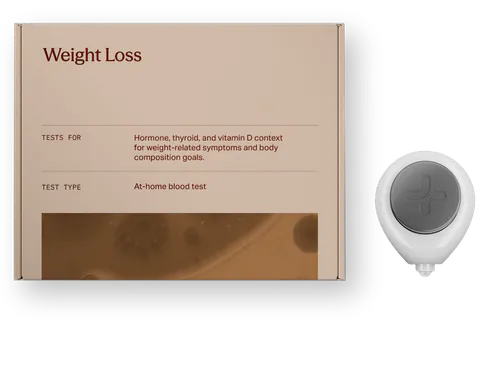
View current details, availability, and member pricing.
Estradiol (E2), Ultrasensitive Blood Test
Reads estrogen accurately at the very low levels found in men, postmenopausal women, and children.
Follicle-Stimulating Hormone (FSH) and Luteinizing Hormone (LH) Panel
The two pituitary hormones that drive ovulation, sperm production, and the reproductive timeline.
Sex Hormone-Binding Globulin (SHBG) Blood Test
The transport protein that decides how much of your testosterone and estradiol is actually available to tissues.