

Topic
Blood Vessels & Heart
-

Oct 8, 2026
Can Stress Cause High Cholesterol? How Much, and What Else Explains a Jump
Stress can nudge cholesterol up, but the measured effect is usually small next to normal test-to-test variation and other causes. Here is what the studies found, why a result can jump, and which tests tell the causes apart.
-

Oct 2, 2026
What Causes High Cholesterol in Women, and Which Tests Find the Cause
Menopause, pregnancy, PMOS, an underactive thyroid, some medicines, and inherited conditions can all raise cholesterol in women. Here is how each cause maps to a life stage, and which blood tests help tell them apart.
-

Sep 17, 2026
How Many Grams of Whole Grain per Day to Lower Cholesterol
A new pooled analysis of 87 randomized trials puts a number on it, and a range where the trials stop.
-

Sep 3, 2026
VLDL Cholesterol: What It Means and How to Lower It
VLDL cholesterol is usually an estimate based on triglycerides. Learn how to read the result, what can raise it, and which changes can help lower it.
-

Aug 27, 2026
CHIP Testing vs Standard Cardiovascular Risk Assessment
How clonal hematopoiesis (CHIP) testing compares with lipids, Lp(a), blood pressure, risk calculators, and a calcium score. CH complements standard assessment, it does not replace it.
-

Aug 27, 2026
Silent Heart Attack: Risk Factors When There Are No Warning Signs
A silent heart attack causes few or atypical symptoms, so knowing your risk factors matters more than waiting for classic chest pain.
-

Jul 21, 2026
How to Check Your Heart Attack Risk at Home
You can't feel a heart attack building — but you can measure the risk. Here are the blood markers that actually predict cardiovascular risk, and how to check the key ones from home.
-

Jun 1, 2026
6 Signs of Metabolic Syndrome
Metabolic syndrome consists of several key markers, including increased waist size, high blood pressure, and abnormal levels of cholesterol and triglycerides. Learn the signs and the blood tests that identify it.
-

May 18, 2026
How to Reverse Metabolic Syndrome
Metabolic syndrome is often reversible. Consistent changes to diet, activity, sleep, and stress, paired with regular blood testing, can improve blood sugar, lipids, and long-term heart health.
Heart health lab tests
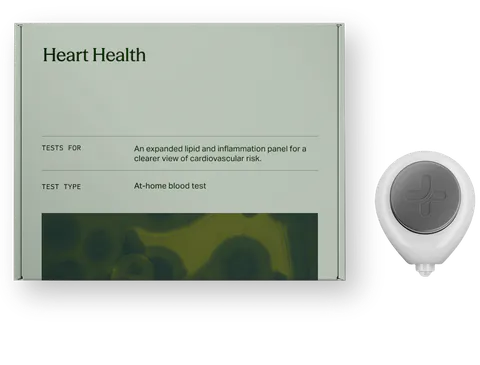
View current details, availability, and member pricing.

Apolipoprotein B (Apo B) Blood Test
Estimate the number of atherogenic lipoprotein particles that can enter the artery wall, not just the cholesterol they carry.
The standard cholesterol workup for cardiovascular risk, and the baseline for tracking diet, exercise, or statin response.
Lipoprotein(a) (Lp(a)) Blood Test
Reveal an inherited cardiovascular risk factor that a standard lipid panel can miss.
C-Reactive Protein, High Sensitivity (hs-CRP) Blood Test
Add an inflammation-sensitive signal to a complete cardiovascular risk assessment.
Advanced Cholesterol Panel (Lipids, Apo B, Lipo A and Cholesterol Particle Size)
A fuller read on cardiovascular risk, counting the atherogenic particles and inherited risk that a standard lipid panel misses.
Lipoprotein Particle Panel (NMR)
Counts the actual LDL particles driving plaque, plus an insulin-resistance score, beyond what standard cholesterol shows.
An amino acid tied to B-vitamin metabolism and cardiovascular risk that routine cholesterol panels do not capture.