Full Body MRI Cost in 2026: Prices, What Is Included and Is It Worth It
What a full-body MRI costs at Prenuvo, Ezra, SimonMed, TrueScan and longevity programs, what the price covers, insurance and HSA/FSA, and what the evidence says about benefits and false positives.
- Published
- November 3, 2026
- Read time
- 11 min read
- Medically reviewed by
-
 Rhonda Collins, FNP-C

A screening full-body MRI costs about $900 to $4,000 in 2026, based on the prices providers listed on their own websites on November 3, 2026. Shorter scans that skip the chest or spine sit at the low end. Prenuvo’s Whole Body Scan is $2,499, and packages that add brain, heart or body composition analysis run $3,999 or more. Longevity programs that include a whole-body MRI in an annual membership cost $8,000 a year or more.
Insurance does not cover a full-body MRI as a screening test, but many people can pay with HSA or FSA funds. Whether it is worth the money depends on what you want from it. Large reviews find that a screening full-body MRI finds cancer in about 1 to 2 percent of people scanned, and finds something that needs follow-up in many more [1][2]. This guide covers the prices, what each one includes, insurance, who might consider a scan, and how it compares with a coronary artery calcium (CAC) scan or a DEXA scan.
Full body MRI prices by provider
Prices as listed on each provider’s own website, checked November 3, 2026. Prices change, and some vary by city, so confirm the current price with the provider before you book.
Provider and scan | Listed price | Scan time | What it covers |
|---|---|---|---|
SimonMed Longevity: Core MRI | $899 (introductory price) | More than 30 minutes | Chest, abdomen and pelvis, with liver fat |
Ezra (Function): Annual MRI | $999, or $899 with a Function membership | 22 minutes | Head, neck, abdomen and pelvis. Not the chest, lungs, heart or spine. |
Prenuvo: Focused Scan | $1,199 | About 25 minutes | Head to mid-thigh. Not the arms or spine, and no aneurysm assessment. |
TrueScan: Focused MRI | $1,195 | 45 minutes | Brain to pelvis |
SimonMed Longevity: Core MRI Plus Head and Neck | $1,599 (introductory price) | More than 45 minutes | Chest, abdomen, pelvis, brain and neck |
Ezra (Function): MRI with Spine | $1,699, or $1,499 with a Function membership | 47 minutes | Head, neck, abdomen, pelvis and spine. Not the chest, lungs or heart. |
TrueScan: Full Body MRI | $1,995 | 60 minutes | Head to ankle, with brain and carotid artery angiography and liver fat |
SimonMed Longevity: Core MRI Plus Head, Neck and Spine | $2,199 (introductory price) | About 60 minutes | Chest, abdomen, pelvis, brain, neck, full spine and head and neck angiography |
Prenuvo: Whole Body Scan | $2,499 | About 50 minutes | Brain, spine, abdomen, pelvis and more |
Ezra (Function): MRI with Skeletal and Neurological Assessment | $3,999 | Two sessions of about an hour | The MRI with Spine, plus hips and knees, head and neck angiography, brain analysis and body composition |
Prenuvo: Enhanced Scan | $3,999 | About 65 minutes | Whole Body Scan, brain health scan, body composition analysis and two blood panels |
Sources, all checked November 3, 2026: Prenuvo pricing [3], Ezra pricing [4], Function Health imaging [5], SimonMed Longevity MRI comparison [6] and TrueScan pricing [7].
The cheapest scans are cheaper mostly because they cover less. Ezra’s Annual MRI, for example, leaves out the chest, lungs and heart. Before you compare prices, compare the body areas each scan includes, and check whether the chest and spine are in or out.
Scans bundled in memberships
Some providers fold the MRI into a yearly membership with blood testing and clinician reviews, so the price is not a like-for-like scan price:
- Prenuvo memberships. The Core membership is $1,199 and the Comprehensive membership is $2,499, each with a scan and blood panels. The Executive membership is $3,999, or $4,499 in New York City [3].
- Human Longevity. Its Executive Health program is listed at $8,000 a year and includes a whole-body MRI, cardiac imaging and blood testing [8].
Hospital and imaging center MRI
A hospital or ordinary imaging center usually does not sell a screening full-body MRI. It bills an MRI one body region at a time, ordered by a doctor for a medical reason, and insurance pays according to your plan. Prices for the same MRI vary widely from one hospital to the next: one study of nearly 2,000 hospitals’ posted prices found the variation in brain MRI prices exceeded 100 percent of the average [9]. That makes a hospital a poor place to price a screening scan, and an expensive way to image several regions at once.
What a full body MRI price includes
A screening full-body MRI price usually includes:
- The scan itself. MRI uses a magnet and radio waves, so there is no radiation. Screening scans are usually done without contrast dye.
- A radiologist’s read and report. Prenuvo lists a radiologist review and a consultation with its clinical team to go over findings [3]. TrueScan lists a radiology report and a physician video consultation [7].
- Any listed add-ons. Brain volume analysis, heart function analysis, body composition or blood panels are included only in the packages that name them.
A screening full-body MRI price usually does not include:
- Follow-up imaging. A finding that needs a closer look often leads to a dedicated MRI, CT, ultrasound or biopsy, billed separately.
- Specialist visits. If a finding needs treatment or monitoring, that care goes through your own doctor and insurance.
- Areas the scan leaves out. Shorter scans skip the chest, lungs, heart or spine, and no full-body MRI replaces colonoscopy, mammography or a low-dose lung CT where those are recommended.
Budget for the chance of follow-up. A review of 12 studies covering 6,214 screening scans found that 30 percent of people had a finding that needed further investigation [1].
Does insurance cover a full body MRI?
No, not as a screening test. Insurers cover an MRI when a doctor orders it for a symptom or a known condition. Ezra says its scans are offered directly to consumers and that it is working with payers, but it describes no current coverage [4]. Prenuvo’s pricing page does not mention insurance [3]. Mito does not accept health insurance.
HSA and FSA funds are a different matter. Ezra labels each of its MRI scans HSA/FSA eligible [4]. Prenuvo says its services may qualify for reimbursement and that eligibility is decided by IRS rules and your plan administrator [3]. Through Mito, the full-body MRI can be paid with an HSA or FSA card at checkout through Flex, which emails an itemized receipt. Our guide to HSA/FSA-eligible health tests covers how that works and what to do if your administrator asks for more.
Is a full body MRI worth it? What the evidence shows
For most adults without symptoms, the evidence does not yet show that a screening full-body MRI helps people live longer. The American College of Radiology said in 2023 that there is not sufficient evidence to recommend total-body screening for people with no symptoms, risk factors or family history suggesting disease. It also said there is no documented evidence that it is cost-efficient or prolongs life, and that it may lead to unnecessary follow-up tests and expense [10].
The research so far comes from studies that measure what the scan finds, not whether finding it changes outcomes:
- Cancer detection. A 2025 meta-analysis of 10 studies and 9,024 people without symptoms found confirmed cancer in about 1.6 percent of those scanned. The authors said modest detection rates, frequent incidental findings, unstandardized protocols and a lack of long-term outcome or cost-effectiveness data limit its clinical use [2].
- Abnormal findings. In the review of 6,214 screening scans, 95 percent of people had at least one abnormal finding. Most findings were benign, 30 percent of people needed further investigation, and 1.1 percent had a cancer confirmed by biopsy [1].
- False positives. A 2019 systematic review found critical or indeterminate incidental findings in about a third of people scanned, more often when the scan included blood vessels or the colon. In the six studies that reported it, about 16 percent of findings were false positives. None of the studies followed people for more than five years to confirm that a normal scan was truly normal [11].
The tradeoff, then, is a small chance of finding a cancer or another serious problem early, against a much larger chance of a finding that leads to more tests, cost and worry and turns out to be harmless.
Who might consider a full body MRI
The strongest evidence for whole-body MRI is in people with an inherited cancer syndrome. In Li-Fraumeni syndrome, caused by a TP53 gene variant, a meta-analysis of 578 people found a new, localized cancer in about 7 percent at their first whole-body MRI [12]. Surveillance plans for that group follow a dedicated lifelong schedule, the Toronto Protocol, arranged through a genetics or cancer care team [13].
Outside that group, people who choose a screening full-body MRI tend to be those who:
- want a baseline picture of their organs and are comfortable paying out of pocket;
- understand that a normal scan does not rule out every cancer or replace recommended screening;
- can absorb the cost and time of follow-up tests if something is found.
A full-body MRI is probably not a good fit if you have an implanted device that has not been cleared for MRI, since the magnet can make some devices malfunction [16], if being in an enclosed scanner for up to an hour is hard for you, or if you would struggle with the worry of an uncertain finding. If you have symptoms, see a doctor rather than booking a screening scan, so the right test is ordered and covered.
Full body MRI vs CAC and DEXA scans
A full-body MRI looks broadly at soft tissue. A CAC scan and a DEXA scan each answer one narrower question, at a much lower price, and both have a clearer place in guidelines.
Scan | What it measures | Radiation | Best for |
|---|---|---|---|
Full-body MRI | Structures across the brain, neck, chest, abdomen and pelvis, depending on the scan | None | A broad baseline, for people who accept the cost and the chance of follow-up |
Coronary artery calcium (CAC) scan | Calcified plaque in the heart’s arteries, as a calcium score | A short, noncontrast CT that uses x-rays | Adults without symptoms whose heart risk is unclear, such as when deciding on a statin |
DEXA scan | Bone density, or body fat, lean mass and visceral fat | A very small dose of x-rays | Checking bone loss, or tracking body composition over time |
Sources: RadiologyInfo pages on cardiac CT for calcium scoring [14] and bone densitometry [15].
- Heart risk. A full-body MRI does not measure coronary plaque the way a CAC scan does, and some full-body scans skip the heart entirely. The 2026 ACC/AHA dyslipidemia guideline uses the calcium score to guide treatment decisions for some adults at borderline or intermediate risk [17]. Our calcium score test guide explains what the score means, and Mito offers a coronary artery calcium scan.
- Bone and body composition. A full-body MRI does not report a bone density T-score. A DEXA bone density scan of the hip and spine does. Our guides cover how to read DEXA scan results, bone density in your 30s and 40s and DEXA vs InBody for body composition. Mito offers a DEXA bone density scan of the hip and spine for bone loss, and a DEXA body composition scan for body fat, lean mass and visceral fat.
If your main question is heart risk or bone health, the targeted scan answers it more directly and for a fraction of the cost. Some people pair a targeted scan with a full-body MRI, while others start with the targeted scan and blood work.
Get a full body MRI through Mito
Mito offers the Prenuvo Full Body MRI. It screens the head, neck, chest, abdomen and pelvis, uses no radiation or contrast dye, and typically takes about one hour. Radiologists review the images, and the results are delivered through Prenuvo’s platform and added to the documents section of your Mito dashboard, next to your lab results. If you are a Mito member, your care team can review them alongside your biomarkers.
Through Mito, the scan is available in Arizona, California, Colorado, Washington DC, Florida, Georgia, Illinois, Massachusetts, Minnesota, New York, Texas and Washington. After you buy it, the Mito team reaches out with scheduling instructions. See the product page for the current Mito price.
References
- Zugni et al., Cancer Imaging 2020: Whole-body MRI for cancer screening in asymptomatic subjects of the general population (PubMed 32393345)
- Martins da Fonseca et al., European Radiology 2026: Whole-body MRI for opportunistic cancer detection in asymptomatic individuals, a systematic review and meta-analysis (PubMed 40884613)
- Prenuvo: Pricing
- Ezra: Pricing
- Function Health: Imaging
- SimonMed Longevity: Whole-body MRI comparison
- TrueScan: Pricing
- Human Longevity: Pricing
- Shen and Moss, BMC Research Notes 2022: Large variations in hospital pricing for standard procedures revealed (PubMed 35382890)
- American College of Radiology: ACR Statement on Screening Total Body MRI (April 17, 2023)
- Kwee and Kwee, Journal of Magnetic Resonance Imaging 2019: Whole-body MRI for preventive health screening, a systematic review (PubMed 30932247)
- Ballinger et al., JAMA Oncology 2017: Baseline surveillance in Li-Fraumeni syndrome using whole-body MRI, a meta-analysis (PubMed 28772291)
- Achatz et al., Clinical Cancer Research 2025: Update on cancer screening recommendations for individuals with Li-Fraumeni syndrome (PubMed 40072304)
- RadiologyInfo: Cardiac CT for Calcium Scoring
- RadiologyInfo: Bone Densitometry (DEXA, DXA)
- RadiologyInfo: Body MRI
- 2026 ACC/AHA Guideline on the Management of Dyslipidemia (PubMed 41824590)
Frequently asked questions
How much is a full body MRI?
Most screening full-body MRIs cost between about $900 and $4,000 in 2026, checked on November 3, 2026. Shorter scans that skip the chest or spine start around $899 to $1,199. Prenuvo lists its Whole Body Scan at $2,499, and the most complete packages with brain, heart or body composition add-ons run $3,999 or more. Longevity programs that include a whole-body MRI can cost $8,000 a year or more.
Is a full body MRI worth it?
It depends on what you want from it. For most adults without symptoms or a high-risk condition, there is no evidence yet that a screening full-body MRI helps people live longer, and the American College of Radiology does not recommend it. Studies find cancer in roughly 1 to 2 percent of people scanned, and many more get findings that need follow-up and turn out to be harmless. Some people still value the baseline, as long as they know the cost and the chance of extra tests.
Does insurance cover a full body MRI?
Not as a screening test. Insurers cover an MRI when a doctor orders it for a symptom or a known condition, and usually for one body region at a time. Ezra says its scans are sold directly to consumers, and Prenuvo's pricing page does not mention insurance. Mito does not accept health insurance.
Can I use HSA or FSA funds for a full body MRI?
Often, yes. Ezra lists its MRI scans as HSA/FSA eligible, and Prenuvo says its services may qualify, with the final decision left to IRS rules and your plan administrator. Through Mito, the full-body MRI can be paid with an HSA or FSA card at checkout through Flex, which emails an itemized receipt. Keep that receipt in case your administrator asks for it.
Does a full body MRI use radiation?
No. MRI uses a magnetic field and radio waves rather than x-rays, and screening full-body MRIs are usually done without contrast dye. A coronary artery calcium scan and a DEXA scan both use x-rays, at small doses.
Is a full body MRI better than a CT scan for screening?
They answer different questions. A full-body MRI looks at soft tissue across many organs without radiation. A coronary artery calcium scan is a short CT of the heart that measures calcified plaque, and it has guideline support for some adults at borderline or intermediate heart risk. A full-body MRI is not a substitute for it, or for recommended cancer screening such as colonoscopy or mammography.
Scans discussed in this guide

View current details, availability, and member pricing.
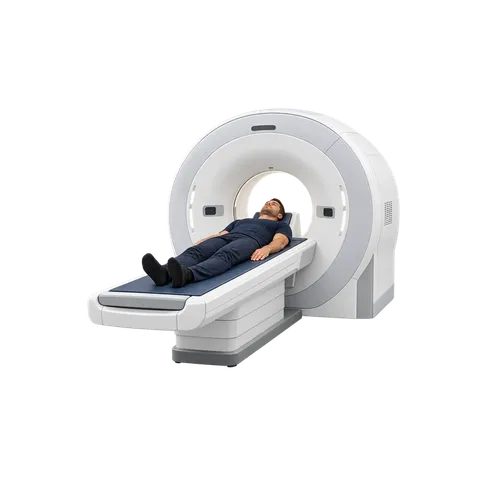
Coronary Artery Calcium (CAC) Scan
A quick, no-needle CT scan that shows whether calcified plaque is building in your heart arteries.
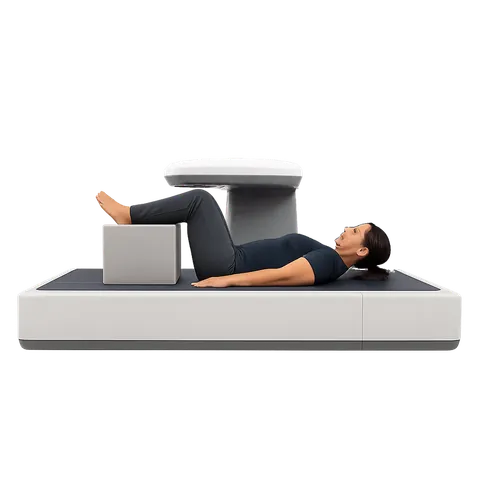
A bone density test of your hip and spine, the DEXA scan guidelines use for osteoporosis.

Measures your body fat, lean muscle and visceral fat, region by region, in about 10 minutes.