

Coronary Artery Calcium (CAC) Scan
A calcium score test is a quick, no-needle CT scan that shows whether plaque is building in your heart arteries, and helps you decide on a statin.
- Your total calcium score, your percentile for age and sex, and a score for each artery
- A few minutes on a CT table, with no needles, no contrast and a low radiation dose
- No referral needed. If your score is above 0, the testing center contacts you and your primary care doctor
- HSA/FSA eligible
- Results on your Mito dashboard
Scanned at 300+ partner centers nationwide
Why people order the Coronary Artery Calcium (CAC) Scan
-
Deciding whether to start a statin
Risk calculators put many people on the fence. A calcium score shows whether plaque has actually started to build. Nearly half of people who qualify for a statin on paper have a score of 0.
Who may consider the Coronary Artery Calcium (CAC) Scan
-
Heart disease runs in your family
A parent or sibling with heart disease raises your own risk. A heart scan shows whether your arteries are following the same path, often years before any symptoms.
-
High cholesterol or high blood pressure
Both drive plaque over time. Your score shows how much they have done so far, which helps you and your doctor decide how hard to treat them.
-
Diabetes, smoking or extra weight
Each one adds to heart risk. A scan turns a general warning into a number about your own arteries.
Not the right test if
-
You have chest pain, shortness of breath or other heart symptoms
See a doctor now rather than booking a screening scan. If symptoms are sudden or severe, get emergency care.
-
You've been diagnosed with heart disease
That includes a past heart attack, stroke, heart failure or a coronary stent. Your doctor or cardiologist should guide testing from here.
-
You're under 40, over 75, or have none of the risk factors
This scan is for ages 40 to 75 with at least one risk factor. If you're under 40, ApoB and Lp(a) blood tests are a better place to start.
-
You're pregnant or might be
The scan uses X-rays, so it isn't done during pregnancy.
Who can order this scan?
Adults aged 40 to 75 with at least one risk factor: a family history of heart disease, high cholesterol or high blood pressure, diabetes, a BMI over 25, a sedentary lifestyle, or smoking now or in the past. You can't have heart symptoms or a past diagnosis of heart disease, heart attack, stroke, heart failure or a stent, and you can't be pregnant. A 1-minute check before checkout tells you. It uses the same questions as booking, so if you pass, you won't be turned away later for the same answers.
Do I need a referral?
No. The order is arranged for you. You give your primary care doctor's name and phone number so the testing center can send them your results if your score is above 0.
Does insurance cover it?
Rarely. Most insurance plans and Medicare don't cover a screening calcium score, so plan to pay out of pocket.
Can I pay with my HSA or FSA?
Yes. You can pay with your HSA or FSA card at checkout.
How soon do I get results?
Reports usually arrive within 24 hours, and officially within 2 business days. They land in your Mito dashboard, next to your labs.
How to prepare
- Attire for the test: you will be given a hospital gown to change into for the test. Please wear clothes you can easily remove and replace.
- Do not wear any items with metal or hard plastic, such as buttons, zippers, jewelry, watches, hair clips, bras with metal clasps or underwires.
- Avoid strenuous exercise for at least 24 hours before your test.
- Avoid alcohol or caffeine for at least 4 hours before your test.
- Let the front desk know that you are scheduled for a test with Fitnescity Health.
- Arrive no more than 5 minutes before your appointment time.
What members say on Trustpilot
What the Coronary Artery Calcium (CAC) Scan measures
A calcium score test is a CT scan of your heart, timed to your heartbeat. It looks for calcium in the walls of your coronary arteries, the vessels that feed your heart muscle. Calcium is a sign of hardened plaque. The scan adds up the size and density of each calcium spot into one number, the Agatston score, which runs from 0 to several thousand.
More calcium means more plaque and a higher chance of a heart attack. In a large US study of more than 6,700 adults, people with a score above 300 had nearly 10 times the risk of a coronary event of people with a score of 0. A score of 0 is just as useful: it is one of the strongest signs that your near-term risk is low, which is why it can settle whether a statin is worth taking now.
There is no IV, no contrast dye and no needle. The radiation dose is about 1 to 2 mSv, roughly what you absorb from natural background radiation in 6 months. This is a screening test for people without symptoms, not a test for chest pain or blocked arteries.
- Report includes
- Total calcium score, Percentile for your age and sex, Score for each artery
- Method
- Non-contrast CT of the heart, timed to your heartbeat with ECG stickers
- Time
- A few minutes on the table. About 10 to 15 minutes for the whole visit
- Radiation
- About 1 to 2 mSv, roughly 6 months of natural background radiation
- Needles or contrast
- None
- Fasting
- Not required
- Results
- On your Mito dashboard
Calcium score, CT angiogram or stress test?
| Compare | Calcium score (CAC) scan | Coronary CT angiogram | Stress test |
|---|---|---|---|
| What it shows | Hardened (calcified) plaque | Hard and soft plaque, and how narrow each artery is | Whether blood flow to your heart drops when it works hard |
| Needle or contrast | None | IV contrast dye | Usually none. Some versions use an IV tracer |
| Radiation | About 1 to 2 mSv | Several times more, about 3 to 9 mSv | None for exercise ECG or echo. Nuclear versions use a tracer |
| Who it's for | People without symptoms, deciding on prevention | People with symptoms or unclear results, ordered by a doctor | People with symptoms, ordered by a doctor |
| Who orders it | You, if you're eligible | Usually a doctor | Usually a doctor |

Your results
What your Coronary Artery Calcium (CAC) Scan report shows
Many people who meet the eligibility rules score 0, especially under 55. If you score above 0, your percentile shows how your arteries compare with other people your age and sex.
Total calcium score
Your Agatston score, the headline number. It sums every calcium spot found across your heart arteries and places you in one of the score groups below.
Percentile for your age and sex
How your score compares with people of the same age and sex. A score of 10 means more at 45 than at 70, because calcium builds with age. A high percentile means plaque is building earlier than in most of your peers.
Score for each artery
Separate scores for your left main, left anterior descending, left circumflex and right coronary arteries. They show where the calcium sits.
What your calcium score means
The total score places you in one of four groups. Your percentile adds context: a higher percentile for your age and sex means more risk than the same score in an older person.
| Score | What it means | What often happens next |
|---|---|---|
| 0 | No calcified plaque found. Your risk of a heart attack over the next 10 years is very low. | A statin can often wait, unless you have diabetes, smoke or have a strong family history. Many people repeat the scan in about 5 years. |
| 1 to 99 | Mild plaque. It has started to build. | Lifestyle changes and lowering LDL cholesterol. A statin is often discussed with your clinician. |
| 100 to 399 | Moderate plaque. Your risk is higher. | Cholesterol-lowering treatment is commonly advised. Your clinician may also review blood pressure and whether aspirin fits you. |
| 400 or more | Extensive plaque. Your risk is high. | More intensive treatment of every risk factor. Your clinician may consider further heart tests, especially if you ever have symptoms. |
Score groups follow the standard Agatston categories radiologists use to read calcium scans, which match common clinical practice. Next steps are general examples from published prevention guidance, not advice for you. Your clinician decides based on your full risk picture.
What this scan can't tell you
- It sees only hardened plaque. It can't see soft plaque, and it can't measure how narrow an artery is.
- A score of 0 means your near-term risk is very low, not that you have no plaque at all, especially if you're younger or smoke.
- It isn't a test for chest pain or other symptoms. Those need a doctor and a different test.
- It can't show whether a statin is working. Statins can make plaque denser, so the score may rise even as risk falls.
- The scan also captures part of your lungs. Roughly 5 to 12 in 100 scans find something unrelated, such as a small lung nodule, that needs a follow-up.
How it works
What to expect from your Coronary Artery Calcium (CAC) Scan
- 1 Check eligibility and order
Answer the 1-minute eligibility check, then check out on Mito. No referral needed.
- 2 Book your time
Confirm your answers, add your primary care doctor's details, and choose a hospital or imaging center and your preferred times. The order is arranged for you. The center confirms your time, usually within hours.
- 3 Get scanned
Change into a gown and lie on the CT table with a few ECG stickers on your chest. You hold your breath for a few seconds while the scanner takes pictures. No needles, no contrast. The visit takes about 10 to 15 minutes.
- 4 Get your report
Results usually arrive within 24 hours and land in your Mito dashboard, next to your labs. If your score is above 0, the testing center contacts you to arrange a call and sends your results to the primary care doctor you named.
- 5 Plan what's next
With a score of 0, many people rescan in about 5 years. With a higher score, the focus moves to lowering your risk with your doctor, and repeat scans usually aren't needed.
How much the Coronary Artery Calcium (CAC) Scan costs
Compare Mito member and non-member prices for this scan with recently checked comparable offers. There is no separate center or order fee.
| Provider | Scan price | Additional fee |
|---|---|---|
| Mito member | $249.00 | $9/mo Mito membership |
| Mito non-member | $348.60 | None No membership needed |
| Function Health | $349.00 | $365.00 Yearly membership, first year |
| Ezra | $349.00 | None No membership needed |
| Superpower | $379.00 | $349.00 Yearly membership |
Mito prices come from the live catalog for the selected provider. Competitor prices were checked October 2, 2026. Function Health and Superpower require a yearly membership, shown as their fee. Ezra needs no membership. You don't need a Mito membership to buy: it lowers the price for $9 a month.

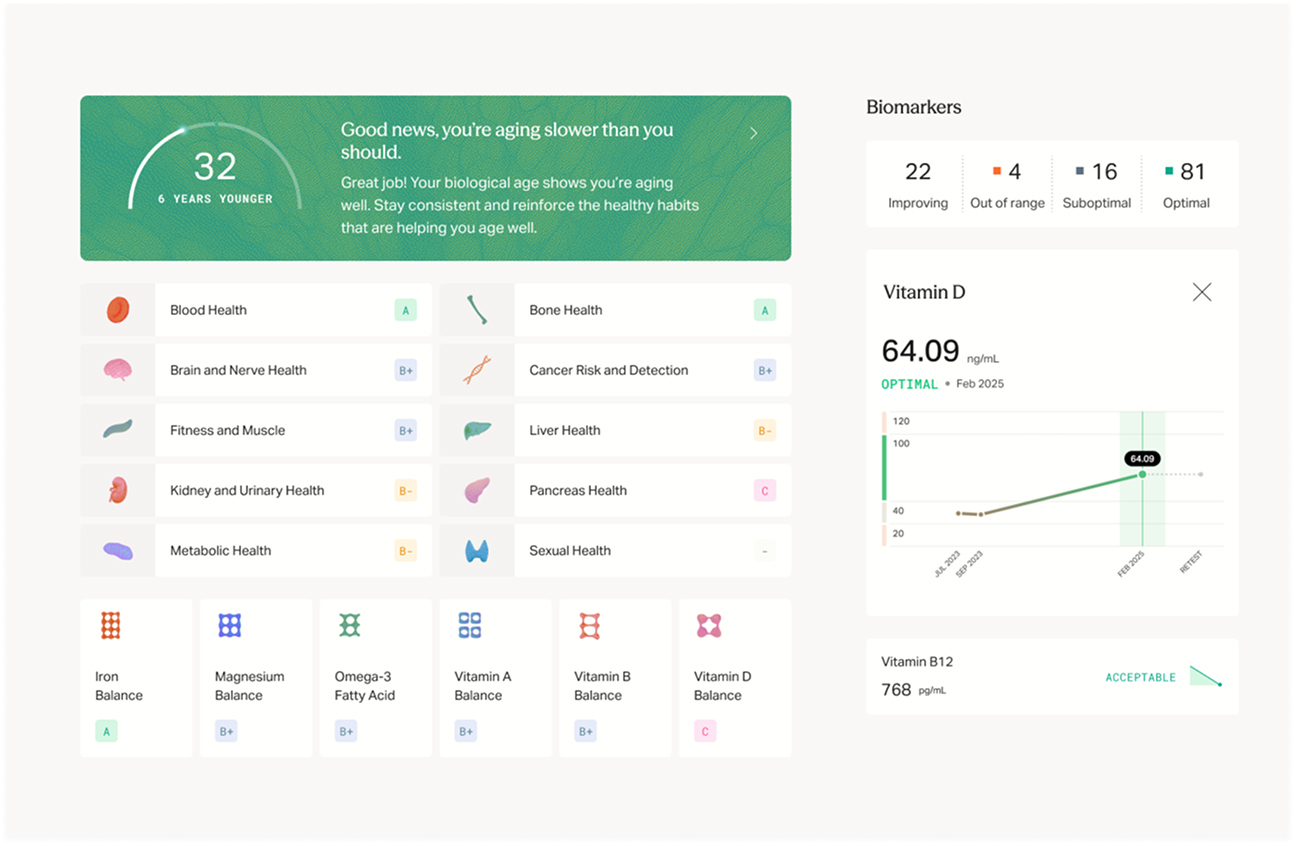
Every result comes with a plan
Your scan report arrives in your Mito dashboard alongside your lab results, and your membership plan uses it.
-
Your report in your dashboard. Your scan results arrive in your Mito dashboard, next to your lab results.
-
Part of your plan. With membership, your personalized action plan takes your scan results into account.
Coronary Artery Calcium (CAC) Scan testing you can trust
Handled under HIPAA

- Order online, then book at a partner center
- Your data is encrypted, handled under HIPAA, and never sold

Overseen by our Care Team Lead
Every result, including your Mito Brain analysis, is checked by Rhonda Collins, FNP-C, our Care Team Lead and a board-certified Family Nurse Practitioner with over 15 years of nursing experience across cardiac ICU, primary care, and dermatology.
Meet RhondaCommon Coronary Artery Calcium (CAC) Scan questions
What is a calcium score test?
What is a good calcium score?
What is a normal calcium score for my age?
How do I prepare for a calcium score test?
How long does a calcium score test take?
How much radiation is in a heart scan?
What happens if my calcium score is high?
Does a calcium score test show blockages?
How often should I get a calcium score test?
How much does a calcium score test cost?
Is a calcium score test worth it?
Where can I get a calcium score test near me?
How does pricing work?
Every test shows the member price next to the standard non-member price, so you can see what membership saves you. The member price is our cost, covering the lab and what it takes to run the service. It is never a profit on the test itself. Mito makes its money on the membership, not on marking up your tests. Membership is $9 per month or $99 per year, and any applicable lab order or draw fee is itemized before you pay.
Is this eligible for HSA/FSA?
Yes. Mito's lab tests are HSA/FSA eligible, so you can pay with pre-tax dollars.
Add the test to your cart and select "Pay with HSA/FSA" at checkout. You'll finish on the secure checkout page of Flex, our HSA/FSA payments partner, and Flex emails you an itemized receipt from notifications@withflex.com for your records.
Most Mito tests are auto-substantiated, so you usually won't need a Letter of Medical Necessity. If your HSA/FSA administrator asks for more, contact us and we'll help.
Who can order a scan or fitness test?
You must be 18 or older to order a scan or fitness test through Mito. For most of them, you answer a few short health questions before you add one to your cart, so we can check that the test is right for you.
- Coronary Artery Calcium Scan: for people aged 40 to 75 with at least one heart risk factor and no known heart disease or heart symptoms. Risk factors include high cholesterol or blood pressure, diabetes, a family history of heart disease, a BMI over 25, smoking, or an inactive lifestyle. You'll also give your primary care provider's details.
- DEXA scans: not available if you're pregnant or may be pregnant, or if you've recently had a barium exam. If you have metal implants, a physician reviews your answers first.
- VO2 Max Test: not available if you're pregnant. Depending on your answers, you may need clearance from your own doctor before your appointment can be confirmed.
- Resting Metabolic Rate (RMR) Test: there are no health questions. You only accept the testing center's terms. It isn't recommended if you're pregnant or breastfeeding, and if you're ill, book once you've recovered.
If your answers mean a test isn't a good fit, you'll see why before you buy.
Do I need a doctor's order for a scan or fitness test?
No. If your test needs a physician's order, it's arranged for you as part of booking. You don't need to contact your own doctor or bring an order with you.
The one exception is the VO2 Max Test. If your health questionnaire shows you need medical clearance, we'll ask your own doctor to sign off first.
Do DEXA or calcium score scans involve radiation?
Yes, both use a low dose of radiation. The VO2 Max Test and the Resting Metabolic Rate (RMR) Test use none.
- DEXA scans use a very low dose: a tiny fraction of a chest X-ray, and less than a day of natural background radiation.
- A coronary artery calcium scan uses a low dose, usually about 1 to 2 millisieverts (mSv). That's roughly 6 months of natural background radiation, and a fraction of the dose of a coronary CT angiogram. For most people with heart risk factors, the benefit outweighs the small risk.
Don't have a DEXA or calcium score scan if you're pregnant or think you may be.
How do I book my scan or fitness test appointment?
After you buy your scan or fitness test, open your Mito dashboard and:
- Answer the testing center's health questions for your test, if it has any. Some tests also ask for an emergency contact or your primary care doctor's details.
- Enter your ZIP code to find the nearest testing center.
- Pick two appointment times: your preferred time and a backup.
The center then confirms one of those times, usually within hours. We'll email you at each step: when we receive your booking request, when the center confirms your appointment, and a reminder before your visit. If your appointment is cancelled or missed, we'll let you know by email too.
What's the difference between "appointment requested" and "appointment confirmed"?
Requested means we've sent your preferred times to the testing center, but the appointment isn't final yet. It may still be waiting on the center, on your health questions, or on a doctor's clearance.
Confirmed means the center has finalized your appointment and expects you at the date and time in your confirmation email.
Please don't treat a requested appointment as final. If it hasn't been confirmed within 48 hours, message Mito Concierge or email help@mitohealth.com.
What happens if I cancel or reschedule my scan or fitness test appointment?
You can reschedule or cancel from your Mito dashboard.
- Rescheduling: your first two reschedules are free when you make them more than 24 hours before your confirmed appointment. Each reschedule after that costs $25. If the center changes your time, that doesn't count toward your free reschedules.
- Cancelling more than 24 hours ahead: your purchase stays open while our care team reviews whether to refund it or use it to rebook. Refunds aren't automatic, so message us if you have a preference.
- Cancelling 24 hours or less before your appointment, or missing it: your purchase is forfeited. A new appointment needs a new purchase at the full price.
How do I prepare for my scan or fitness test?
Follow the instructions in your confirmation email, because they can affect your results. If you don't prepare as instructed, the center may not be able to do the test.
For every appointment
- Bring a photo ID and your confirmation or reminder email.
- Arrive about 5 minutes before your appointment. Many centers have little waiting space, so don't arrive much earlier. If you're late, the center may not be able to see you.
- Don't bring children, and avoid bringing guests.
DEXA scans
- Wear comfortable clothes, such as gym clothes, with no metal or hard plastic. That means no zippers, buttons, underwire, jewelry, or watches.
- Don't eat for 2 to 4 hours before. Drink water normally.
- Avoid intense exercise, saunas, and steam rooms for 12 hours before.
- Tell the staff if you have metal in your body, such as a pin or a joint replacement.
VO2 Max Test
- Don't exercise for 24 hours before.
- Be well hydrated and fed, but avoid a heavy meal in the 2 to 3 hours before. A light snack is fine.
- Wear the clothes and shoes you normally exercise in.
- Allow 1 to 1.5 hours.
Coronary Artery Calcium Scan
- No alcohol or caffeine for 4 hours before.
- No strenuous exercise for 24 hours before.
- Wear clothes that are easy to take off, with no metal. A gown may be provided.
Resting Metabolic Rate (RMR) Test
- Book a morning appointment, so most of the fast happens while you sleep.
- Have nothing but water for 12 hours before: no food, caffeine, or alcohol.
- Wait at least 4 hours after nicotine, appetite suppressants, or allergy medication.
- No moderate or vigorous exercise for 24 hours before.
- Leave extra time so the trip in is calm, without brisk walking, running, or lots of stairs.
When and how will I get my scan or fitness test results?
Your results are uploaded to your Mito dashboard, where you can view and download them. They usually arrive within 24 hours of your appointment, and officially within 2 business days. If you haven't seen them after 5 business days, message Mito Concierge or email help@mitohealth.com and we'll check.
Can I talk to someone about my scan or fitness test results?
Yes. Consultations are available to review your results and talk through what they mean for you. You can book one from your Mito dashboard.
What happens if my calcium score is above 0?
A score above 0 means some calcified plaque was found in your heart's arteries. The scan measures calcium in plaque. It doesn't show blockages or how narrow your arteries are.
If your score is above 0, the testing center contacts you to arrange a call about your result and sends your results to the primary care doctor you named when you booked. You can also book a Mito consultation to go through your results.
If you have chest pain, shortness of breath, or other symptoms that worry you, call 911 or go to the nearest emergency room.
How do availability and prices vary by state?
Available in all 50 states and Washington, DC.
| States | Provider | Availability | Member price | Non-member price |
|---|---|---|---|---|
| All 50 states and DC | Fitnescity Health | Available | $249.00 | $348.60 |