
How to Get Tested for Clonal Hematopoiesis (CHIP): Cost and Steps
Clonal hematopoiesis testing needs a clinician order and a specialized blood draw. Here is how to arrange one, what it costs, and how to prepare.
- Published
- August 27, 2026
- Read time
- 5 min read
- Medically reviewed by
-
 Rhonda Collins, FNP-C
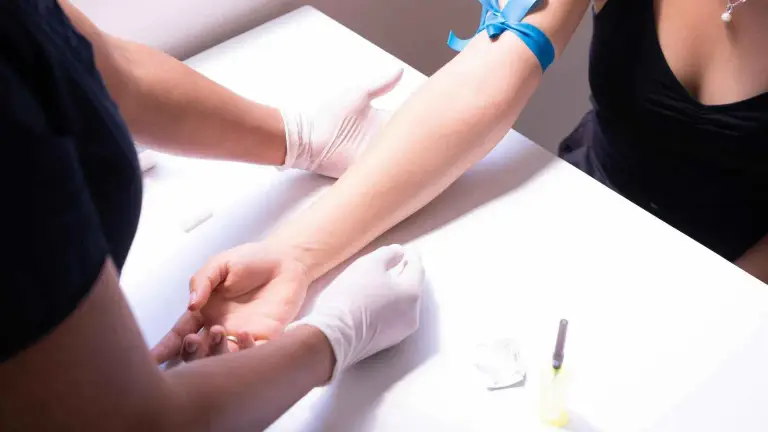
Table of contents
To get tested for clonal hematopoiesis (CH), you need a clinician to order a specialized DNA sequencing blood test, because a standard complete blood count does not detect it. With Mito, you request the CardioHemeRISK test, a telehealth partner reviews your request and orders it if appropriate, a mobile phlebotomist draws your blood at home or at work, the lab processes the sample, and you receive a CardioHemeRISK score with personalized action items. The test is $899.64, or $642.60 for Mito members, is HSA/FSA eligible, and results take about 12 working days.
Clonal hematopoiesis is a measurable, age-associated signal, not a diagnosis. It has strong observed associations with cardiovascular events and blood cancers, but those associations come from observational studies, and association is not causation. CH is not a guideline-endorsed population screening test. A clinician interprets your result in the full context of your history.
How do you actually get a CHIP test?
CH mutations sit inside the DNA of your blood cells at very low levels, so detecting them takes targeted next-generation sequencing rather than a routine blood panel. That means the test is prescription only. Here is the path from interest to result with Mito:
- Request the test. You start the CardioHemeRISK request through Mito’s telehealth partner.
- Clinical review and order. The partner reviews your request and places the order if the test is appropriate for you.
- Mobile blood draw. A mobile phlebotomist comes to your home or workplace and collects the sample, so you do not have to visit a lab.
- Lab processing. The accredited lab sequences the sample and calculates your score.
- Score and action items. Your CardioHemeRISK score and personalized next steps are delivered back through the telehealth partner.
When you are ready, you can start with CardioHemeRISK. If you would rather map out your broader risk picture first, take the Mito quiz.
What does a clonal hematopoiesis test cost?
CardioHemeRISK is $899.64 for non-members, or $642.60 for Mito members (membership is $9 a month). It is HSA/FSA eligible, so you may be able to use pre-tax funds, and the at-home blood draw is included at no additional cost. Confirm current pricing on the product page.
Detail | CardioHemeRISK |
|---|---|
Price | $899.64 non-member, $642.60 member |
Payment options | HSA/FSA eligible; $9/month Mito membership unlocks member pricing |
Blood draw | At-home draw included at no additional cost |
Turnaround | About 12 working days |
Sample | 2 x 10 mL Streck tubes, collected by mobile phlebotomy |
Order type | Prescription only, ordered through a telehealth partner |
Pricing and logistics per Mito CardioHemeRISK product information, August 2026. Confirm current details before ordering.
How long do CHIP test results take?
Turnaround is about 12 working days from when the lab receives your sample. Your CardioHemeRISK score and personalized action items are then delivered back through the telehealth partner.
How do you prepare for the blood draw?
Preparation is light. Avoid a heavy meal in the 4 hours before your draw. There is no requirement to fast overnight. The collection uses 2 x 10 mL Streck tubes, which are specialized tubes that stabilize cell-free DNA, and the mobile phlebotomist brings everything needed.
Who cannot take the CardioHemeRISK test?
The test is not recommended for anyone who:
- has ever had a bone-marrow transplant, or
- has had a blood transfusion within the past 2 weeks.
Both situations can introduce blood cells or DNA that are not your own, which would confound the result. CardioHemeRISK also does not assess inherited or germline genetic risk, and it does not include every gene associated with cardiovascular or blood-cancer risk, so some at-risk individuals will have no detectable CH. Discuss your specific situation with the ordering clinician.
What makes ordering through Mito different?
Mito is built to turn a result into a plan, not just a number:
- Telehealth ordering. You do not need to find your own prescriber. Mito’s telehealth partner reviews the request and orders the test when it is appropriate.
- Mobile phlebotomy. A phlebotomist draws your blood at home or at work.
- Integrated with the rest of your bloodwork. You can view CardioHemeRISK alongside the rest of your Mito results, so a cardiovascular signal sits next to your other markers rather than in a silo.
- Concierge and a 1:1 consult. You can ask follow-up questions through Mito Concierge and book a 1:1 consultation to talk through what your score means and what to do next.
Clonal hematopoiesis testing questions
Can a regular blood test detect CHIP? No. A standard complete blood count measures cell counts, not the low-level DNA mutations that define CH. Detecting CH requires targeted DNA sequencing.
Do I need a doctor to order it? Yes. CardioHemeRISK is prescription only. Mito’s telehealth partner reviews your request and places the order if it is appropriate.
How much is the test? CardioHemeRISK is $899.64, or $642.60 for Mito members ($9 a month). It is HSA/FSA eligible. Confirm current pricing on the product page.
How long until I get results? About 12 working days after the lab receives your sample.
Do I have to fast? No overnight fast is required. Avoid a heavy meal in the 4 hours before your draw.
Is a positive result a diagnosis? No. A detected clone is a risk signal, not a diagnosis. Your clinician interprets it with the rest of your history and decides whether any follow-up is warranted.
Related reading
- What Is Clonal Hematopoiesis (CHIP)?
- Clonal Hematopoiesis (CHIP): The Complete Guide
- Does a Standard Blood Test Detect CHIP? CBC vs. CH Sequencing
Medical disclaimer
This article is for informational purposes only and does not constitute medical advice, diagnosis, or treatment. Clonal hematopoiesis testing is not a guideline-endorsed population screening test, and its disease associations come from observational research, so association does not prove causation. A detected clone is a risk signal, not a diagnosis. A qualified clinician should order the test when appropriate and interpret any result in the context of your symptoms, history, and other testing.
Popular lab tests

Comprehensive Metabolic Panel (CMP)
A 14-marker snapshot of kidney function, liver function, electrolytes, and blood sugar in one draw.
Complete Blood Count (CBC) with Differential and Platelet Count Test
A broad screen of red cells, white cells, and platelets that anchors most checkups.
The standard cholesterol workup for cardiovascular risk, and the baseline for tracking diet, exercise, or statin response.
Vitamin D, 25-Hydroxy (Calcidiol) Blood Test
The standard measure of vitamin D status, reflecting what you build from sun, diet, and supplements.