
CTX Blood Test Cost: 2026 Price Comparison Across U.S. Labs
What a CTX (C-telopeptide) blood test costs when you order it yourself, compared across Mito and other U.S. self-order labs, plus how to prepare and how CTX pairs with a DEXA scan.
- Published
- November 18, 2026
- Read time
- 6 min read
- Medically reviewed by
-
 Rhonda Collins, FNP-C

A CTX blood test costs $14.04 for Mito members when it runs at Quest. That is the lowest price in this comparison. Other U.S. self-order providers charged $50 to $129 for the same test when we checked on November 18, 2026. Without a membership, the Mito price for the Quest test is $19.66.
How much does a CTX blood test cost?
The table compares the price of the CTX test itself at each provider. Every row is serum C-telopeptide (CTX), ordered as a single test with the lab and test code shown. Each provider also charges its own draw, requisition, or physician fee per order. Those fees are left out of every row, Mito’s included, so the table compares test prices only.
Provider | Lab and test code | CTX test price | Checked |
|---|---|---|---|
Mito (member) | Quest 17406 | $14.04 | November 18, 2026 |
Mito (member) | Labcorp 500089 | $35.64 | November 18, 2026 |
Jason Health | Quest 17406 | $50 | November 18, 2026 |
GoodLabs | Quest 17406 | $62 | November 18, 2026 |
Walk-In Lab | Labcorp 500089 or Quest 17406 | $129 | November 18, 2026 |
Prices are snapshots, not guarantees. Mito prices come from its live product page. Competitor prices come from each provider’s own test page. Jason Health shows $68 on its test page, which adds its $18 per-order requisition charge to the $50 test price. Ulta Lab Tests is not included because its test page could not be checked. Confirm the final checkout total and your state’s availability before you order.
The Mito CTX test is available in every state and DC except Hawaii, New Jersey, New York, and Rhode Island, at Quest or Labcorp. Check the current price and the lab options for your state on the CTX blood test product page.
What does a CTX blood test measure?
CTX stands for C-terminal telopeptide of type I collagen. Type I collagen is the main protein in bone. When bone-resorbing cells break bone down, fragments of this collagen are released into the blood, and CTX is one of them. A higher CTX level means bone is being broken down faster [1].
Bone is replaced throughout life in a cycle called remodeling: old bone is removed, then new bone is laid down in its place. CTX measures the removal side of that cycle. Its partner on the formation side is P1NP (also written PINP), a fragment released when new collagen is made. The International Osteoporosis Foundation and the International Federation of Clinical Chemistry recommend CTX and P1NP as the reference markers of bone turnover [1]. Mito sells the PINP Blood Test and the Osteocalcin Blood Test, another formation marker, for people who want to measure both sides.
A CTX result does not diagnose osteoporosis. It measures how fast bone is turning over at the time of the draw, not how much bone you have.
Who orders a CTX test?
CTX is most often used to track bone loss and its treatment, especially after age 50:
- Monitoring osteoporosis treatment. Drugs that slow bone loss, such as bisphosphonates, lower CTX within weeks. Expert groups suggest measuring CTX or P1NP before starting an oral bisphosphonate and again at 3 months. A fall larger than the normal day-to-day variation suggests the treatment is working and being taken as prescribed [1].
- Menopause and midlife bone loss. The rate of bone turnover rises by 50% to 100% at menopause because estrogen falls [1]. CTX measures that turnover directly.
- Tracking a training or nutrition change. Bone markers change within weeks, much sooner than bone density. See our guide to the best exercise for bone density for how CTX and osteocalcin can track a new routine.
How do you prepare for a CTX blood test?
Book a morning draw and fast overnight. CTX is more sensitive to timing and food than other bone markers, so the conditions of the draw change the number [1]:
- Time of day. CTX peaks between about 1:30 and 4:30 a.m. and falls to its lowest point between about 11 a.m. and 3 p.m. The swing is 40% to 60% above and below the daily average. Samples are best collected at the same time each time, ideally before 10 a.m.
- Food. Eating lowers CTX. In studies, a morning meal lowered CTX by about 18% to 29%, so a fasting sample gives a more reliable result.
Mito’s CTX product page asks for a fast of at least 12 hours, an appointment between 8 and 10 a.m., and no biotin for at least 3 days before the test. If you repeat the test, keep the same time, fasting state, and lab each time, because results from different CTX assays are not always directly comparable [1].
A few other things raise CTX and are worth noting when you compare results [1]:
- A recent fracture. Bone turnover markers rise while a fracture heals and can take about a year to return to baseline.
- Advanced kidney disease. CTX builds up in the blood when kidney function is severely reduced.
CTX and DEXA: why they pair well
CTX and a DEXA scan answer different questions. A DEXA scan measures bone density at the hip and spine, and it is the standard method used to diagnose osteoporosis [2]. CTX measures how fast bone is being broken down right now. Density changes slowly, over a year or more. CTX can change within weeks.
Together they show both where your bones stand and which direction they are moving. Mito sells the DEXA Bone Density Scan without a referral. For what the T-score and Z-score on the report mean, see our guide to reading DEXA scan results. For when bone testing makes sense before the usual screening ages, see bone density in your 30s and 40s.
Does insurance or Medicare cover a CTX test?
Sometimes, when a clinician orders it for a covered reason. Medicare’s national coverage policy for collagen crosslink tests, which include CTX, covers testing to monitor treatment in people with osteoporosis, Paget’s disease of bone, or risk of osteoporosis. It limits how often repeat tests are covered and treats repeat testing as unnecessary when bone resorption is not raised [3]. Private plans set their own rules.
Every price in the table above is a self-pay cash price. A self-ordered test is not billed to insurance or Medicare, so you pay the listed price plus the provider’s per-order fee.
This guide is for educational purposes and does not replace medical advice, diagnosis, or treatment.
References
- Schini M, et al. Bone turnover markers: basic biology to clinical applications. Endocr Rev. 2023. PMC10166271
- RadiologyInfo.org: Bone Densitometry (DEXA, DXA)
- Centers for Medicare & Medicaid Services: National Coverage Determination 190.19, Collagen Crosslinks, Any Method
Bone tests discussed in this guide
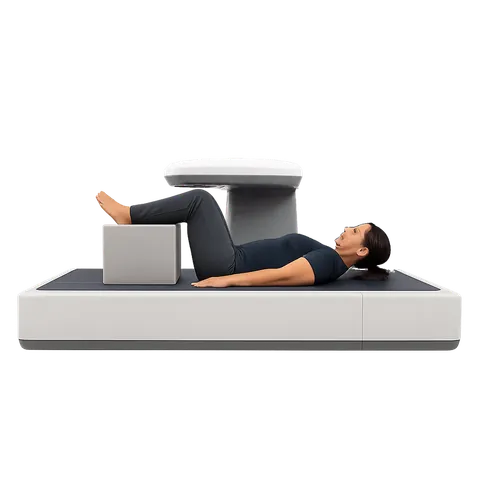
A bone density test of your hip and spine, the DEXA scan guidelines use for osteoporosis.
Procollagen Type I Intact N-Terminal Propeptide (PINP) Blood Test
View current details, availability, and member pricing.
View current details, availability, and member pricing.