


Urinalysis Test w/Reflex to Culture
A broad screen of your urine that flags infection, kidney issues, blood sugar problems, and more.
Consider this test if:
- Painful, frequent, or urgent urination, or cloudy or foul-smelling urine
- Blood in the urine, flank or lower back pain, or unexplained swelling
- Screening kidney and metabolic health as part of a general baseline
- Diabetes or high blood sugar, to check for glucose, ketones, or protein spilling into urine
- Following up on a prior abnormal urine result or a history of recurrent UTIs
Check availability by location.
Select a state to see whether this test is offered there.
Reflex testing
If your urinalysis shows signs of a possible infection, such as nitrites or leukocyte esterase, a urine culture runs automatically to identify the bacteria involved and guide treatment. This is done at no additional cost.
Pre-test considerations
No fasting required. A clean-catch, midstream sample is best: clean first, start the stream, then collect midstream to avoid contamination. Note that heavy vitamin C intake, some medications, and recent intense exercise can affect certain results, and a sample taken during your period may show blood that is not from the urinary tract.

Video consult with your Care Team
A 1:1 call to discuss your health.
What members say on Trustpilot
What this test is for
A urinalysis examines the physical, chemical, and microscopic properties of urine, including color, pH, protein, glucose, ketones, bilirubin, blood, nitrites, leukocyte esterase, and cells or crystals in the sediment. It is one of the most useful general screens available: protein or blood can point to kidney damage, glucose and ketones can flag uncontrolled blood sugar, and nitrites with leukocyte esterase suggest a urinary tract infection. It is commonly ordered to investigate symptoms like painful or frequent urination, flank or back pain, blood in the urine, or unexplained swelling, and it also works well as a routine baseline. Because it covers many analytes at once, an abnormal finding usually narrows down which more specific test to run next rather than diagnosing a single condition on its own.
Biomarkers tested
Includes 23 biomarkers
- Specimen
- Urine
- Measures
- Appearance
- Specimen
- Urine sediment
- Method
- Automated cell count
- Measures
- Count per area
This dipstick check flags whether bilirubin, a breakdown product of old red blood cells that your liver normally processes into bile, is leaking into your urine. Healthy urine carries none of it, so a positive result points to conjugated bilirubin backing up into the bloodstream, a sign of bile duct obstruction, hepatitis, or other liver dysfunction. It's a useful piece of the puzzle when you're investigating dark urine, yellowing skin or eyes, pale stools, itching, or unexplained fatigue, and it often shows up on the same strip as urobilinogen for a fuller read on liver and bile flow.
- Specimen
- Urine
- Method
- Test strip
- Measures
- Presence / threshold
- Specimen
- Urine
- Method
- Automated
- Measures
- Presence / threshold
- Specimen
- Urine sediment
- Method
- Automated cell count
- Measures
- Count per area
This dipstick test checks whether glucose is spilling into your urine, which normally shouldn't happen because your kidneys reclaim virtually all of it back into the blood. Glucose shows up in urine when blood sugar climbs high enough to overwhelm that reabsorption, most often from undiagnosed or poorly controlled diabetes. It's a quick, low-cost flag rather than a precise reading, so a positive result points you toward blood-based tests like fasting glucose or A1c to confirm what's actually happening.
- Specimen
- Urine
- Method
- Test strip
- Measures
- Presence / threshold
- Specimen
- Urine
- Method
- Computer assisted
- Measures
- Presence / threshold
This dipstick screen detects hemoglobin in urine, the protein that carries oxygen in red blood cells and, when present in urine, signals that blood is leaking somewhere along the kidneys or urinary tract. A positive result points to causes ranging from kidney irritation, UTIs, kidney stones, or strenuous exercise, to more serious conditions like kidney disease that warrant follow-up. It is a simple way to catch silent urinary tract or kidney issues before symptoms like pain, changes in urination, or visible blood appear.
- Specimen
- Urine
- Method
- Test strip
- Measures
- Presence / threshold
- Specimen
- Urine
- Method
- Automated
- Measures
- Presence / threshold
This dipstick test detects ketones spilling into urine when the body burns fat for fuel instead of glucose. It's useful for tracking a ketogenic or low-carb diet, confirming your body has shifted into fat-burning mode, or checking on a fasting protocol. Unexplained positive results paired with high blood sugar, excessive thirst, or fatigue warrant prompt follow-up, since that combination can signal diabetic ketoacidosis rather than diet-driven ketosis.
- Specimen
- Urine
- Method
- Test strip
- Measures
- Presence / threshold
Leukocyte esterase is an enzyme released by white blood cells, and this dipstick test detects it in urine as a marker of inflammation in the urinary tract. A positive result signals that neutrophils have shown up to fight something, usually a urinary tract infection, and often shows up alongside symptoms like burning with urination, urgency, frequency, or pelvic discomfort. It pairs with urine nitrites and a urinalysis to confirm infection and decide whether further culture or treatment is needed.
- Specimen
- Urine
- Method
- Test strip
- Measures
- Presence / threshold
This dipstick reading detects nitrite in urine, produced when certain bacteria (E. coli and other common culprits) convert dietary nitrate into nitrite as they multiply. A positive result signals a likely urinary tract infection and pairs with leukocyte esterase to confirm it, useful when you're tracking down burning urination, urgency, frequency, or pelvic discomfort. It's also a quick proactive check if you're prone to recurrent UTIs and want to catch one early, before it climbs to the kidneys.
- Specimen
- Urine
- Method
- Test strip
- Measures
- Presence / threshold
- Specimen
- Urine
- Measures
- Concentration
- Specimen
- Urine
- Method
- Computer assisted
- Measures
- Presence / threshold
- Specimen
- Urine
- Method
- Automated
- Measures
- Presence / threshold
- Specimen
- Stool
- Measures
- Presence / threshold
- Specimen
- Urine
- Method
- Automated
- Measures
- Presence / threshold
- Specimen
- Urine
- Method
- Computer assisted
- Measures
- Presence / threshold
Urine color is a simple visual observation, part of a standard urinalysis, that reflects hydration, diet, medications, and sometimes blood or bile in the urine. Pale yellow signals good hydration, while dark amber urine points to concentrated urine and dehydration, and red, brown, or tea colored urine can flag blood, muscle breakdown, or liver issues that warrant a closer look. It's a quick baseline check alongside other urine markers, or a useful clue when investigating unusual fatigue, dark urine, or changes in urination.
- Specimen
- Urine
- Measures
- Color
- Specimen
- Urine
- Method
- Automated
- Measures
- Presence / threshold
This dipstick check flags whether protein is spilling into your urine at all, a quick presence or absence read rather than a precise count. Healthy kidneys keep protein locked in the blood, so a positive result signals that the filtering units are leaking and deserves a closer look with a quantitative test like urine albumin to creatinine ratio. It's a useful baseline for anyone tracking kidney health alongside blood pressure or blood sugar, and a natural next step if you've noticed foamy urine, swelling in the legs or eyes, or unexplained fatigue.
- Specimen
- Urine
- Method
- Test strip
- Measures
- Presence / threshold
- Specimen
- Urine
- Method
- Test strip
- Measures
- Concentration
- Specimen
- Urine
- Method
- Automated
- Measures
- Presence / threshold

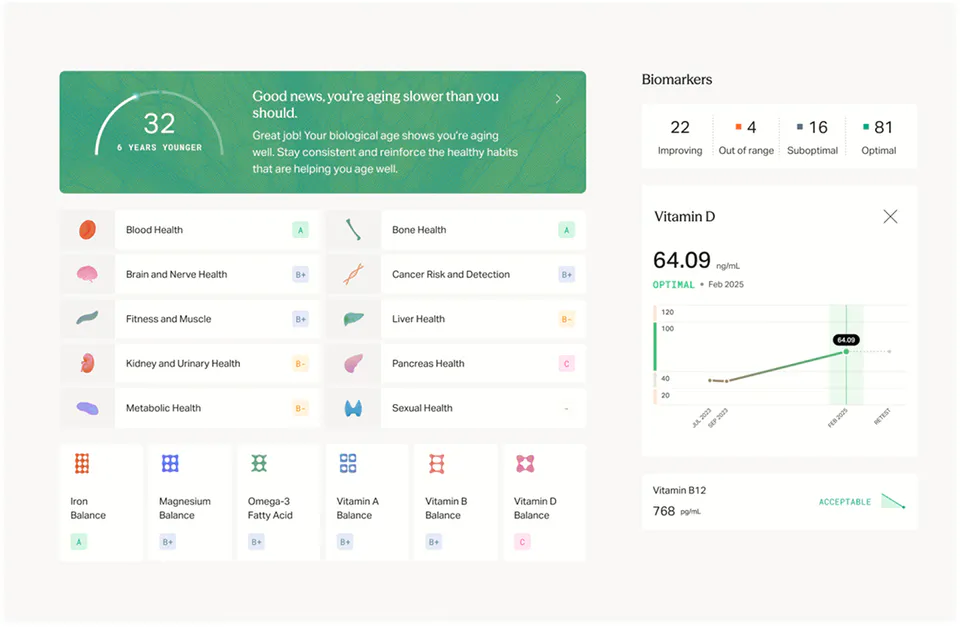
What you'll learn
Insights that connect the dots. A clinician reads your whole picture, not one result in isolation, connecting family history, past results, and lifestyle into clear next steps.
Your personalized action plan. Nutrition, supplements, and training in one clinician-reviewed protocol, updated as your results change.
Track your trends. Upload results from any lab and see each biomarker trend over time, so you know what is working.
Never miss a recheck. Mito tells you what is worth retesting and when, then reminds you so nothing slips.
What to expect
- 1 Book instantly
Click, book, done. Choose a convenient lab location near you. Transparent, up-front pricing.
- 2 Quick lab visit
Testing to fit your busy schedule, usually 15 minutes or less. Walk-in and appointments available.
- 3 Typical results in 1-2 days
Your results post straight to your dashboard as soon as the lab completes them.
- 4 Expert guidance
Included with Mito membership. A clinician reviews your results and your personalized action plan follows, with clear next steps.
What members are saying
-
@nasdaily
-
15/10 experience - I felt actually taken care of
Super impressed with my Mito experience - the thoroughness of the intake, the data tracking and the doctor's visit.
RS Reena Sudan -
@ellarosemcfadin
-
Helped show an overall picture
I would highly recommend this service to anyone that wants a more in-depth picture of their health and labs. The platform is super user friendly.
BS Bo Sal -
@katelyn_kim
-
Specific and actionable advice
It felt like, for the first time, I had real data guiding me to make meaningful changes and I've definitely noticed the difference.
MH Maya Hickey -
@bryce_witmer
-
Tired of arguing with my PCP
After extensive research, I decided Mito was the best option. The insights were clear and make sense. Mito gave me peace of mind and a path to follow.
JO Josh -
@alexandradawson
-
3x the tests for less money
A great alternative to the basic blood work at your local clinic. Love the report card format. Much better value.
P Page -
@daniklass
-
Best $9 a month I spend
The action plan changes every time new results come in. I've actually never had a health company recommend doing less. Refreshing.
DP Devi Patel -
@natalieefer
-
Finally, prices that make sense
Every test is published. I can see what it costs and what I save as a member. No surprises.
KT Kenji Tanaka -
@tyler_sarkisian
Everything your health needs,
in one membership
-

Every test at our cost
Members pay our cost on every test, with lab fees passed straight through. The full receipt is itemized, never padded.
-

Continuous tracking, all in one place
Upload past labs and watch your trends over time. Every marker and visit lives in one longitudinal record, so all your care stays together.
-
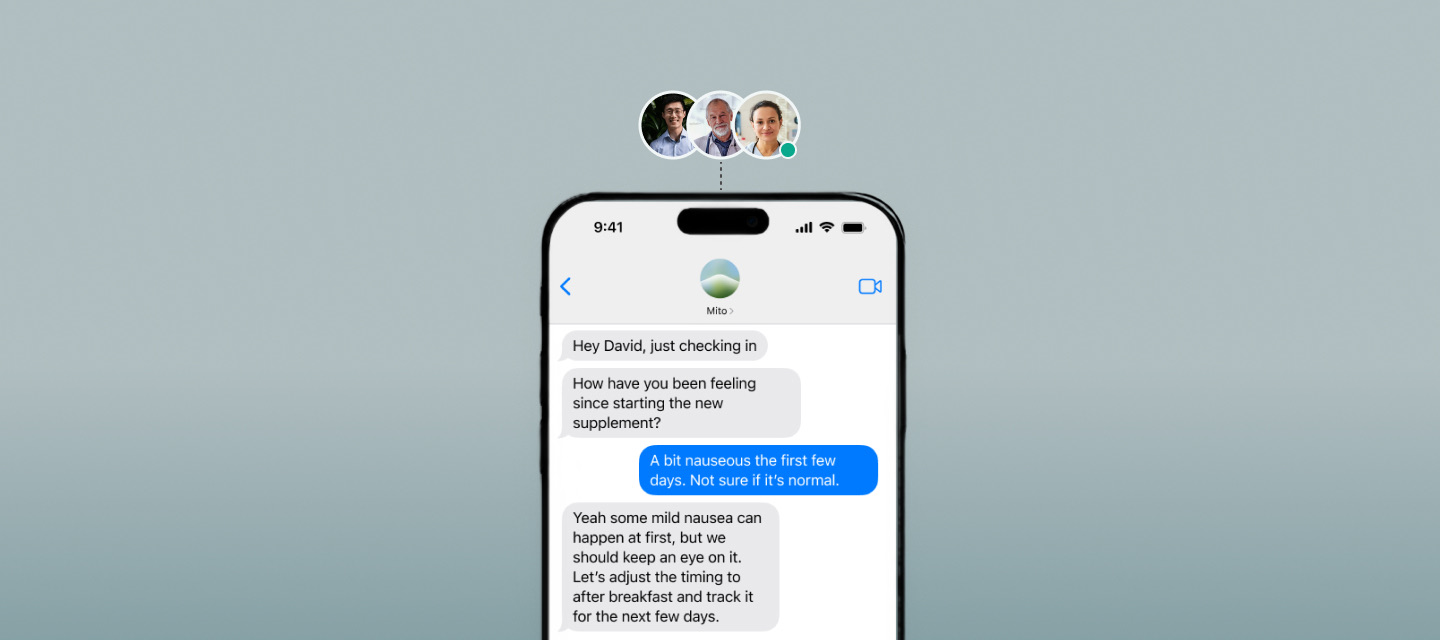
Year-round clinician support
Text anytime and get clinician-reviewed answers. When you want to go deeper, 1:1 consultations are available at affordable rates.
All for $9/month
Order any test or consult without joining. For $9/month, members unlock member prices, trend tracking, and year-round clinician guidance.
Mito Membership
$9 /mo
cancel anytime
Without membership
$0
pay as you go
At-cost pricing on labs, scans, and more
Supplements at member rates NEW
On-demand clinician consults when you need guidance
Personalized action plans across supplements, exercise, nutrition, and sleep
AI health coaching to help you act on your results
Year-round medical support, with in-chat clinician escalation
All your health records in one personal vault, with trends and biological age tracking
Early access to new diagnostics and product releases
More tests to consider
Loading essentials…
Frequently asked questions
View all FAQsHow does pricing work?
Every test shows the member price next to the standard non-member price, so you can see what membership saves you. The member price is our cost, covering the lab and what it takes to run the service. It is never a profit on the test itself. Mito makes its money on the membership, not on marking up your tests. Membership is $9 per month or $99 per year, and any applicable lab order or draw fee is itemized before you pay.
Where do I get tested?
Choose an available partner lab at checkout. If your cart contains multiple blood tests, Mito helps consolidate the eligible tests at one lab when possible. At-home kits and scans follow the collection or appointment process shown on their product page.
Is this eligible for HSA/FSA?
Yes. Mito's lab tests are HSA/FSA eligible, so you can pay with pre-tax dollars.
Add the test to your cart and select "Pay with HSA/FSA" at checkout. You'll finish on the secure checkout page of Flex, our HSA/FSA payments partner, and Flex emails you an itemized receipt from notifications@withflex.com for your records.
Most Mito tests are auto-substantiated, so you usually won't need a Letter of Medical Necessity. If your HSA/FSA administrator asks for more, contact us and we'll help.
When will I get my results?
Your results appear in your Mito dashboard after the laboratory completes processing. A clinician then reviews them before your analysis and personalized action plan are finalized. Timing varies by test, and specialty assays and at-home kits may take longer.
Do I need a physician's order?
No. Mito provides the laboratory order when one is required, so you do not need to arrange a separate physician visit before purchasing.
How do availability and prices vary by state?
Available in 2 states.
| States | Provider | Availability | Member price | Non-member price |
|---|---|---|---|---|
| NJ and NY | BioReference | Available | $8.10 | $11.34 |
| All states and DC except NJ and NY | Not currently available |
Recently viewed
Loading essentials…