

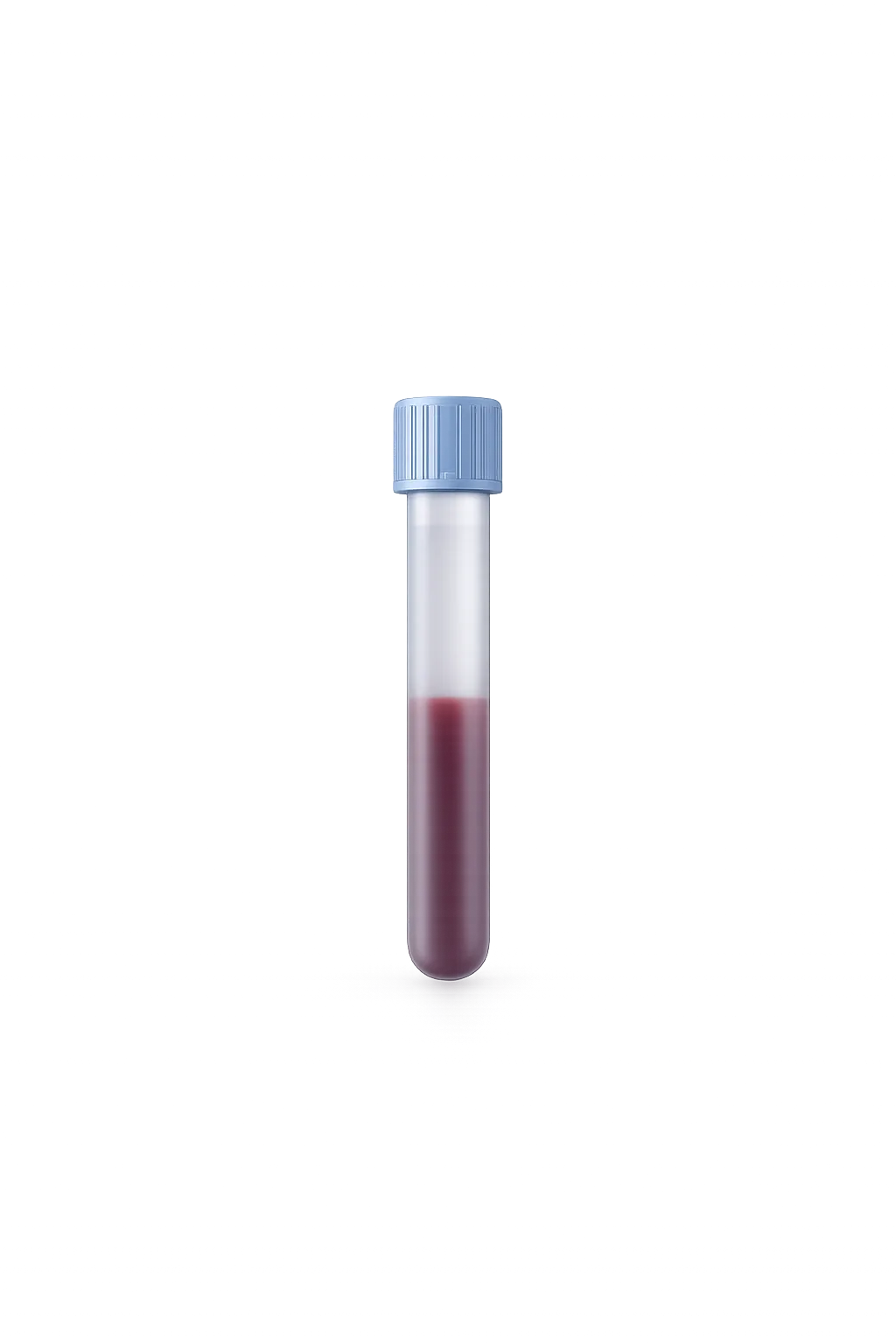
PSA, Total Blood Test with Reflex to PSA, Free
The main prostate screening marker, tracking changes that can signal enlargement, inflammation, or cancer.
Consider this test if:
- Routine prostate screening after age 50, or earlier with a family history of prostate cancer
- Urinary symptoms like weak stream, frequent nighttime urination, or difficulty starting
- Tracking a known enlarged prostate (BPH) or prior borderline PSA over time
- Following up an abnormal digital rectal exam
- Establishing a baseline PSA to compare against future results
- HSA/FSA eligible
- Typical results in 1-2 days · Reviewed by a real clinician
Blood draw at 3,300+ lab locations nationwide
Reflex testing
If your total PSA falls in the borderline range (typically 4.0 to 10.0 ng/mL), a free PSA test runs automatically to calculate the percent free PSA, which helps distinguish benign causes from ones that warrant biopsy. This is done at no additional cost.
Pre-test considerations
Avoid ejaculation, vigorous cycling, and prostate exams for about 48 hours before the draw, since these can transiently raise PSA. Recent urinary infection or prostate procedures also elevate the result, so time the test away from them. No fasting required.

Video consult with your Care Team
A 1:1 call to discuss your health.
What members say on Trustpilot
What this test is for
PSA (prostate-specific antigen) is a protein made by the prostate, and its level in blood rises with changes to prostate tissue. Elevated total PSA reflects a range of causes: benign prostatic hyperplasia (BPH), prostatitis, recent trauma or prostate manipulation, and prostate cancer. It is the standard blood marker for prostate screening and for tracking a known prostate condition over time. A single elevated result does not mean cancer, since BPH and inflammation raise it too, which is exactly why the free PSA reflex is useful in the borderline range.
This is the standard total PSA test measured to routine sensitivity. The separate ultrasensitive PSA is used mainly to monitor for recurrence after prostate cancer treatment, where very small changes near zero matter.
Biomarkers tested
Includes 1 biomarker
PSA is a protein made by prostate cells, and this test measures its total concentration in blood without separating the free and bound fractions. Levels rise with prostate enlargement, inflammation (prostatitis), and prostate cancer, which is why it's the standard tool for prostate cancer screening in men over 50 (or earlier with family history) and for tracking known prostate conditions over time. Rising trends matter as much as single values, so testing PSA on a routine schedule lets you catch upward movement early rather than reacting to a single high number.
- Specimen
- Serum or plasma
- Measures
- Mass concentration
Free PSA measures the fraction of prostate specific antigen that circulates unbound to blood proteins, as opposed to total PSA, which counts both bound and free forms. The ratio of free to total PSA helps distinguish benign prostate enlargement from prostate cancer when total PSA falls in a borderline range, since cancerous tissue tends to release more of the protein-bound form while benign tissue releases more free PSA. A low free PSA percentage raises suspicion for cancer and often prompts further evaluation, while a higher percentage supports a benign cause like BPH and can help men avoid an unnecessary biopsy.
- Specimen
- Serum or plasma
- Measures
- Mass concentration

What you'll learn
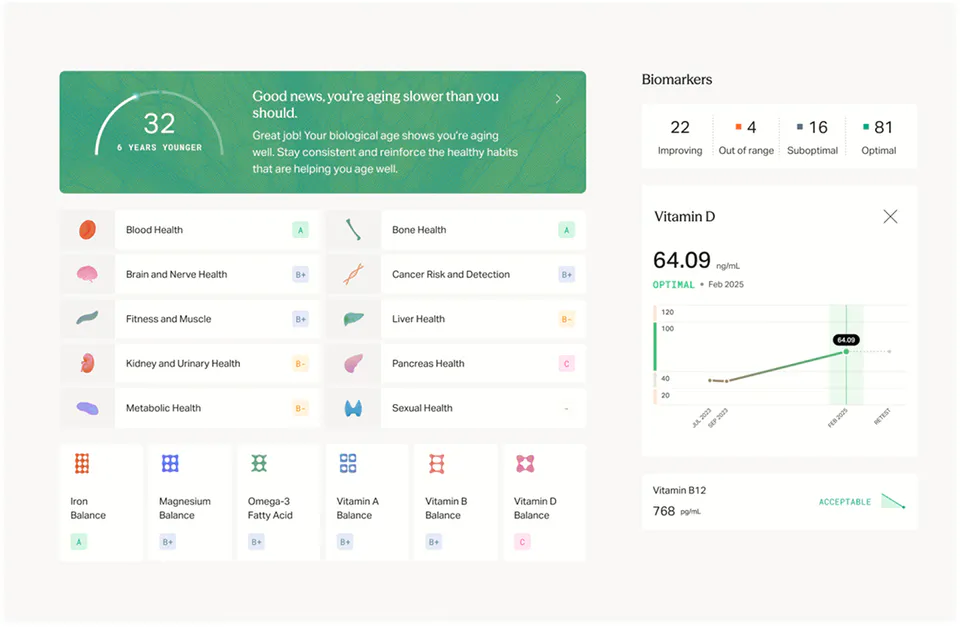
Insights that connect the dots. A clinician reads your whole picture, not one result in isolation, connecting family history, past results, and lifestyle into clear next steps.
Your personalized action plan. Nutrition, supplements, and training in one clinician-reviewed protocol, updated as your results change.
Track your trends. Upload results from any lab and see each biomarker trend over time, so you know what is working.
Never miss a recheck. Mito tells you what is worth retesting and when, then reminds you so nothing slips.
What to expect
- 1 Book instantly
Click, book, done. Choose a convenient lab location near you. Transparent, up-front pricing.
- 2 Quick lab visit
Testing to fit your busy schedule, usually 15 minutes or less. Walk-in and appointments available.
- 3 Typical results in 1-2 days
Your results post straight to your dashboard as soon as the lab completes them.
- 4 Expert guidance
Included with Mito membership. A clinician reviews your results and your personalized action plan follows, with clear next steps.
What members are saying
-
@nasdaily
-
15/10 experience - I felt actually taken care of
Super impressed with my Mito experience - the thoroughness of the intake, the data tracking and the doctor's visit.
RS Reena Sudan -
@ellarosemcfadin
-
Helped show an overall picture
I would highly recommend this service to anyone that wants a more in-depth picture of their health and labs. The platform is super user friendly.
BS Bo Sal -
@katelyn_kim
-
Specific and actionable advice
It felt like, for the first time, I had real data guiding me to make meaningful changes and I've definitely noticed the difference.
MH Maya Hickey -
@bryce_witmer
-
Tired of arguing with my PCP
After extensive research, I decided Mito was the best option. The insights were clear and make sense. Mito gave me peace of mind and a path to follow.
JO Josh -
@alexandradawson
-
3x the tests for less money
A great alternative to the basic blood work at your local clinic. Love the report card format. Much better value.
P Page -
@daniklass
-
Best $9 a month I spend
The action plan changes every time new results come in. I've actually never had a health company recommend doing less. Refreshing.
DP Devi Patel -
@natalieefer
-
Finally, prices that make sense
Every test is published. I can see what it costs and what I save as a member. No surprises.
KT Kenji Tanaka -
@tyler_sarkisian
Everything your health needs,
in one membership
-

Every test at our cost
Members pay our cost on every test, with lab fees passed straight through. The full receipt is itemized, never padded.
-

Continuous tracking, all in one place
Upload past labs and watch your trends over time. Every marker and visit lives in one longitudinal record, so all your care stays together.
-

Year-round clinician support
Text anytime and get clinician-reviewed answers. When you want to go deeper, 1:1 consultations are available at affordable rates.
All for $9/month
Order any test or consult without joining. For $9/month, members unlock member prices, trend tracking, and year-round clinician guidance.
Mito Membership
$9 /mo
cancel anytime
Without membership
$0
pay as you go
At-cost pricing on labs, scans, and more
Supplements at member rates NEW
On-demand clinician consults when you need guidance
Personalized action plans across supplements, exercise, nutrition, and sleep
AI health coaching to help you act on your results
Year-round medical support, with in-chat clinician escalation
All your health records in one personal vault, with trends and biological age tracking
Early access to new diagnostics and product releases
More tests to consider
Loading essentials…
Frequently asked questions
View all FAQsHow does pricing work?
Every test shows the member price next to the standard non-member price, so you can see what membership saves you. The member price is our cost, covering the lab and what it takes to run the service. It is never a profit on the test itself. Mito makes its money on the membership, not on marking up your tests. Membership is $9 per month or $99 per year, and any applicable lab order or draw fee is itemized before you pay.
Where do I get tested?
Choose an available partner lab at checkout. If your cart contains multiple blood tests, Mito helps consolidate the eligible tests at one lab when possible. At-home kits and scans follow the collection or appointment process shown on their product page.
Is this eligible for HSA/FSA?
Yes. Mito's lab tests are HSA/FSA eligible, so you can pay with pre-tax dollars.
Add the test to your cart and select "Pay with HSA/FSA" at checkout. You'll finish on the secure checkout page of Flex, our HSA/FSA payments partner, and Flex emails you an itemized receipt from notifications@withflex.com for your records.
Most Mito tests are auto-substantiated, so you usually won't need a Letter of Medical Necessity. If your HSA/FSA administrator asks for more, contact us and we'll help.
When will I get my results?
Your results appear in your Mito dashboard after the laboratory completes processing. A clinician then reviews them before your analysis and personalized action plan are finalized. Timing varies by test, and specialty assays and at-home kits may take longer.
Do I need a physician's order?
No. Mito provides the laboratory order when one is required, so you do not need to arrange a separate physician visit before purchasing.
How do availability and prices vary by state?
Available in 48 states and Washington, DC.
| States | Provider | Availability | Member price | Non-member price |
|---|---|---|---|---|
| All states and DC except HI, NJ, NY, and RI | Labcorp | Available | $22.34 | $31.28 |
| All states and DC except HI, NJ, NY, and RI | Quest Diagnostics | Available | $5.19 | $7.27 |
| NJ and NY | BioReference | Available | $29.80 | $41.72 |
| HI and RI | Not currently available |
Recently viewed
Loading essentials…