

Liver Fibrosis Risk Panel
Noninvasive scoring that flags liver scarring before symptoms appear, especially with fatty liver or hepatitis.
Consider this test if:
- Fatty liver, MASLD, or MASH found on imaging or suspected from metabolic risk
- Chronic hepatitis C, hepatitis B, or heavy alcohol use
- Type 2 diabetes, obesity, or metabolic syndrome and you want to screen for silent liver scarring
- Tracking whether weight loss, alcohol reduction, or treatment is changing your fibrosis risk over time
- Elevated liver enzymes on a prior panel and you want to gauge how concerning they are
- HSA/FSA eligible
- Typical results in 1 day · Reviewed by a real clinician
Blood draw at 1,400+ lab locations nationwide
Pre-test considerations
No fasting is required for the fibrosis scores. FIB-4 also factors in age, so results are interpreted with your age in mind. A recent significant change in platelets or AST from acute illness can shift the scores, so testing during a stable period gives the most representative result.

Video consult with your Care Team
A 1:1 call to discuss your health.
What members say on Trustpilot
What this test is for
This panel combines liver enzymes, bilirubin, albumin, and a complete blood count to calculate two validated fibrosis scores, APRI and FIB-4, which estimate the likelihood of scarring in the liver without a biopsy. Both scores lean heavily on the AST-to-platelet relationship, because as fibrosis advances AST tends to rise and platelets tend to fall. It is used to stratify people with metabolic dysfunction-associated steatotic liver disease (MASLD/MASH), chronic hepatitis C, or heavy alcohol use into low or high risk for significant fibrosis. A low FIB-4 is reassuring and can safely defer further workup; a high or indeterminate score is the trigger for imaging such as elastography or referral.
This is the fibrosis-risk version of standard liver testing. A Hepatic Function Panel reports the enzymes and proteins on their own, while this panel runs the blood count alongside them and turns the numbers into APRI and FIB-4 scores.
Biomarkers tested
Includes 29 biomarkers, 2 of them calculated from your results
Albumin is the protein your liver churns out in the largest quantity, and it does double duty: it holds water inside your blood vessels (so fluid doesn't leak into tissue) and ferries hormones, fatty acids, and medications through your bloodstream. Low albumin points to liver disease, kidney protein loss, chronic inflammation, or poor nutrition, and often shows up alongside swelling, fatigue, or unexplained weight loss. Because it reflects both liver production and overall protein status, it's a useful baseline check and a quick way to see whether inflammation or malnutrition is quietly dragging your protein reserves down.
- Specimen
- Serum or plasma
- Measures
- Mass concentration
- Specimen
- Serum or plasma
- Measures
- Enzyme activity
ALT is an enzyme that lives mostly inside liver cells, where it helps metabolize amino acids. When liver cells get inflamed or damaged, from alcohol, fatty liver, viral hepatitis, or certain medications and supplements, they leak ALT into the bloodstream, making it the most specific marker of liver cell injury on a standard panel. It's worth tracking as a baseline if you drink regularly, use supplements or medications processed by the liver, or carry extra weight, and worth investigating if you have unexplained fatigue, abdominal discomfort, or nausea, since ALT often rises well before symptoms do.
- Specimen
- Serum or plasma
- Measures
- Enzyme activity
AST is an enzyme that lives inside liver cells (and muscle and heart cells too), and it spills into your blood when those cells get damaged. High AST flags liver strain from alcohol, fatty liver, medications, or infection, though muscle damage from intense training can also push it up, which is why it's usually read alongside ALT to pinpoint the source. It's worth tracking as a baseline for liver health, before starting a new supplement or medication, or when investigating fatigue, abdominal discomfort, or unexplained changes in appetite.
- Specimen
- Serum or plasma
- Measures
- Enzyme activity
- Specimen
- Serum and blood
- Method
- Calculated
- Measures
- Ratio
- Specimen
- Whole blood
- Method
- Automated cell count
- Measures
- Number concentration
- Specimen
- Whole blood
- Method
- Automated cell count
- Measures
- Number fraction (%)
Direct bilirubin measures the conjugated fraction that your liver has already processed and packaged for excretion into bile, distinct from the unconjugated bilirubin still circulating unbound. When direct bilirubin rises, it points to a downstream problem: bile duct obstruction, gallstones, or liver cells struggling to excrete what they've already conjugated, rather than an upstream issue like excess red blood cell breakdown. It's the marker that helps separate liver and bile duct disease from other causes of jaundice, and it's worth checking alongside ALT, AST, and alkaline phosphatase if you're dealing with yellowing skin or eyes, dark urine, pale stools, or unexplained itching.
- Specimen
- Serum or plasma
- Measures
- Mass concentration
- Specimen
- Whole blood
- Method
- Automated cell count
- Measures
- Number concentration
- Specimen
- Whole blood
- Method
- Automated cell count
- Measures
- Number fraction (%)
- Specimen
- Whole blood
- Method
- Automated cell count
- Measures
- Distribution width
- Specimen
- Whole blood
- Method
- Automated cell count
- Measures
- Number concentration
- Specimen
- Whole blood
- Method
- Automated cell count
- Measures
- Number fraction (%)
Hematocrit measures the percentage of your blood volume made up of red blood cells, the cells that carry oxygen from your lungs to every tissue. Low hematocrit points to anemia and pairs with fatigue, breathlessness, dizziness, or poor exercise tolerance, while high hematocrit can reflect dehydration, high altitude, smoking, or overactive red cell production, and thickens blood in ways that matter for cardiovascular risk. It's a core piece of the complete blood count, useful as a baseline read on oxygen-carrying capacity and for tracking how iron status, training, or altitude exposure are shifting your blood over time.
- Specimen
- Whole blood
- Method
- Automated cell count
- Measures
- Volume fraction (%)
- Specimen
- Whole blood
- Measures
- Mass concentration
Immature granulocytes are neutrophil precursors that your bone marrow releases early when it's scrambling to meet demand, cells that normally stay put until fully mature. A raised count signals active infection, inflammation, or marrow stress before other markers catch up, making it one of the earliest flags on a routine CBC. If you're chasing down unexplained fever, fatigue, or signs of infection, this number often moves before white cell count or CRP tell the full story.
- Specimen
- Whole blood
- Method
- Automated cell count
- Measures
- Number concentration
- Specimen
- Whole blood
- Method
- Automated cell count
- Measures
- Number concentration
- Specimen
- Serum
- Method
- Calculated
- Measures
- Score
- Specimen
- Whole blood
- Method
- Automated cell count
- Measures
- Number concentration
- Specimen
- Whole blood
- Measures
- Presence / threshold
- Specimen
- Whole blood
- Method
- Automated cell count
- Measures
- Number fraction (%)
- Specimen
- Whole blood
- Method
- Automated cell count
- Measures
- Number fraction (%)
- Specimen
- Whole blood
- Method
- Automated cell count
- Measures
- Number concentration
- Specimen
- Whole blood
- Method
- Automated cell count
- Measures
- Number fraction (%)
- Specimen
- Whole blood
- Method
- Automated cell count
- Measures
- Ratio
- Specimen
- Red blood cells
- Method
- Automated cell count
- Measures
- Mean cell volume
- Specimen
- Whole blood
- Method
- Automated cell count
- Measures
- Number concentration
Total bilirubin measures the pigment left over when your body breaks down old red blood cells, a job the liver clears by processing it into bile. High levels point to a liver struggling to keep up (hepatitis, fatty liver, bile duct blockage) or red cells breaking down faster than normal, and often show up as yellowing skin or eyes, dark urine, or fatigue. It pairs with ALT, AST, and ALP to pinpoint whether a problem sits in the liver cells, the bile ducts, or upstream in the blood itself, and mildly elevated results with otherwise normal liver panels usually reflect Gilbert's syndrome, a harmless and common genetic quirk.
- Specimen
- Serum or plasma
- Measures
- Mass concentration
Total protein adds up albumin and globulins, the workhorses that hold fluid in your blood vessels, carry hormones and nutrients, and fuel your immune defenses. Low levels point toward liver disease, kidney loss of protein, malnutrition, or poor absorption, while high levels can flag chronic inflammation or dehydration. It's a quick baseline check within a metabolic panel, and if your levels drift off, it usually leads straight to albumin and globulin breakdowns to pinpoint what's driving it.
- Specimen
- Serum or plasma
- Measures
- Mass concentration

What you'll learn
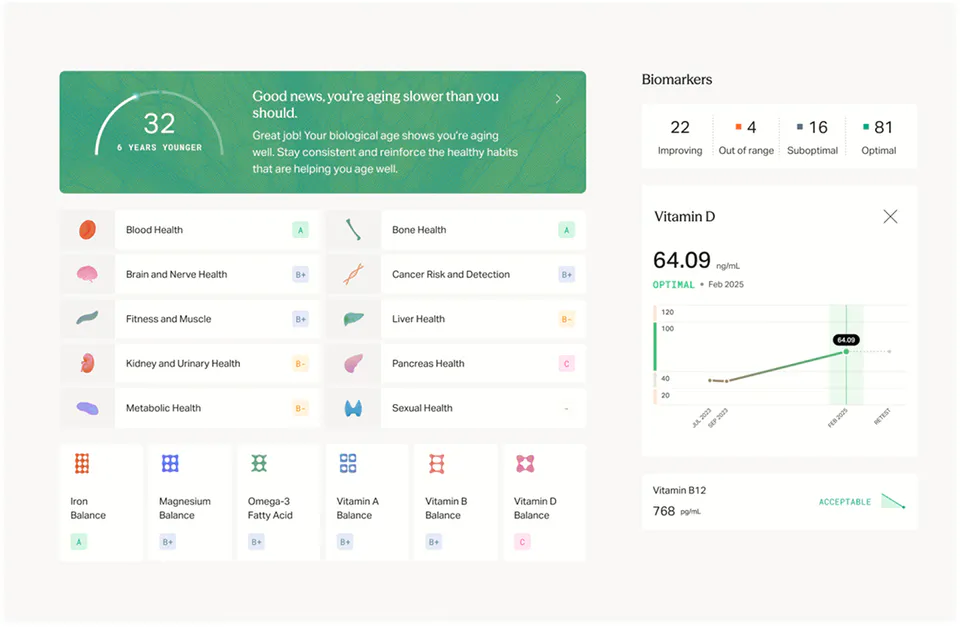
Insights that connect the dots. A clinician reads your whole picture, not one result in isolation, connecting family history, past results, and lifestyle into clear next steps.
Your personalized action plan. Nutrition, supplements, and training in one clinician-reviewed protocol, updated as your results change.
Track your trends. Upload results from any lab and see each biomarker trend over time, so you know what is working.
Never miss a recheck. Mito tells you what is worth retesting and when, then reminds you so nothing slips.
What to expect
- 1 Book instantly
Click, book, done. Choose a convenient lab location near you. Transparent, up-front pricing.
- 2 Quick lab visit
Testing to fit your busy schedule, usually 15 minutes or less. Walk-in and appointments available.
- 3 Typical results in 1 day
Your results post straight to your dashboard as soon as the lab completes them.
- 4 Expert guidance
Included with Mito membership. A clinician reviews your results and your personalized action plan follows, with clear next steps.
What members are saying
-
@nasdaily
-
15/10 experience - I felt actually taken care of
Super impressed with my Mito experience - the thoroughness of the intake, the data tracking and the doctor's visit.
RS Reena Sudan -
@ellarosemcfadin
-
Helped show an overall picture
I would highly recommend this service to anyone that wants a more in-depth picture of their health and labs. The platform is super user friendly.
BS Bo Sal -
@katelyn_kim
-
Specific and actionable advice
It felt like, for the first time, I had real data guiding me to make meaningful changes and I've definitely noticed the difference.
MH Maya Hickey -
@bryce_witmer
-
Tired of arguing with my PCP
After extensive research, I decided Mito was the best option. The insights were clear and make sense. Mito gave me peace of mind and a path to follow.
JO Josh -
@alexandradawson
-
3x the tests for less money
A great alternative to the basic blood work at your local clinic. Love the report card format. Much better value.
P Page -
@daniklass
-
Best $9 a month I spend
The action plan changes every time new results come in. I've actually never had a health company recommend doing less. Refreshing.
DP Devi Patel -
@natalieefer
-
Finally, prices that make sense
Every test is published. I can see what it costs and what I save as a member. No surprises.
KT Kenji Tanaka -
@tyler_sarkisian
Everything your health needs,
in one membership
-

Every test at our cost
Members pay our cost on every test, with lab fees passed straight through. The full receipt is itemized, never padded.
-

Continuous tracking, all in one place
Upload past labs and watch your trends over time. Every marker and visit lives in one longitudinal record, so all your care stays together.
-

Year-round clinician support
Text anytime and get clinician-reviewed answers. When you want to go deeper, 1:1 consultations are available at affordable rates.
All for $9/month
Order any test or consult without joining. For $9/month, members unlock member prices, trend tracking, and year-round clinician guidance.
Mito Membership
$9 /mo
cancel anytime
Without membership
$0
pay as you go
At-cost pricing on labs, scans, and more
Supplements at member rates NEW
On-demand clinician consults when you need guidance
Personalized action plans across supplements, exercise, nutrition, and sleep
AI health coaching to help you act on your results
Year-round medical support, with in-chat clinician escalation
All your health records in one personal vault, with trends and biological age tracking
Early access to new diagnostics and product releases
More tests to consider
Loading essentials…
Frequently asked questions
View all FAQsHow does pricing work?
Every test shows the member price next to the standard non-member price, so you can see what membership saves you. The member price is our cost, covering the lab and what it takes to run the service. It is never a profit on the test itself. Mito makes its money on the membership, not on marking up your tests. Membership is $9 per month or $99 per year, and any applicable lab order or draw fee is itemized before you pay.
Where do I get tested?
Choose an available partner lab at checkout. If your cart contains multiple blood tests, Mito helps consolidate the eligible tests at one lab when possible. At-home kits and scans follow the collection or appointment process shown on their product page.
Is this eligible for HSA/FSA?
Yes. Mito's lab tests are HSA/FSA eligible, so you can pay with pre-tax dollars.
Add the test to your cart and select "Pay with HSA/FSA" at checkout. You'll finish on the secure checkout page of Flex, our HSA/FSA payments partner, and Flex emails you an itemized receipt from notifications@withflex.com for your records.
Most Mito tests are auto-substantiated, so you usually won't need a Letter of Medical Necessity. If your HSA/FSA administrator asks for more, contact us and we'll help.
When will I get my results?
Your results appear in your Mito dashboard after the laboratory completes processing. A clinician then reviews them before your analysis and personalized action plan are finalized. Timing varies by test, and specialty assays and at-home kits may take longer.
Do I need a physician's order?
No. Mito provides the laboratory order when one is required, so you do not need to arrange a separate physician visit before purchasing.
How do availability and prices vary by state?
Available in 46 states and Washington, DC.
| States | Provider | Availability | Member price | Non-member price |
|---|---|---|---|---|
| All states and DC except HI, NJ, NY, and RI | Labcorp | Available | $12.92 | $18.09 |
| HI, NJ, NY, and RI | Not currently available |
Recently viewed
Loading essentials…