

Lipoprotein Particle Panel (NMR)
Counts the actual LDL particles driving plaque, plus an insulin-resistance score, beyond what standard cholesterol shows.
Consider this test if:
- Normal LDL cholesterol but a family history of early heart disease or other elevated risk
- Insulin resistance, metabolic syndrome, prediabetes, or type 2 diabetes you want to characterize earlier than glucose shows
- Checking whether a statin, diet change, or weight loss actually lowered particle count, not just cholesterol
- Discordant results before, where LDL-C looked fine but triglycerides or HDL suggested hidden risk
- Building a detailed cardiometabolic baseline to track over time
- HSA/FSA eligible
- Typical results in 2-3 days · Reviewed by a real clinician
- Drawn at a CLIA/CAP-accredited lab near you ·
Pre-test considerations
Fast for at least 8 hours before the draw; water is fine. Triglyceride-rich particles and recent meals distort sizing and particle counts, so timing matters. Keep alcohol and unusually heavy or fatty meals consistent the day before, and try to test under similar conditions each time for comparable results.

Video consult with your Care Team
A 1:1 call to discuss your health.
What members say on Trustpilot
What this test is for
This panel uses nuclear magnetic resonance to directly count lipoprotein particles rather than estimate the cholesterol they carry. LDL-C tells you how much cholesterol your LDL is hauling; LDL-P tells you how many particles are doing the hauling, and people with the same LDL-C can have very different particle counts. A high LDL-P with normal or low LDL-C (common in insulin resistance, metabolic syndrome, and type 2 diabetes) flags cardiovascular risk that routine lipid panels miss. The panel also reports particle sizes, small LDL-P, HDL-P, and the LP-IR score, a 0 to 100 measure of insulin resistance built from six lipoprotein parameters that shift before glucose and A1c do.
A related Ion Mobility fractionation panel answers the same particle-number question using a different separation method; this NMR version is the right default for most people tracking particle burden and insulin resistance together.
Biomarkers tested
Includes 8 biomarkers
Large HDL particles measure the biggest, most buoyant subclass of HDL, the ones most efficient at pulling cholesterol out of artery walls and carrying it back to the liver for disposal. A high count generally tracks with better cardiovascular protection and often rises with aerobic exercise, weight loss, and moderate alcohol intake, while a low count despite normal total HDL can mean your HDL isn't doing its job well. This is most useful alongside ApoB and Lp(a) for people building a fuller picture of cardiovascular risk, or for tracking whether training and diet changes are actually improving your lipid profile rather than just moving the total HDL number.
- Specimen
- Serum or plasma
- Measures
- Substance concentration
Large VLDL particles are the biggest, triglyceride-stuffed carriers your liver ships out when it's dealing with excess calories, insulin resistance, or a high-carb, high-fat load. A high count signals your liver is overproducing fat-rich particles, often the earliest lipid clue of metabolic syndrome, fatty liver, or prediabetes, well before standard cholesterol panels look abnormal. If you're tracking how diet, weight loss, or reduced alcohol and sugar intake are reshaping your metabolism, this number moves fast and gives you a real-time read on that progress.
- Specimen
- Serum or plasma
- Measures
- Substance concentration
LDL particle number counts the actual number of LDL particles circulating in your blood, not just the cholesterol packed inside them. Each particle can lodge in an artery wall and seed plaque, so particle count often predicts cardiovascular risk more precisely than LDL cholesterol, especially when the two disagree (a common pattern with insulin resistance, high triglycerides, or metabolic syndrome). Test it to get a real baseline on atherogenic risk or to see whether diet, exercise, or medication changes are actually lowering the number of particles driving plaque, not just the cholesterol they carry.“}
- Specimen
- Serum or plasma
- Measures
- Substance concentration
This measures the average size of your LDL particles, not just how much LDL you're carrying. Smaller, dense LDL particles slip into artery walls more easily and oxidize faster, driving plaque formation, while larger, buoyant particles are comparatively less harmful, so two people with identical LDL cholesterol can carry very different cardiovascular risk. Pair it with ApoB and Lp(a) to see whether your cardiovascular risk is being underestimated by standard cholesterol testing, or track it as you change diet, carbs, or training to see your particle profile shift toward the less atherogenic pattern.
- Specimen
- Serum or plasma
- Measures
- Length (per cell)
- Specimen
- Serum or plasma
- Measures
- Length (per cell)
- Specimen
- Serum or plasma
- Measures
- Length (per cell)
Lipoprotein(a), or Lp(a), is a cholesterol-carrying particle whose level is set almost entirely by your genes rather than your diet or lifestyle. High Lp(a) sticks to artery walls and promotes clotting, driving heart attack and stroke risk independent of LDL or ApoB, which is why it matters most for people with a family history of early heart disease or an event that seemed to come out of nowhere. Because it's genetically fixed, one test usually tells you your risk for life, making it one of the highest-value checks in a cardiovascular baseline.
- Specimen
- Serum or plasma
- Measures
- Substance concentration
Small LDL particles measures the dense, cholesterol-poor LDL subtype that slips into artery walls more easily and lingers longer than large, buoyant LDL. Elevated levels often appear alongside high triglycerides, low HDL, and insulin resistance, a pattern common with metabolic syndrome, prediabetes, or a diet high in refined carbs, and one that standard LDL cholesterol can completely miss. Testing this is useful for anyone with a strong cardiovascular family history, borderline LDL but nagging risk factors, or a need to see whether carb reduction, weight loss, or exercise is actually shifting particle quality, not just particle count.
- Specimen
- Serum or plasma
- Measures
- Substance concentration

What you'll learn
-
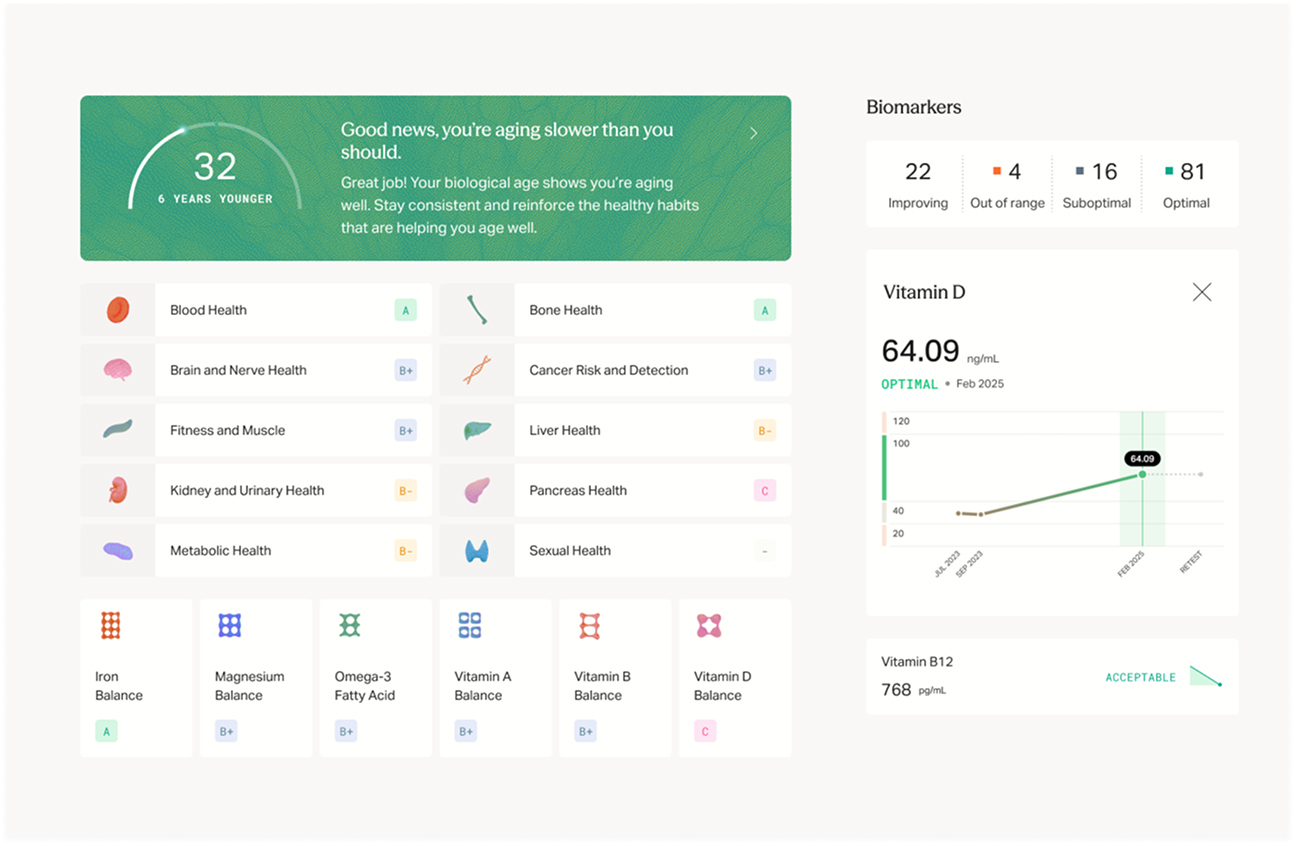
Insights that connect the dots. A clinician reads your whole picture, not one result in isolation, connecting family history, past results, and lifestyle into clear next steps.
-
Your personalized action plan. Nutrition, supplements, and training in one clinician-reviewed protocol, updated as your results change.
-
Track your trends. Upload results from any lab and see each biomarker trend over time, so you know what is working.
-
Never miss a recheck. Mito tells you what is worth retesting and when, then reminds you so nothing slips.
What to expect
- 1 Book instantly
Click, book, done. Choose a convenient lab location near you. Transparent, up-front pricing.
- 2 Quick lab visit
Testing to fit your busy schedule, usually 15 minutes or less. Walk-in and appointments available.
- 3 Typical results in 2-3 days
Your results post straight to your dashboard as soon as the lab completes them.
- 4 Expert guidance
Included with Mito membership. A clinician reviews your results and your personalized action plan follows, with clear next steps.
Everything your health needs,
in one membership
-

Every test at our cost
Members pay our cost on every test, with lab fees passed straight through. The full receipt is itemized, never padded.
-

Continuous tracking, all in one place
Upload past labs and watch your trends over time. Every marker and visit lives in one longitudinal record, so all your care stays together.
-

Year-round clinician support
Text anytime and get clinician-reviewed answers. When you want to go deeper, 1:1 consultations are available at affordable rates.
All for $9/month
Order any test or consult without joining. For $9/month, members unlock member prices, trend tracking, and year-round clinician guidance.
Mito Membership
$9 /mo
cancel anytime
Without membership
$0
pay as you go
At-cost pricing on labs, scans, and more
Supplements at 30% off retail prices Coming soon
On-demand clinician consults when you need guidance
Personalized action plans across supplements, exercise, nutrition, and sleep
AI health coaching to help you act on your results
Year-round medical support, with in-chat clinician escalation
All your health records in one personal vault, with trends and biological age tracking
Early access to new diagnostics and product releases
More tests to consider
Loading essentials…
Frequently asked questions
View all FAQsHow does pricing work?
Every test shows the member price next to the standard non-member price, so you can see what membership saves you. The member price is our cost, covering the lab and what it takes to run the service. It is never a profit on the test itself. Mito makes its money on the $9 membership, not on marking up your tests. Membership is $9 per month, and any applicable lab order or draw fee is itemized before you pay.
Where do I get tested?
Choose an available partner lab at checkout. If your cart contains multiple blood tests, Mito helps consolidate the eligible tests at one lab when possible. At-home kits and scans follow the collection or appointment process shown on their product page.
Is this eligible for HSA/FSA?
Yes. Eligible tests can be paid for with an HSA or FSA card at checkout.
When will I get my results?
Your results appear in your Mito dashboard after the laboratory completes processing. A clinician then reviews them before your analysis and personalized action plan are finalized. Timing varies by test, and specialty assays and at-home kits may take longer.
Do I need a physician's order?
No. Mito provides the laboratory order when one is required, so you do not need to arrange a separate physician visit before purchasing.
Recently viewed
Loading essentials…