Get a deeper look into your health.
Schedule online, results in a week
Clear guidance, follow-up care available
HSA/FSA Eligible
Which Omega-3 Supplement is Right for You? Fish Oil vs Krill vs Algal Comparison
Compare fish oil, krill oil, and algal omega-3 supplements. Learn EPA/DHA ratios, absorption rates, sustainability, and which form optimizes your omega-3 levels.

Written by
Mito Health

Krill oil absorbs 68% better than fish oil. That's not marketing-it's phospholipid chemistry. Yet most people still take fish oil because it's cheaper, not realizing they might need twice the dose to get the same tissue levels.
The omega-3 market is confusing by design. Fish oil, krill oil, algal oil-they all deliver EPA and DHA, but through different molecular structures, different purity standards, and wildly different price points. Choosing based on price alone is like buying the cheapest running shoes and wondering why your knees hurt.
The right omega-3 for you depends on your goals: cardiovascular health, brain function, inflammation reduction, or general longevity. Each source has trade-offs in absorption, contamination risk, and sustainability.
This guide breaks down all three sources by absorption, purity, sustainability, cost, and clinical evidence. By the end, you'll know exactly which omega-3 to buy based on your health goals and values.
Quick Decision Tree - Choose Your Omega-3 in 30 Seconds
Start here-what's your priority?
Best absorption? Krill oil (phospholipid form, 68% better absorption)
Best budget option? Fish oil triglyceride form ($0.10-0.20 per 1,000mg EPA/DHA)
Vegan/vegetarian? Algal oil (plant-based DHA, often with EPA)
High triglycerides (>150 mg/dL)? Prescription omega-3 (Vascepa/Lovaza) or high-EPA fish oil
Brain health/cognitive function? Algal DHA or high-DHA fish oil (aim for 1,000mg+ DHA daily)
Joint inflammation/arthritis? Krill oil or high-EPA fish oil (2,000mg+ EPA daily)
Sustainability priority? Algal oil (no ocean depletion) or MSC-certified fish oil
Avoiding fishy burps? Krill oil (less burping) or enteric-coated fish oil
Already eating fish 3x/week? May not need supplements-test omega-3 index first
Still not sure? Keep reading-we'll break down exactly why these recommendations work.
Fish Oil vs Krill Oil vs Algal Oil - The Critical Differences
Let's cut through the marketing. Here's what the research actually shows:
Feature | Fish Oil | Krill Oil | Algal Oil |
|---|---|---|---|
Source | Anchovies, sardines, mackerel | Antarctic krill (tiny crustaceans) | Marine algae/microalgae |
Form | Triglyceride or ethyl ester | Phospholipid | Triglyceride |
EPA Content | High (varies by product) | Moderate (240-300mg per 1g) | Low to moderate (varies) |
DHA Content | Moderate to high | Low to moderate (110-150mg per 1g) | High (200-400mg per 500mg capsule) |
Absorption | Baseline (1x) | 1.68x better than fish oil [1] | Comparable to fish oil |
Oxidation Risk | Moderate to high | Lower (astaxanthin protects) | Low (algae naturally contains antioxidants) |
Sustainability | Variable (check MSC certification) | Controversial (krill are keystone species) | Excellent (farmed algae, no ocean impact) |
Cost per 1,000mg EPA/DHA | $0.10-0.20 | $0.40-0.60 | $0.30-0.50 |
Fishy Burps | Common | Rare | None (plant-based) |
Vegan | No | No | Yes |
The bottom line: Fish oil wins on cost and EPA content. Krill oil wins on absorption and less GI side effects. Algal oil wins on sustainability and vegan-friendliness. There's no universal "best"-it depends on your priorities. What most people don't realize is that consistency matters more than the specific form you choose.
Fish Oil - The Budget-Friendly Workhorse
Fish oil is the most-studied omega-3 supplement. Thousands of clinical trials, decades of safety data, and the cheapest option per gram of EPA/DHA. But there's a catch-not all fish oil is created equal.
Triglyceride vs Ethyl Ester Forms:
Fish oil comes in two molecular structures:
Triglyceride (TG) form Natural structure found in fish
Absorption: Better (especially when taken with fat)
Cost: Slightly more expensive
Label: Look for "triglyceride form" or "re-esterified triglycerides"Ethyl ester (EE) form Synthetic structure from chemical processing
Absorption: 20-30% lower than TG form
Cost: Cheaper (most budget brands use this)
Label: Often doesn't specify-assume EE if not stated
Here's where it gets interesting: The prescription omega-3 drugs (Vascepa, Lovaza) use ethyl esters, yet they're still clinically effective at high doses (4 grams daily). This means form matters less than total dose-but for supplements, TG form gives you more bang for your buck.
Best uses:
General cardiovascular health (1,000-2,000mg EPA+DHA daily)
Lowering high triglycerides (2,000-4,000mg EPA+DHA daily)
Budget-conscious supplementation
High-dose protocols (cheaper to get 3-4 grams daily with fish oil)
What to expect:
Triglyceride reduction: 20-30% decrease with 3-4g daily [2]
Inflammation markers: 10-15% reduction in hsCRP with 2g+ daily
Timeline: 8-12 weeks for lipid changes, 4-6 weeks for inflammatory markers
Dosing:
General health: 1,000-2,000mg EPA+DHA daily (combined)
High triglycerides: 2,000-4,000mg EPA+DHA daily
Depression/mood: 1,000-2,000mg EPA daily (EPA-dominant formulas work better for mood)
But there's a catch: Fish oil oxidizes quickly. Rancid fish oil smells like old fish (obviously) and loses potency. Look for:
Third-party testing (IFOS, USP, ConsumerLab)
"Freshness" or "totox value" <26 (measures oxidation)
Dark glass bottles or opaque capsules (light degrades omega-3s)
Refrigeration after opening
Track Your Omega-3 Levels
Mito Health tests 100+ biomarkers including omega-3 index, inflammatory markers, and cardiovascular health metrics with physician-guided protocols to help you optimize brain function, heart health, and reduce inflammation. Our comprehensive panels provide personalized interpretation to identify omega-3 deficiency early.
The Bottom Line - Your Omega-3 Action Plan
If you're still overwhelmed, here's your decision flowchart:
For most people: Start with fish oil (triglyceride form, 1,000-2,000mg EPA+DHA daily). Check for IFOS 5-star rating or USP verification. Take with meals.
If you're vegan: Choose algal oil with 500mg+ DHA daily. Consider a brand that also includes EPA (Örlö, iwi) for full-spectrum coverage.
If you have reflux/fishy burps: Switch to krill oil or enteric-coated fish oil. Worth the extra cost if GI side effects prevent consistent use.
If you have high triglycerides: Use high-EPA fish oil (2,000-4,000mg EPA+DHA daily) or ask your doctor about prescription omega-3 (Vascepa).
If sustainability is your priority: Choose algal oil or MSC-certified fish oil from small fish (anchovies, sardines).
If you're pregnant or planning pregnancy: Prioritize DHA (300-600mg daily minimum). Algal DHA or prenatal fish oil both work-avoid high-mercury sources.
Optimize From Within
Join Mito Health's annual membership to test 100+ biomarkers with concierge-level support from your care team. Track your omega-3 index and related cardiovascular biomarkers with repeat testing and personalized protocols.
Key Takeaways
Fish oil is the most cost-effective Triglyceride form offers best absorption at $0.10-0.20 per 1,000mg EPA+DHA
Krill oil has superior absorption Phospholipid structure provides 68% better bioavailability, less fishy burps, but costs 3-5x more
Algal oil is the only sustainable vegan option Plant-based DHA (often with EPA), zero ocean depletion, no mercury contamination
Target 1,000-2,000mg EPA+DHA daily for maintenance Higher doses (2,000-4,000mg) for high triglycerides or inflammation
Form matters: triglyceride > ethyl ester Re-esterified triglyceride absorbs 70% better than cheap ethyl ester forms
Third-party testing is essential Look for IFOS 5-star or USP verified to avoid oxidation and mercury
DHA is critical for brain health Aim for 500-1,000mg DHA daily for cognitive function; EPA targets inflammation
Take with fatty meals for 50% better absorption Fat-soluble nutrients need dietary fat to absorb properly
Test your omega-3 index Target 8-12% for optimal cardiovascular protection; most people are at 4-6%
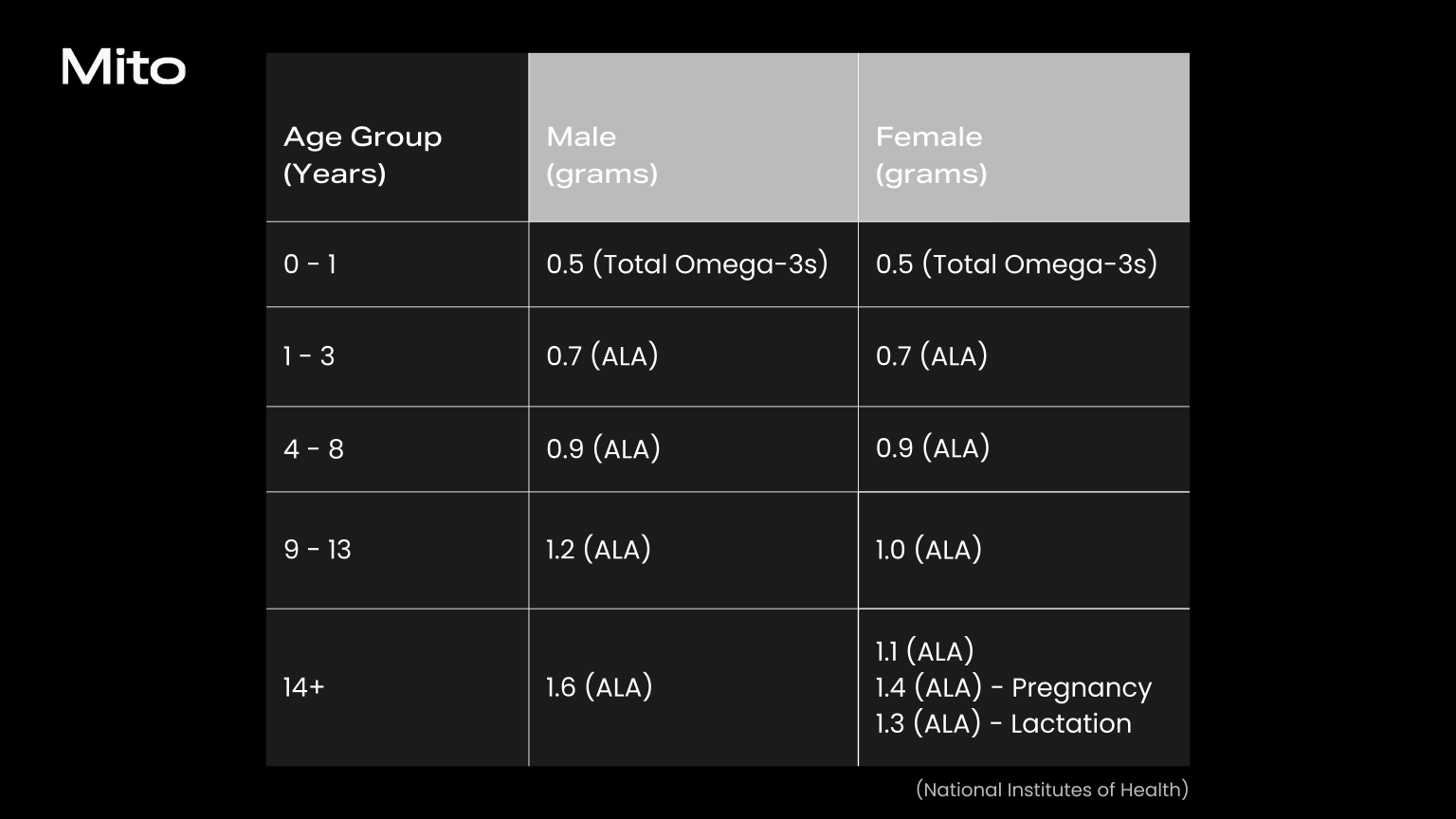
Photo from Unsplash Your biology is unique-some people need 500mg EPA/DHA to maintain optimal levels, others need 3,000mg. Testing your omega-3 index is the only way to know. Optimize from within.
Medical Disclaimer
This article is for educational and informational purposes only and does not constitute medical advice. The information provided should not be used for diagnosing or treating a health condition. Always consult with your doctor or qualified healthcare provider before starting any new supplement protocol, making changes to your diet, or if you have questions about a medical condition.
Individual results may vary. The dosages and protocols discussed are evidence-based but should be personalized under medical supervision, especially if you have existing health conditions or take medications.
Related Content
References
[1] Ulven SM, et al. Metabolic effects of krill oil are essentially similar to those of fish oil but at lower dose of EPA and DHA, in healthy volunteers. Lipids. 2011;46(1):37-46. PMID: 21042875
[2] Skulas-Ray AC, et al. Omega-3 Fatty Acids for the Management of Hypertriglyceridemia: A Science Advisory From the American Heart Association. Circulation. 2019;140(12):e673-e691. PMID: 31422671
[3] Mozaffarian D, Wu JH. Omega-3 fatty acids and cardiovascular disease: effects on risk factors, molecular pathways, and clinical events. J Am Coll Cardiol. 2011;58(20):2047-2067. PMID: 22051327
[4] Bhatt DL, et al. Cardiovascular Risk Reduction with Icosapent Ethyl for Hypertriglyceridemia. N Engl J Med. 2019;380(1):11-22. PMID: 30415628
[5] Grosso G, et al. Omega-3 fatty acids and depression: scientific evidence and biological mechanisms. Oxid Med Cell Longev. 2014;2014:313570. PMID: 24757497
[6] Goldberg RJ, Katz J. A meta-analysis of the analgesic effects of omega-3 polyunsaturated fatty acid supplementation for inflammatory joint pain. Pain. 2007;129(1-2):210-223. PMID: 17335973
[7] Dyall SC. Long-chain omega-3 fatty acids and the brain: a review of the independent and shared effects of EPA, DPA and DHA. Front Aging Neurosci. 2015;7:52. PMID: 25954194
[8] Lane K, et al. Bioavailability and potential uses of vegetarian sources of omega-3 fatty acids: a review of the literature. Crit Rev Food Sci Nutr. 2014;54(5):572-579. PMID: 24261532
Get a deeper look into your health.
Schedule online, results in a week
Clear guidance, follow-up care available
HSA/FSA Eligible

Comments
Get a deeper look into your health.
Schedule online, results in a week
Clear guidance, follow-up care available
HSA/FSA Eligible
Which Omega-3 Supplement is Right for You? Fish Oil vs Krill vs Algal Comparison
Compare fish oil, krill oil, and algal omega-3 supplements. Learn EPA/DHA ratios, absorption rates, sustainability, and which form optimizes your omega-3 levels.

Written by
Mito Health

Krill oil absorbs 68% better than fish oil. That's not marketing-it's phospholipid chemistry. Yet most people still take fish oil because it's cheaper, not realizing they might need twice the dose to get the same tissue levels.
The omega-3 market is confusing by design. Fish oil, krill oil, algal oil-they all deliver EPA and DHA, but through different molecular structures, different purity standards, and wildly different price points. Choosing based on price alone is like buying the cheapest running shoes and wondering why your knees hurt.
The right omega-3 for you depends on your goals: cardiovascular health, brain function, inflammation reduction, or general longevity. Each source has trade-offs in absorption, contamination risk, and sustainability.
This guide breaks down all three sources by absorption, purity, sustainability, cost, and clinical evidence. By the end, you'll know exactly which omega-3 to buy based on your health goals and values.
Quick Decision Tree - Choose Your Omega-3 in 30 Seconds
Start here-what's your priority?
Best absorption? Krill oil (phospholipid form, 68% better absorption)
Best budget option? Fish oil triglyceride form ($0.10-0.20 per 1,000mg EPA/DHA)
Vegan/vegetarian? Algal oil (plant-based DHA, often with EPA)
High triglycerides (>150 mg/dL)? Prescription omega-3 (Vascepa/Lovaza) or high-EPA fish oil
Brain health/cognitive function? Algal DHA or high-DHA fish oil (aim for 1,000mg+ DHA daily)
Joint inflammation/arthritis? Krill oil or high-EPA fish oil (2,000mg+ EPA daily)
Sustainability priority? Algal oil (no ocean depletion) or MSC-certified fish oil
Avoiding fishy burps? Krill oil (less burping) or enteric-coated fish oil
Already eating fish 3x/week? May not need supplements-test omega-3 index first
Still not sure? Keep reading-we'll break down exactly why these recommendations work.
Fish Oil vs Krill Oil vs Algal Oil - The Critical Differences
Let's cut through the marketing. Here's what the research actually shows:
Feature | Fish Oil | Krill Oil | Algal Oil |
|---|---|---|---|
Source | Anchovies, sardines, mackerel | Antarctic krill (tiny crustaceans) | Marine algae/microalgae |
Form | Triglyceride or ethyl ester | Phospholipid | Triglyceride |
EPA Content | High (varies by product) | Moderate (240-300mg per 1g) | Low to moderate (varies) |
DHA Content | Moderate to high | Low to moderate (110-150mg per 1g) | High (200-400mg per 500mg capsule) |
Absorption | Baseline (1x) | 1.68x better than fish oil [1] | Comparable to fish oil |
Oxidation Risk | Moderate to high | Lower (astaxanthin protects) | Low (algae naturally contains antioxidants) |
Sustainability | Variable (check MSC certification) | Controversial (krill are keystone species) | Excellent (farmed algae, no ocean impact) |
Cost per 1,000mg EPA/DHA | $0.10-0.20 | $0.40-0.60 | $0.30-0.50 |
Fishy Burps | Common | Rare | None (plant-based) |
Vegan | No | No | Yes |
The bottom line: Fish oil wins on cost and EPA content. Krill oil wins on absorption and less GI side effects. Algal oil wins on sustainability and vegan-friendliness. There's no universal "best"-it depends on your priorities. What most people don't realize is that consistency matters more than the specific form you choose.
Fish Oil - The Budget-Friendly Workhorse
Fish oil is the most-studied omega-3 supplement. Thousands of clinical trials, decades of safety data, and the cheapest option per gram of EPA/DHA. But there's a catch-not all fish oil is created equal.
Triglyceride vs Ethyl Ester Forms:
Fish oil comes in two molecular structures:
Triglyceride (TG) form Natural structure found in fish
Absorption: Better (especially when taken with fat)
Cost: Slightly more expensive
Label: Look for "triglyceride form" or "re-esterified triglycerides"Ethyl ester (EE) form Synthetic structure from chemical processing
Absorption: 20-30% lower than TG form
Cost: Cheaper (most budget brands use this)
Label: Often doesn't specify-assume EE if not stated
Here's where it gets interesting: The prescription omega-3 drugs (Vascepa, Lovaza) use ethyl esters, yet they're still clinically effective at high doses (4 grams daily). This means form matters less than total dose-but for supplements, TG form gives you more bang for your buck.
Best uses:
General cardiovascular health (1,000-2,000mg EPA+DHA daily)
Lowering high triglycerides (2,000-4,000mg EPA+DHA daily)
Budget-conscious supplementation
High-dose protocols (cheaper to get 3-4 grams daily with fish oil)
What to expect:
Triglyceride reduction: 20-30% decrease with 3-4g daily [2]
Inflammation markers: 10-15% reduction in hsCRP with 2g+ daily
Timeline: 8-12 weeks for lipid changes, 4-6 weeks for inflammatory markers
Dosing:
General health: 1,000-2,000mg EPA+DHA daily (combined)
High triglycerides: 2,000-4,000mg EPA+DHA daily
Depression/mood: 1,000-2,000mg EPA daily (EPA-dominant formulas work better for mood)
But there's a catch: Fish oil oxidizes quickly. Rancid fish oil smells like old fish (obviously) and loses potency. Look for:
Third-party testing (IFOS, USP, ConsumerLab)
"Freshness" or "totox value" <26 (measures oxidation)
Dark glass bottles or opaque capsules (light degrades omega-3s)
Refrigeration after opening
Track Your Omega-3 Levels
Mito Health tests 100+ biomarkers including omega-3 index, inflammatory markers, and cardiovascular health metrics with physician-guided protocols to help you optimize brain function, heart health, and reduce inflammation. Our comprehensive panels provide personalized interpretation to identify omega-3 deficiency early.
The Bottom Line - Your Omega-3 Action Plan
If you're still overwhelmed, here's your decision flowchart:
For most people: Start with fish oil (triglyceride form, 1,000-2,000mg EPA+DHA daily). Check for IFOS 5-star rating or USP verification. Take with meals.
If you're vegan: Choose algal oil with 500mg+ DHA daily. Consider a brand that also includes EPA (Örlö, iwi) for full-spectrum coverage.
If you have reflux/fishy burps: Switch to krill oil or enteric-coated fish oil. Worth the extra cost if GI side effects prevent consistent use.
If you have high triglycerides: Use high-EPA fish oil (2,000-4,000mg EPA+DHA daily) or ask your doctor about prescription omega-3 (Vascepa).
If sustainability is your priority: Choose algal oil or MSC-certified fish oil from small fish (anchovies, sardines).
If you're pregnant or planning pregnancy: Prioritize DHA (300-600mg daily minimum). Algal DHA or prenatal fish oil both work-avoid high-mercury sources.
Optimize From Within
Join Mito Health's annual membership to test 100+ biomarkers with concierge-level support from your care team. Track your omega-3 index and related cardiovascular biomarkers with repeat testing and personalized protocols.
Key Takeaways
Fish oil is the most cost-effective Triglyceride form offers best absorption at $0.10-0.20 per 1,000mg EPA+DHA
Krill oil has superior absorption Phospholipid structure provides 68% better bioavailability, less fishy burps, but costs 3-5x more
Algal oil is the only sustainable vegan option Plant-based DHA (often with EPA), zero ocean depletion, no mercury contamination
Target 1,000-2,000mg EPA+DHA daily for maintenance Higher doses (2,000-4,000mg) for high triglycerides or inflammation
Form matters: triglyceride > ethyl ester Re-esterified triglyceride absorbs 70% better than cheap ethyl ester forms
Third-party testing is essential Look for IFOS 5-star or USP verified to avoid oxidation and mercury
DHA is critical for brain health Aim for 500-1,000mg DHA daily for cognitive function; EPA targets inflammation
Take with fatty meals for 50% better absorption Fat-soluble nutrients need dietary fat to absorb properly
Test your omega-3 index Target 8-12% for optimal cardiovascular protection; most people are at 4-6%

Photo from Unsplash Your biology is unique-some people need 500mg EPA/DHA to maintain optimal levels, others need 3,000mg. Testing your omega-3 index is the only way to know. Optimize from within.
Medical Disclaimer
This article is for educational and informational purposes only and does not constitute medical advice. The information provided should not be used for diagnosing or treating a health condition. Always consult with your doctor or qualified healthcare provider before starting any new supplement protocol, making changes to your diet, or if you have questions about a medical condition.
Individual results may vary. The dosages and protocols discussed are evidence-based but should be personalized under medical supervision, especially if you have existing health conditions or take medications.
Related Content
References
[1] Ulven SM, et al. Metabolic effects of krill oil are essentially similar to those of fish oil but at lower dose of EPA and DHA, in healthy volunteers. Lipids. 2011;46(1):37-46. PMID: 21042875
[2] Skulas-Ray AC, et al. Omega-3 Fatty Acids for the Management of Hypertriglyceridemia: A Science Advisory From the American Heart Association. Circulation. 2019;140(12):e673-e691. PMID: 31422671
[3] Mozaffarian D, Wu JH. Omega-3 fatty acids and cardiovascular disease: effects on risk factors, molecular pathways, and clinical events. J Am Coll Cardiol. 2011;58(20):2047-2067. PMID: 22051327
[4] Bhatt DL, et al. Cardiovascular Risk Reduction with Icosapent Ethyl for Hypertriglyceridemia. N Engl J Med. 2019;380(1):11-22. PMID: 30415628
[5] Grosso G, et al. Omega-3 fatty acids and depression: scientific evidence and biological mechanisms. Oxid Med Cell Longev. 2014;2014:313570. PMID: 24757497
[6] Goldberg RJ, Katz J. A meta-analysis of the analgesic effects of omega-3 polyunsaturated fatty acid supplementation for inflammatory joint pain. Pain. 2007;129(1-2):210-223. PMID: 17335973
[7] Dyall SC. Long-chain omega-3 fatty acids and the brain: a review of the independent and shared effects of EPA, DPA and DHA. Front Aging Neurosci. 2015;7:52. PMID: 25954194
[8] Lane K, et al. Bioavailability and potential uses of vegetarian sources of omega-3 fatty acids: a review of the literature. Crit Rev Food Sci Nutr. 2014;54(5):572-579. PMID: 24261532
Get a deeper look into your health.
Schedule online, results in a week
Clear guidance, follow-up care available
HSA/FSA Eligible

Comments
Which Omega-3 Supplement is Right for You? Fish Oil vs Krill vs Algal Comparison
Compare fish oil, krill oil, and algal omega-3 supplements. Learn EPA/DHA ratios, absorption rates, sustainability, and which form optimizes your omega-3 levels.

Written by
Mito Health

Krill oil absorbs 68% better than fish oil. That's not marketing-it's phospholipid chemistry. Yet most people still take fish oil because it's cheaper, not realizing they might need twice the dose to get the same tissue levels.
The omega-3 market is confusing by design. Fish oil, krill oil, algal oil-they all deliver EPA and DHA, but through different molecular structures, different purity standards, and wildly different price points. Choosing based on price alone is like buying the cheapest running shoes and wondering why your knees hurt.
The right omega-3 for you depends on your goals: cardiovascular health, brain function, inflammation reduction, or general longevity. Each source has trade-offs in absorption, contamination risk, and sustainability.
This guide breaks down all three sources by absorption, purity, sustainability, cost, and clinical evidence. By the end, you'll know exactly which omega-3 to buy based on your health goals and values.
Quick Decision Tree - Choose Your Omega-3 in 30 Seconds
Start here-what's your priority?
Best absorption? Krill oil (phospholipid form, 68% better absorption)
Best budget option? Fish oil triglyceride form ($0.10-0.20 per 1,000mg EPA/DHA)
Vegan/vegetarian? Algal oil (plant-based DHA, often with EPA)
High triglycerides (>150 mg/dL)? Prescription omega-3 (Vascepa/Lovaza) or high-EPA fish oil
Brain health/cognitive function? Algal DHA or high-DHA fish oil (aim for 1,000mg+ DHA daily)
Joint inflammation/arthritis? Krill oil or high-EPA fish oil (2,000mg+ EPA daily)
Sustainability priority? Algal oil (no ocean depletion) or MSC-certified fish oil
Avoiding fishy burps? Krill oil (less burping) or enteric-coated fish oil
Already eating fish 3x/week? May not need supplements-test omega-3 index first
Still not sure? Keep reading-we'll break down exactly why these recommendations work.
Fish Oil vs Krill Oil vs Algal Oil - The Critical Differences
Let's cut through the marketing. Here's what the research actually shows:
Feature | Fish Oil | Krill Oil | Algal Oil |
|---|---|---|---|
Source | Anchovies, sardines, mackerel | Antarctic krill (tiny crustaceans) | Marine algae/microalgae |
Form | Triglyceride or ethyl ester | Phospholipid | Triglyceride |
EPA Content | High (varies by product) | Moderate (240-300mg per 1g) | Low to moderate (varies) |
DHA Content | Moderate to high | Low to moderate (110-150mg per 1g) | High (200-400mg per 500mg capsule) |
Absorption | Baseline (1x) | 1.68x better than fish oil [1] | Comparable to fish oil |
Oxidation Risk | Moderate to high | Lower (astaxanthin protects) | Low (algae naturally contains antioxidants) |
Sustainability | Variable (check MSC certification) | Controversial (krill are keystone species) | Excellent (farmed algae, no ocean impact) |
Cost per 1,000mg EPA/DHA | $0.10-0.20 | $0.40-0.60 | $0.30-0.50 |
Fishy Burps | Common | Rare | None (plant-based) |
Vegan | No | No | Yes |
The bottom line: Fish oil wins on cost and EPA content. Krill oil wins on absorption and less GI side effects. Algal oil wins on sustainability and vegan-friendliness. There's no universal "best"-it depends on your priorities. What most people don't realize is that consistency matters more than the specific form you choose.
Fish Oil - The Budget-Friendly Workhorse
Fish oil is the most-studied omega-3 supplement. Thousands of clinical trials, decades of safety data, and the cheapest option per gram of EPA/DHA. But there's a catch-not all fish oil is created equal.
Triglyceride vs Ethyl Ester Forms:
Fish oil comes in two molecular structures:
Triglyceride (TG) form Natural structure found in fish
Absorption: Better (especially when taken with fat)
Cost: Slightly more expensive
Label: Look for "triglyceride form" or "re-esterified triglycerides"Ethyl ester (EE) form Synthetic structure from chemical processing
Absorption: 20-30% lower than TG form
Cost: Cheaper (most budget brands use this)
Label: Often doesn't specify-assume EE if not stated
Here's where it gets interesting: The prescription omega-3 drugs (Vascepa, Lovaza) use ethyl esters, yet they're still clinically effective at high doses (4 grams daily). This means form matters less than total dose-but for supplements, TG form gives you more bang for your buck.
Best uses:
General cardiovascular health (1,000-2,000mg EPA+DHA daily)
Lowering high triglycerides (2,000-4,000mg EPA+DHA daily)
Budget-conscious supplementation
High-dose protocols (cheaper to get 3-4 grams daily with fish oil)
What to expect:
Triglyceride reduction: 20-30% decrease with 3-4g daily [2]
Inflammation markers: 10-15% reduction in hsCRP with 2g+ daily
Timeline: 8-12 weeks for lipid changes, 4-6 weeks for inflammatory markers
Dosing:
General health: 1,000-2,000mg EPA+DHA daily (combined)
High triglycerides: 2,000-4,000mg EPA+DHA daily
Depression/mood: 1,000-2,000mg EPA daily (EPA-dominant formulas work better for mood)
But there's a catch: Fish oil oxidizes quickly. Rancid fish oil smells like old fish (obviously) and loses potency. Look for:
Third-party testing (IFOS, USP, ConsumerLab)
"Freshness" or "totox value" <26 (measures oxidation)
Dark glass bottles or opaque capsules (light degrades omega-3s)
Refrigeration after opening
Track Your Omega-3 Levels
Mito Health tests 100+ biomarkers including omega-3 index, inflammatory markers, and cardiovascular health metrics with physician-guided protocols to help you optimize brain function, heart health, and reduce inflammation. Our comprehensive panels provide personalized interpretation to identify omega-3 deficiency early.
The Bottom Line - Your Omega-3 Action Plan
If you're still overwhelmed, here's your decision flowchart:
For most people: Start with fish oil (triglyceride form, 1,000-2,000mg EPA+DHA daily). Check for IFOS 5-star rating or USP verification. Take with meals.
If you're vegan: Choose algal oil with 500mg+ DHA daily. Consider a brand that also includes EPA (Örlö, iwi) for full-spectrum coverage.
If you have reflux/fishy burps: Switch to krill oil or enteric-coated fish oil. Worth the extra cost if GI side effects prevent consistent use.
If you have high triglycerides: Use high-EPA fish oil (2,000-4,000mg EPA+DHA daily) or ask your doctor about prescription omega-3 (Vascepa).
If sustainability is your priority: Choose algal oil or MSC-certified fish oil from small fish (anchovies, sardines).
If you're pregnant or planning pregnancy: Prioritize DHA (300-600mg daily minimum). Algal DHA or prenatal fish oil both work-avoid high-mercury sources.
Optimize From Within
Join Mito Health's annual membership to test 100+ biomarkers with concierge-level support from your care team. Track your omega-3 index and related cardiovascular biomarkers with repeat testing and personalized protocols.
Key Takeaways
Fish oil is the most cost-effective Triglyceride form offers best absorption at $0.10-0.20 per 1,000mg EPA+DHA
Krill oil has superior absorption Phospholipid structure provides 68% better bioavailability, less fishy burps, but costs 3-5x more
Algal oil is the only sustainable vegan option Plant-based DHA (often with EPA), zero ocean depletion, no mercury contamination
Target 1,000-2,000mg EPA+DHA daily for maintenance Higher doses (2,000-4,000mg) for high triglycerides or inflammation
Form matters: triglyceride > ethyl ester Re-esterified triglyceride absorbs 70% better than cheap ethyl ester forms
Third-party testing is essential Look for IFOS 5-star or USP verified to avoid oxidation and mercury
DHA is critical for brain health Aim for 500-1,000mg DHA daily for cognitive function; EPA targets inflammation
Take with fatty meals for 50% better absorption Fat-soluble nutrients need dietary fat to absorb properly
Test your omega-3 index Target 8-12% for optimal cardiovascular protection; most people are at 4-6%

Photo from Unsplash Your biology is unique-some people need 500mg EPA/DHA to maintain optimal levels, others need 3,000mg. Testing your omega-3 index is the only way to know. Optimize from within.
Medical Disclaimer
This article is for educational and informational purposes only and does not constitute medical advice. The information provided should not be used for diagnosing or treating a health condition. Always consult with your doctor or qualified healthcare provider before starting any new supplement protocol, making changes to your diet, or if you have questions about a medical condition.
Individual results may vary. The dosages and protocols discussed are evidence-based but should be personalized under medical supervision, especially if you have existing health conditions or take medications.
Related Content
References
[1] Ulven SM, et al. Metabolic effects of krill oil are essentially similar to those of fish oil but at lower dose of EPA and DHA, in healthy volunteers. Lipids. 2011;46(1):37-46. PMID: 21042875
[2] Skulas-Ray AC, et al. Omega-3 Fatty Acids for the Management of Hypertriglyceridemia: A Science Advisory From the American Heart Association. Circulation. 2019;140(12):e673-e691. PMID: 31422671
[3] Mozaffarian D, Wu JH. Omega-3 fatty acids and cardiovascular disease: effects on risk factors, molecular pathways, and clinical events. J Am Coll Cardiol. 2011;58(20):2047-2067. PMID: 22051327
[4] Bhatt DL, et al. Cardiovascular Risk Reduction with Icosapent Ethyl for Hypertriglyceridemia. N Engl J Med. 2019;380(1):11-22. PMID: 30415628
[5] Grosso G, et al. Omega-3 fatty acids and depression: scientific evidence and biological mechanisms. Oxid Med Cell Longev. 2014;2014:313570. PMID: 24757497
[6] Goldberg RJ, Katz J. A meta-analysis of the analgesic effects of omega-3 polyunsaturated fatty acid supplementation for inflammatory joint pain. Pain. 2007;129(1-2):210-223. PMID: 17335973
[7] Dyall SC. Long-chain omega-3 fatty acids and the brain: a review of the independent and shared effects of EPA, DPA and DHA. Front Aging Neurosci. 2015;7:52. PMID: 25954194
[8] Lane K, et al. Bioavailability and potential uses of vegetarian sources of omega-3 fatty acids: a review of the literature. Crit Rev Food Sci Nutr. 2014;54(5):572-579. PMID: 24261532
Get a deeper look into your health.
Schedule online, results in a week
Clear guidance, follow-up care available
HSA/FSA Eligible

Comments
Which Omega-3 Supplement is Right for You? Fish Oil vs Krill vs Algal Comparison
Compare fish oil, krill oil, and algal omega-3 supplements. Learn EPA/DHA ratios, absorption rates, sustainability, and which form optimizes your omega-3 levels.

Written by
Mito Health

Krill oil absorbs 68% better than fish oil. That's not marketing-it's phospholipid chemistry. Yet most people still take fish oil because it's cheaper, not realizing they might need twice the dose to get the same tissue levels.
The omega-3 market is confusing by design. Fish oil, krill oil, algal oil-they all deliver EPA and DHA, but through different molecular structures, different purity standards, and wildly different price points. Choosing based on price alone is like buying the cheapest running shoes and wondering why your knees hurt.
The right omega-3 for you depends on your goals: cardiovascular health, brain function, inflammation reduction, or general longevity. Each source has trade-offs in absorption, contamination risk, and sustainability.
This guide breaks down all three sources by absorption, purity, sustainability, cost, and clinical evidence. By the end, you'll know exactly which omega-3 to buy based on your health goals and values.
Quick Decision Tree - Choose Your Omega-3 in 30 Seconds
Start here-what's your priority?
Best absorption? Krill oil (phospholipid form, 68% better absorption)
Best budget option? Fish oil triglyceride form ($0.10-0.20 per 1,000mg EPA/DHA)
Vegan/vegetarian? Algal oil (plant-based DHA, often with EPA)
High triglycerides (>150 mg/dL)? Prescription omega-3 (Vascepa/Lovaza) or high-EPA fish oil
Brain health/cognitive function? Algal DHA or high-DHA fish oil (aim for 1,000mg+ DHA daily)
Joint inflammation/arthritis? Krill oil or high-EPA fish oil (2,000mg+ EPA daily)
Sustainability priority? Algal oil (no ocean depletion) or MSC-certified fish oil
Avoiding fishy burps? Krill oil (less burping) or enteric-coated fish oil
Already eating fish 3x/week? May not need supplements-test omega-3 index first
Still not sure? Keep reading-we'll break down exactly why these recommendations work.
Fish Oil vs Krill Oil vs Algal Oil - The Critical Differences
Let's cut through the marketing. Here's what the research actually shows:
Feature | Fish Oil | Krill Oil | Algal Oil |
|---|---|---|---|
Source | Anchovies, sardines, mackerel | Antarctic krill (tiny crustaceans) | Marine algae/microalgae |
Form | Triglyceride or ethyl ester | Phospholipid | Triglyceride |
EPA Content | High (varies by product) | Moderate (240-300mg per 1g) | Low to moderate (varies) |
DHA Content | Moderate to high | Low to moderate (110-150mg per 1g) | High (200-400mg per 500mg capsule) |
Absorption | Baseline (1x) | 1.68x better than fish oil [1] | Comparable to fish oil |
Oxidation Risk | Moderate to high | Lower (astaxanthin protects) | Low (algae naturally contains antioxidants) |
Sustainability | Variable (check MSC certification) | Controversial (krill are keystone species) | Excellent (farmed algae, no ocean impact) |
Cost per 1,000mg EPA/DHA | $0.10-0.20 | $0.40-0.60 | $0.30-0.50 |
Fishy Burps | Common | Rare | None (plant-based) |
Vegan | No | No | Yes |
The bottom line: Fish oil wins on cost and EPA content. Krill oil wins on absorption and less GI side effects. Algal oil wins on sustainability and vegan-friendliness. There's no universal "best"-it depends on your priorities. What most people don't realize is that consistency matters more than the specific form you choose.
Fish Oil - The Budget-Friendly Workhorse
Fish oil is the most-studied omega-3 supplement. Thousands of clinical trials, decades of safety data, and the cheapest option per gram of EPA/DHA. But there's a catch-not all fish oil is created equal.
Triglyceride vs Ethyl Ester Forms:
Fish oil comes in two molecular structures:
Triglyceride (TG) form Natural structure found in fish
Absorption: Better (especially when taken with fat)
Cost: Slightly more expensive
Label: Look for "triglyceride form" or "re-esterified triglycerides"Ethyl ester (EE) form Synthetic structure from chemical processing
Absorption: 20-30% lower than TG form
Cost: Cheaper (most budget brands use this)
Label: Often doesn't specify-assume EE if not stated
Here's where it gets interesting: The prescription omega-3 drugs (Vascepa, Lovaza) use ethyl esters, yet they're still clinically effective at high doses (4 grams daily). This means form matters less than total dose-but for supplements, TG form gives you more bang for your buck.
Best uses:
General cardiovascular health (1,000-2,000mg EPA+DHA daily)
Lowering high triglycerides (2,000-4,000mg EPA+DHA daily)
Budget-conscious supplementation
High-dose protocols (cheaper to get 3-4 grams daily with fish oil)
What to expect:
Triglyceride reduction: 20-30% decrease with 3-4g daily [2]
Inflammation markers: 10-15% reduction in hsCRP with 2g+ daily
Timeline: 8-12 weeks for lipid changes, 4-6 weeks for inflammatory markers
Dosing:
General health: 1,000-2,000mg EPA+DHA daily (combined)
High triglycerides: 2,000-4,000mg EPA+DHA daily
Depression/mood: 1,000-2,000mg EPA daily (EPA-dominant formulas work better for mood)
But there's a catch: Fish oil oxidizes quickly. Rancid fish oil smells like old fish (obviously) and loses potency. Look for:
Third-party testing (IFOS, USP, ConsumerLab)
"Freshness" or "totox value" <26 (measures oxidation)
Dark glass bottles or opaque capsules (light degrades omega-3s)
Refrigeration after opening
Track Your Omega-3 Levels
Mito Health tests 100+ biomarkers including omega-3 index, inflammatory markers, and cardiovascular health metrics with physician-guided protocols to help you optimize brain function, heart health, and reduce inflammation. Our comprehensive panels provide personalized interpretation to identify omega-3 deficiency early.
The Bottom Line - Your Omega-3 Action Plan
If you're still overwhelmed, here's your decision flowchart:
For most people: Start with fish oil (triglyceride form, 1,000-2,000mg EPA+DHA daily). Check for IFOS 5-star rating or USP verification. Take with meals.
If you're vegan: Choose algal oil with 500mg+ DHA daily. Consider a brand that also includes EPA (Örlö, iwi) for full-spectrum coverage.
If you have reflux/fishy burps: Switch to krill oil or enteric-coated fish oil. Worth the extra cost if GI side effects prevent consistent use.
If you have high triglycerides: Use high-EPA fish oil (2,000-4,000mg EPA+DHA daily) or ask your doctor about prescription omega-3 (Vascepa).
If sustainability is your priority: Choose algal oil or MSC-certified fish oil from small fish (anchovies, sardines).
If you're pregnant or planning pregnancy: Prioritize DHA (300-600mg daily minimum). Algal DHA or prenatal fish oil both work-avoid high-mercury sources.
Optimize From Within
Join Mito Health's annual membership to test 100+ biomarkers with concierge-level support from your care team. Track your omega-3 index and related cardiovascular biomarkers with repeat testing and personalized protocols.
Key Takeaways
Fish oil is the most cost-effective Triglyceride form offers best absorption at $0.10-0.20 per 1,000mg EPA+DHA
Krill oil has superior absorption Phospholipid structure provides 68% better bioavailability, less fishy burps, but costs 3-5x more
Algal oil is the only sustainable vegan option Plant-based DHA (often with EPA), zero ocean depletion, no mercury contamination
Target 1,000-2,000mg EPA+DHA daily for maintenance Higher doses (2,000-4,000mg) for high triglycerides or inflammation
Form matters: triglyceride > ethyl ester Re-esterified triglyceride absorbs 70% better than cheap ethyl ester forms
Third-party testing is essential Look for IFOS 5-star or USP verified to avoid oxidation and mercury
DHA is critical for brain health Aim for 500-1,000mg DHA daily for cognitive function; EPA targets inflammation
Take with fatty meals for 50% better absorption Fat-soluble nutrients need dietary fat to absorb properly
Test your omega-3 index Target 8-12% for optimal cardiovascular protection; most people are at 4-6%

Photo from Unsplash Your biology is unique-some people need 500mg EPA/DHA to maintain optimal levels, others need 3,000mg. Testing your omega-3 index is the only way to know. Optimize from within.
Medical Disclaimer
This article is for educational and informational purposes only and does not constitute medical advice. The information provided should not be used for diagnosing or treating a health condition. Always consult with your doctor or qualified healthcare provider before starting any new supplement protocol, making changes to your diet, or if you have questions about a medical condition.
Individual results may vary. The dosages and protocols discussed are evidence-based but should be personalized under medical supervision, especially if you have existing health conditions or take medications.
Related Content
References
[1] Ulven SM, et al. Metabolic effects of krill oil are essentially similar to those of fish oil but at lower dose of EPA and DHA, in healthy volunteers. Lipids. 2011;46(1):37-46. PMID: 21042875
[2] Skulas-Ray AC, et al. Omega-3 Fatty Acids for the Management of Hypertriglyceridemia: A Science Advisory From the American Heart Association. Circulation. 2019;140(12):e673-e691. PMID: 31422671
[3] Mozaffarian D, Wu JH. Omega-3 fatty acids and cardiovascular disease: effects on risk factors, molecular pathways, and clinical events. J Am Coll Cardiol. 2011;58(20):2047-2067. PMID: 22051327
[4] Bhatt DL, et al. Cardiovascular Risk Reduction with Icosapent Ethyl for Hypertriglyceridemia. N Engl J Med. 2019;380(1):11-22. PMID: 30415628
[5] Grosso G, et al. Omega-3 fatty acids and depression: scientific evidence and biological mechanisms. Oxid Med Cell Longev. 2014;2014:313570. PMID: 24757497
[6] Goldberg RJ, Katz J. A meta-analysis of the analgesic effects of omega-3 polyunsaturated fatty acid supplementation for inflammatory joint pain. Pain. 2007;129(1-2):210-223. PMID: 17335973
[7] Dyall SC. Long-chain omega-3 fatty acids and the brain: a review of the independent and shared effects of EPA, DPA and DHA. Front Aging Neurosci. 2015;7:52. PMID: 25954194
[8] Lane K, et al. Bioavailability and potential uses of vegetarian sources of omega-3 fatty acids: a review of the literature. Crit Rev Food Sci Nutr. 2014;54(5):572-579. PMID: 24261532
Get a deeper look into your health.
Schedule online, results in a week
Clear guidance, follow-up care available
HSA/FSA Eligible

Get a deeper look into your health.
Schedule online, results in a week
Clear guidance, follow-up care available
HSA/FSA Eligible
Comments
Recently published
Recently published
Recently published
Recently published
What's included

1 Comprehensive lab test (Core)
One appointment, test at 2,000+ labs nationwide

Personalized health insights & action plan
In-depth recommendations across exercise, nutrition, and supplements

1:1 Consultation
Meet with your dedicated care team to review your results and define next steps

Lifetime health record tracking
Upload past labs and monitor your progress over time

Biological age analysis
See how your body is aging and what’s driving it

Order add-on tests and scans anytime
Access to advanced diagnostics at discounted rates for members
Concierge-level care, made accessible.
Valentine's Offer: Get $75 off your membership
Codeveloped with experts at MIT & Stanford
Less than $1/ day
Billed annually - cancel anytime
Bundle options:
Individual
$399
$324
/year
or 4 interest-free payments of $87.25*
Duo Bundle
(For 2)
$798
$563
/year
or 4 interest-free payments of $167*
Pricing for members in NY, NJ & RI may vary.

Checkout with HSA/FSA
Secure, private platform
What's included

1 Comprehensive lab test (Core)
One appointment, test at 2,000+ labs nationwide

Personalized health insights & action plan
In-depth recommendations across exercise, nutrition, and supplements

1:1 Consultation
Meet with your dedicated care team to review your results and define next steps

Lifetime health record tracking
Upload past labs and monitor your progress over time

Biological age analysis
See how your body is aging and what’s driving it

Order add-on tests and scans anytime
Access to advanced diagnostics at discounted rates for members
Concierge-level care, made accessible.
Valentine's Offer: Get $75 off your membership
Codeveloped with experts at MIT & Stanford
Less than $1/ day
Billed annually - cancel anytime
Bundle options:
Individual
$399
$324
/year
or 4 interest-free payments of $87.25*
Duo Bundle
(For 2)
$798
$563
/year
or 4 interest-free payments of $167*
Pricing for members in NY, NJ & RI may vary.

Checkout with HSA/FSA
Secure, private platform
What's included

1 Comprehensive lab test (Core)
One appointment, test at 2,000+ labs nationwide

Personalized health insights & action plan
In-depth recommendations across exercise, nutrition, and supplements

1:1 Consultation
Meet with your dedicated care team to review your results and define next steps

Lifetime health record tracking
Upload past labs and monitor your progress over time

Biological age analysis
See how your body is aging and what’s driving it

Order add-on tests and scans anytime
Access to advanced diagnostics at discounted rates for members
Concierge-level care, made accessible.
Valentine's Offer: Get $75 off your membership
Codeveloped with experts at MIT & Stanford
Less than $1/ day
Billed annually - cancel anytime
Bundle options:
Individual
$399
$324
/year
or 4 interest-free payments of $87.25*
Duo Bundle (For 2)
$798
$563
/year
or 4 interest-free payments of $167*
Pricing for members in NY, NJ & RI may vary.

Checkout with HSA/FSA
Secure, private platform
What's included

1 Comprehensive lab test (Core)
One appointment, test at 2,000+ labs nationwide

Personalized health insights & action plan
In-depth recommendations across exercise, nutrition, and supplements

1:1 Consultation
Meet with your dedicated care team to review your results and define next steps

Lifetime health record tracking
Upload past labs and monitor your progress over time

Biological age analysis
See how your body is aging and what’s driving it

Order add-on tests and scans anytime
Access to advanced diagnostics at discounted rates for members
Concierge-level care, made accessible.
Valentine's Offer: Get $75 off your membership
Codeveloped with experts at MIT & Stanford
Less than $1/ day
Billed annually - cancel anytime
Bundle options:
Individual
$399
$324
/year
or 4 payments of $87.25*
Duo Bundle
(For 2)
$798
$563
/year
or 4 payments of $167*
Pricing for members in NY, NJ & RI may vary.

Checkout with HSA/FSA
Secure, private platform